
The Piece at the Centre of Everything
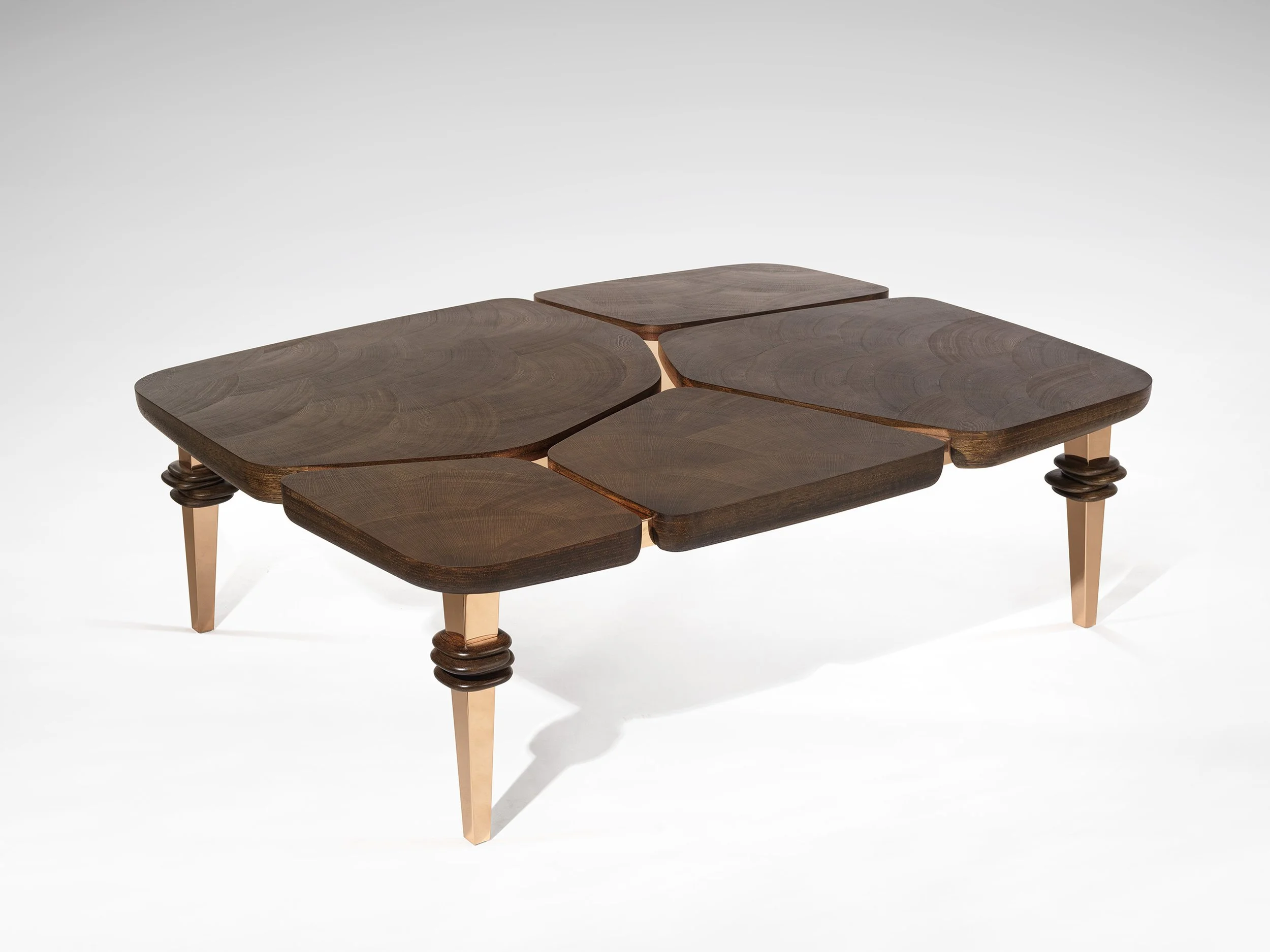
Cracked Earth Coffee Table - Layers in Time
The coffee table is a modern invention.
For centuries, drawing rooms were arranged around high tables designed for upright posture, formal occasion and the ritual of afternoon tea. Then, gradually, something shifted. The twentieth century brought a new way of living, easier, less ceremonial, more horizontal. Sofas got deeper. Chairs got lower. And the table at the centre of the room followed suit.
The coffee table, in its truest sense, is a piece of furniture born from relaxation.
That origin matters more than it might seem. A piece designed for moments of ease, for conversation, for gathering, for the unhurried hours of a day, carries a very different brief to almost anything else in a room. It must work for every person seated around it simultaneously. It must be seen from above, from the side, from across the room. It must be touched, leaned across, lived with. And it must do all of this while sitting at the visual heart of the interior.
When Designers Took Notice
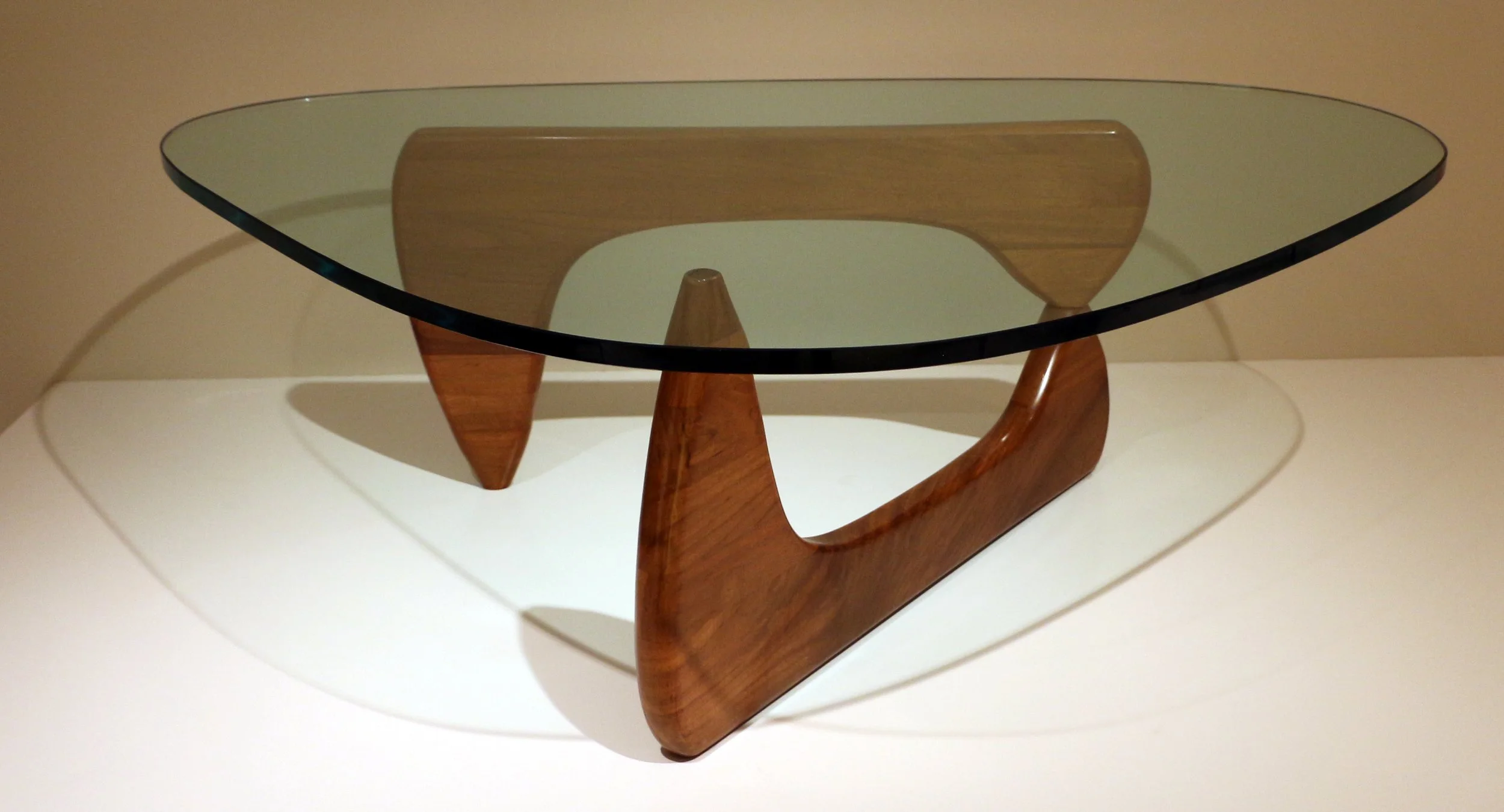
Isamu Noguchi’s 1947 Coffee Table
It took designers some time to recognise what that really meant. Isamu Noguchi was among the first. His 1947 table for Herman Miller, a single sheet of glass balanced on two interlocking walnut forms, was less a table than a sculptural proposition. It asked whether the piece at the centre of a room might be as considered, as resolved, as expressive as anything hanging on the walls above it. The answer, it turned out, was yes.
What followed was a slow but significant reappraisal of the coffee table as a design consideration. If the form was determined not by convention but by the specific geometry of the room, the sofa configuration, the ceiling height, the scale of every other piece, then there was no such thing as a generic solution. The shape of a coffee table is perhaps the most contextually determined decision in any interior. Get it wrong and the whole room feels unsettled. Get it right and the space resolves around it as if it could not have been any other way.
The Most Examined Surface in Any Room
The surface of a coffee table is the most examined surface in any interior.
People sit around it for hours. They look down at it in conversation. They lean across it. They run their hands across it without thinking. A dining tabletop disappears beneath plates and glasses. A desktop disappears beneath work. The coffee tabletop is always present, always visible, always available for inspection.
Which means the material decisions made at that surface carry more weight here than almost anywhere else in a room. The direction of a veneer. The depth of a finish. The relationship between surface and base. Each decision will be scrutinised, consciously or not, by every person who sits in that room.
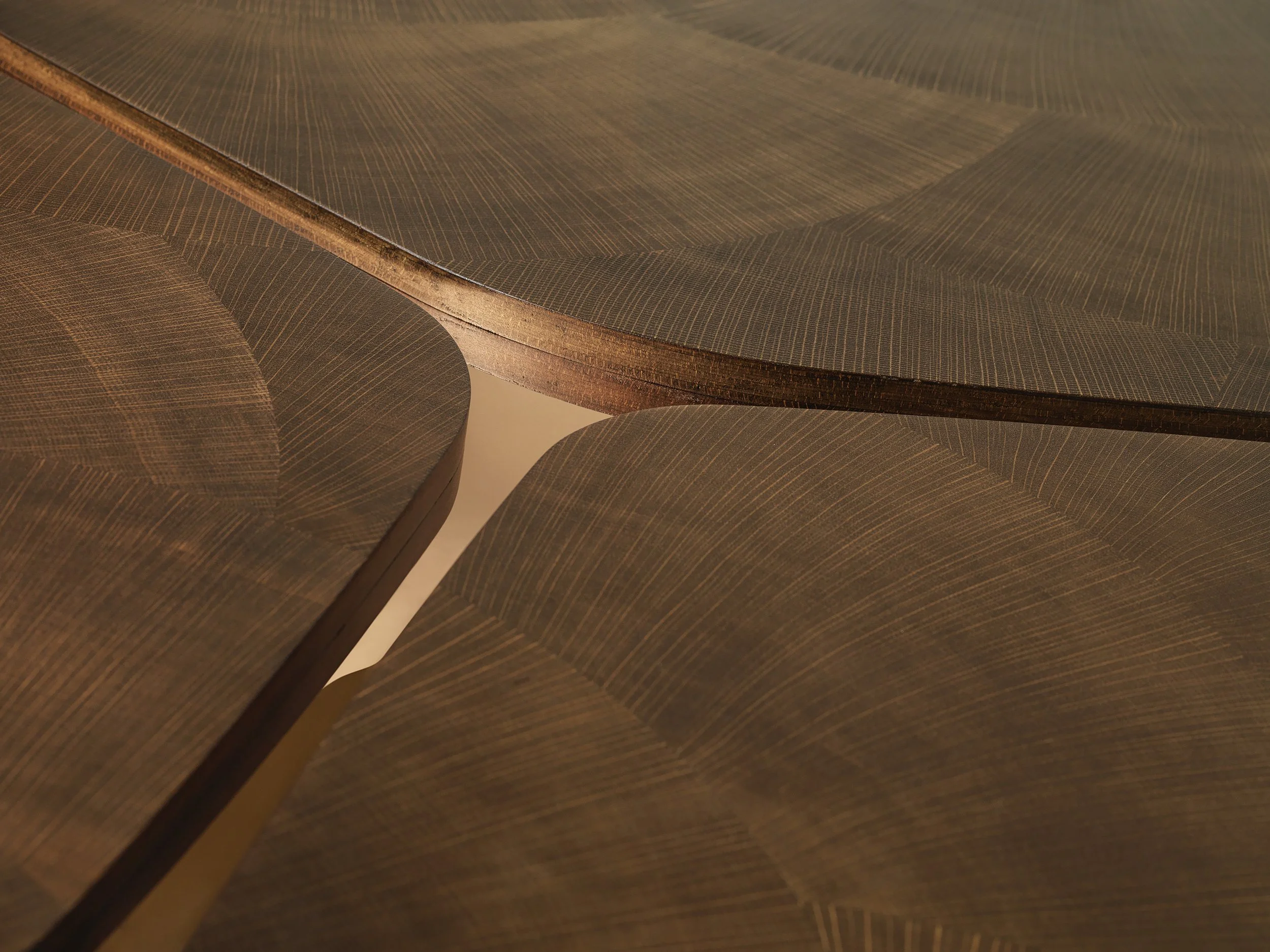
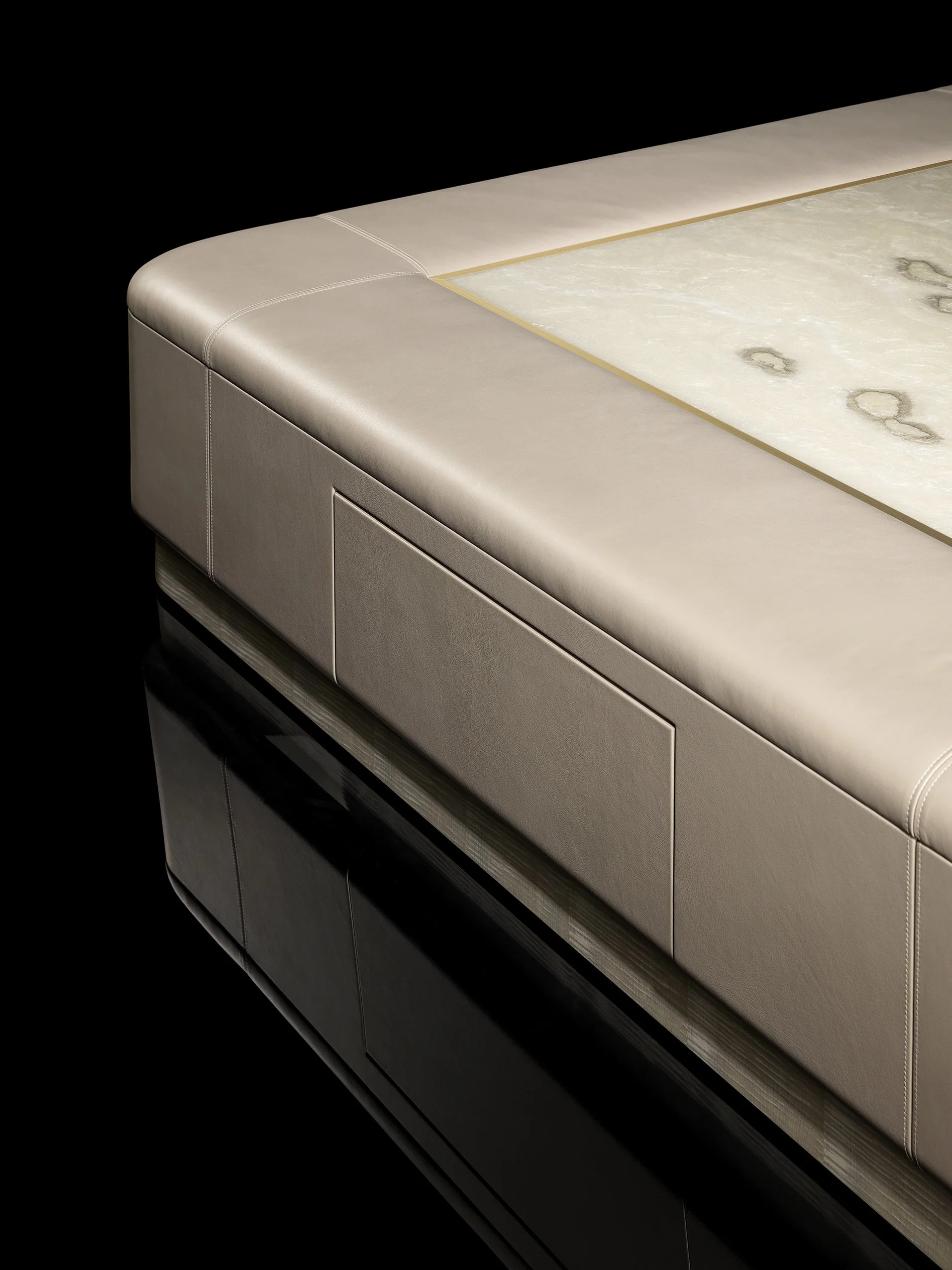
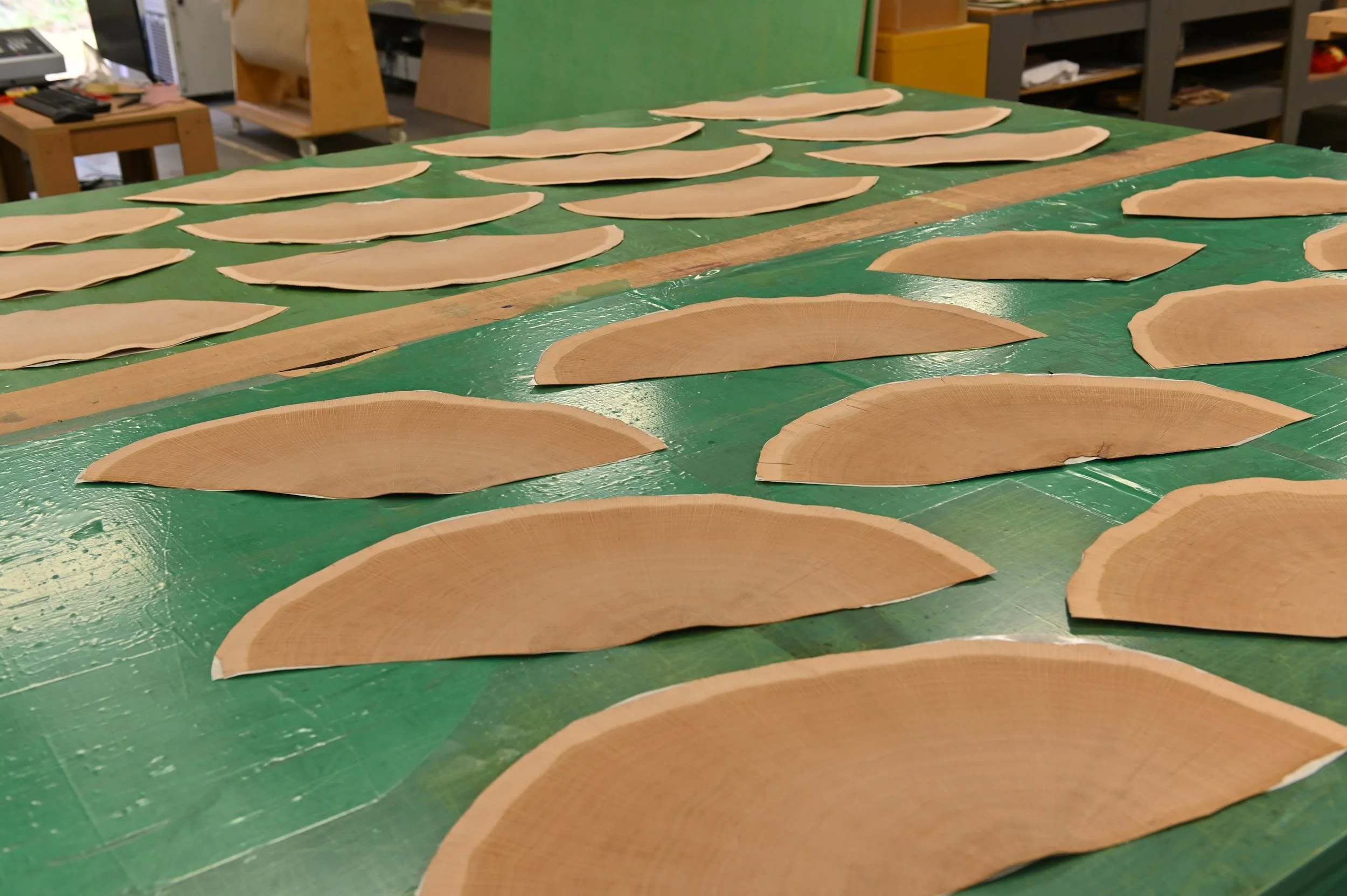
Cracked Earth Coffee Table Veneer and Bronze Inlays
Function Beyond the Surface
The brief has expanded. The coffee table that simply holds a drink and a book is no longer the whole story.
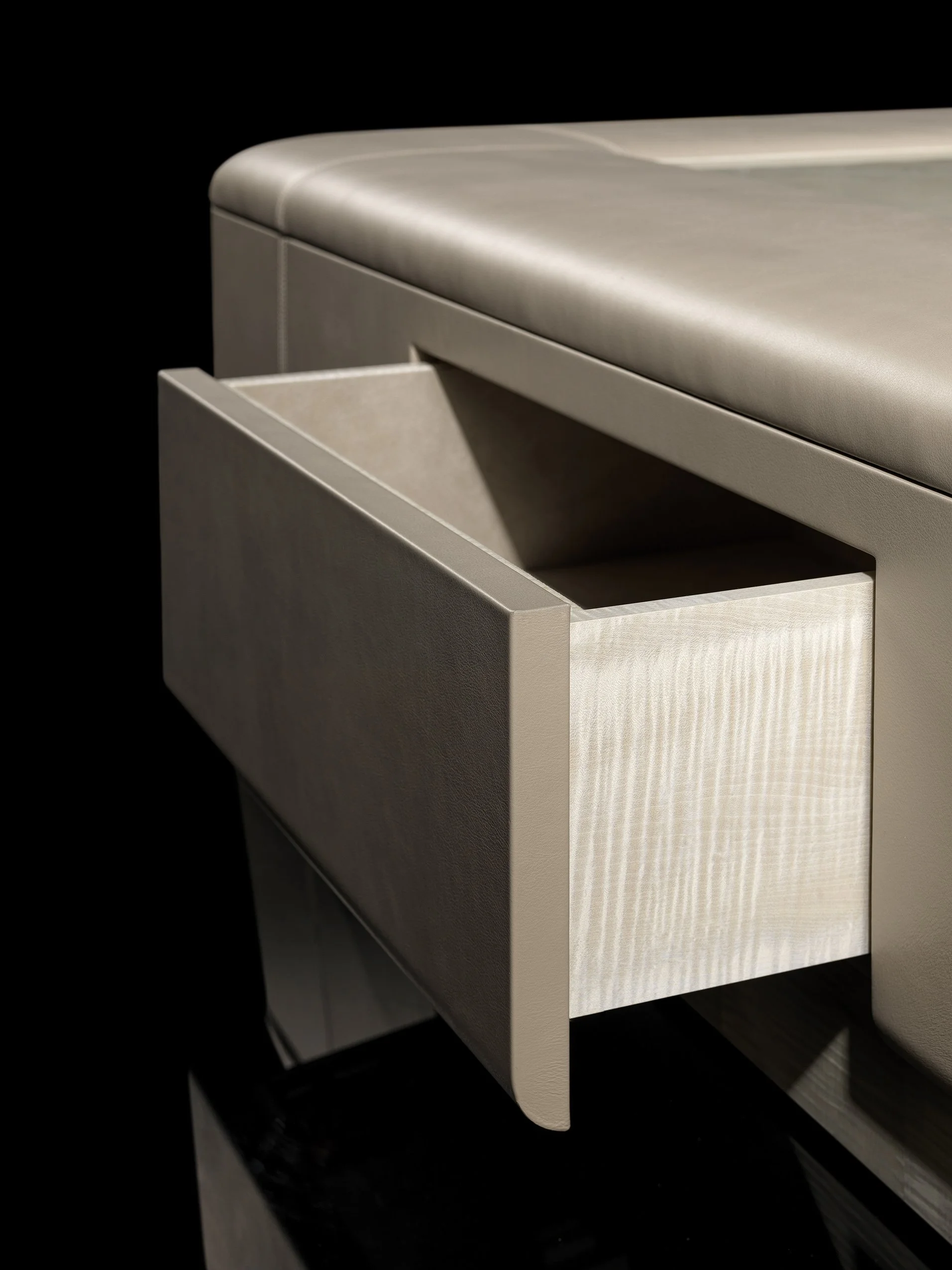
Commissions increasingly ask for more. Storage that does not announce itself. Surfaces that reward the scrutiny of a guest leaning in to look more closely. Bases that are as considered as the top. The coffee table has become, in the most ambitious interiors, a composition rather than a piece. Something to be experienced from every angle, at every height, in every light.
This ambition is not decoration. It is a response to where the piece sits and what it is asked to do. The coffee table occupies the centre. It earns that position or it does not.
For Designers and Specifiers
For designers working across residential and superyacht interiors, the coffee table presents a particular opportunity. It is the one piece in a room where material ambition is always visible, always legible, always in conversation with the people around it.
The brief is shaped by the room, by the people who will use it, by the moments it will hold. Scale, proportion, material, finish and function must resolve together. No element can be considered in isolation.
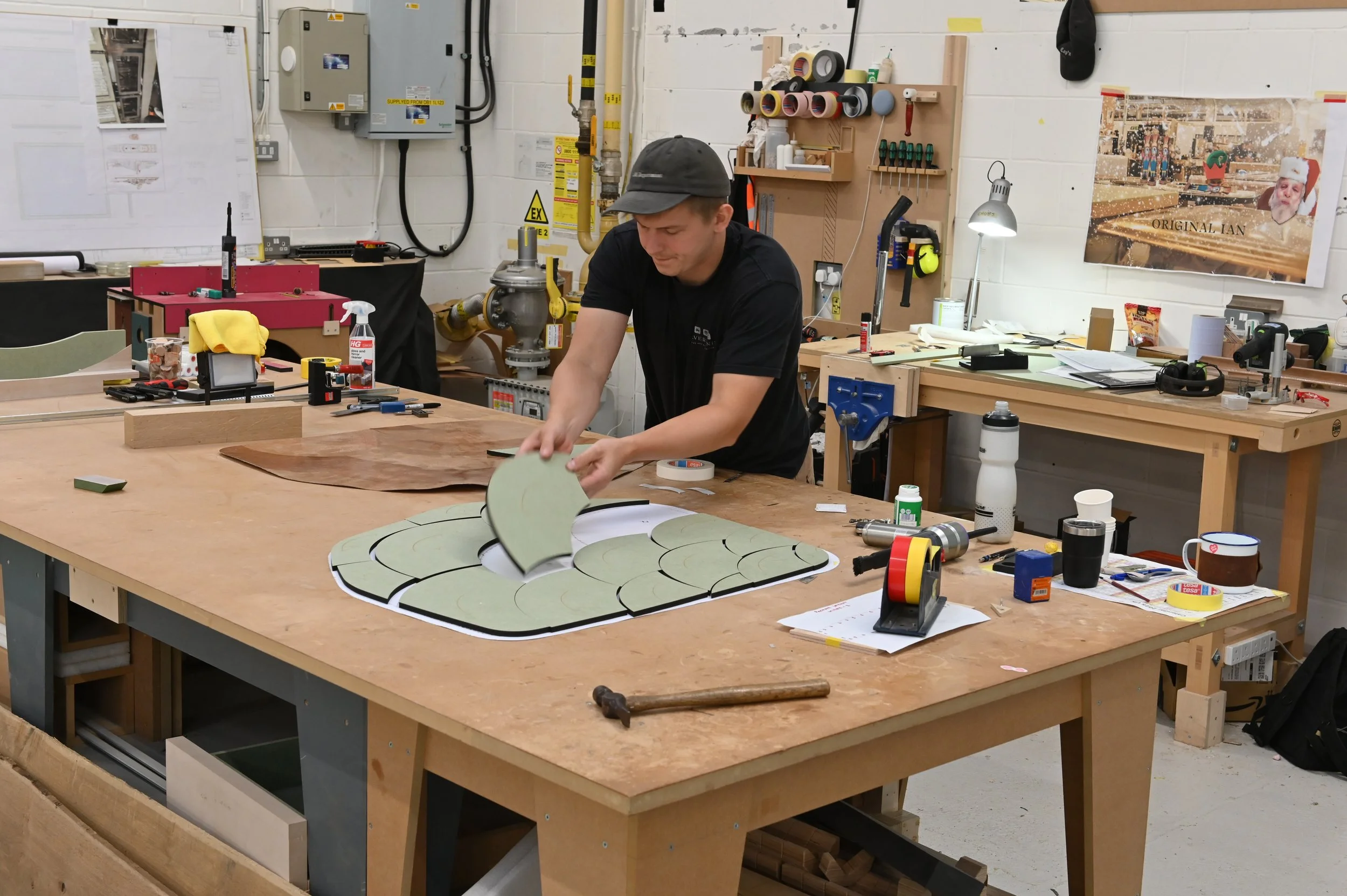
For makers, the coffee table exposes capability across disciplines. Surface finishing, structural engineering, material knowledge and compositional thinking must all operate at the same level simultaneously. There is nowhere to hide at coffee table height.
The piece exists because we learned to relax. It deserves to be treated accordingly.
Subscribe to our newsletter
Sign-up to receive our newsletter and discover our stories, collections and latest innovations.


