
In Good Hands: What to Consider When Commissioning a Games Table
Almost every piece of furniture a client commissions is designed around their own experience of it. The sofa they will sit on, the bed they will sleep in, the desk they will work at. A games table is different. It is designed, first and foremost, around the experience of the people gathered at it. That single distinction changes every decision in the brief.
A Long History of Gathering
The games table as a distinct piece of furniture has existed since at least the 11th century, though it was the early 1700s that established it as a drawing room essential. The earliest tables specifically designed for playing cards appeared around the beginning of that century, veneered in walnut with rectangular folding tops laid with baize, legs that swung out to support the flap, and corners dished to hold candlesticks, with wells for money or counters.
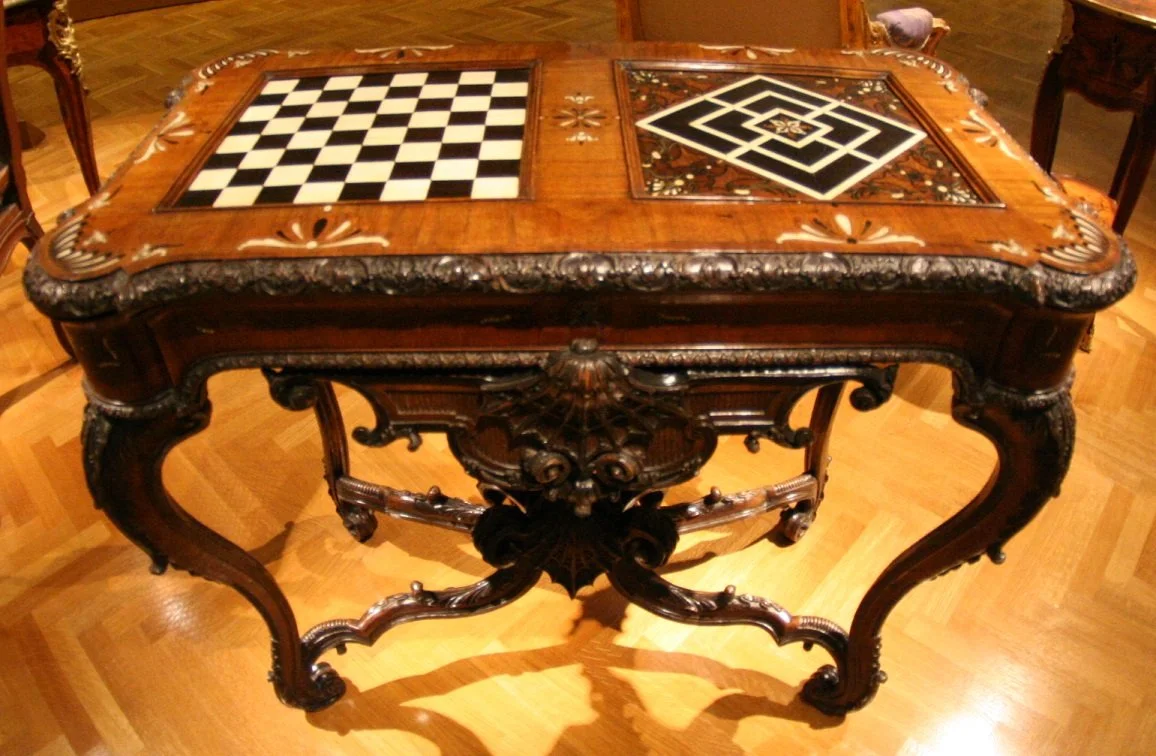
The decorative surface did not begin as an aesthetic choice. Needlework tops were practical for card games, keeping the noise of placing counters to a minimum and preventing accidental slippage of the cards. As gaming grew in popularity across Europe and the games table moved from the corner of the room to its centre, it became a piece worth showing off. The decoration followed the social elevation of the table itself, and what had begun as a functional lining became a surface worthy of the room it sat in, elaborately decorated with inlay, marquetry, bronze and gilt. Some tables combined gaming and tea functions, one polished surface for serving, a baize-lined top for play, with secret drawers and compartments for storing chips and cards. The games table has always been as much about hospitality as it is about play.
The First Decision
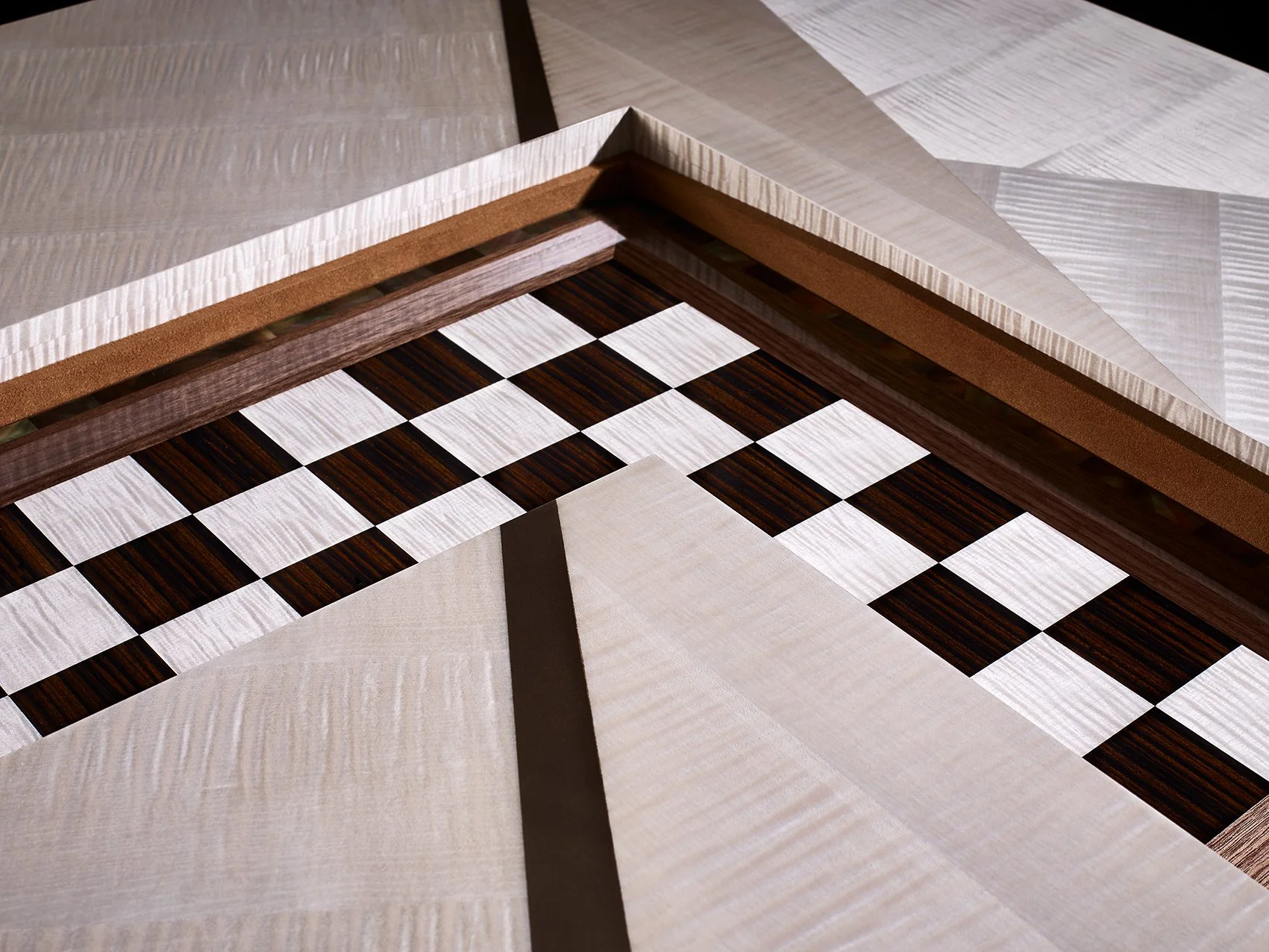
The playing surface is where a games table commission begins, and the choices made here are ultimately choices about the people who will use it. Baize remains the traditional choice for card play, close-woven and quiet, absorbing the sound of counters and pieces in a way that keeps the atmosphere of the game intact. Leather offers a harder wearing alternative, working particularly well for a table expected to serve two lives. For board games, the surface must accommodate the physical requirements of play, pieces need to sit securely, dice need a defined rolling area, and players on opposite sides need to reach comfortably across the table.
At the highest level of commission, the playing surface becomes an opportunity for marquetry, an inlaid chess or backgammon board that gives guests something to engage with before the game has even begun, and something to look at long after it has finished.
Built for the Game
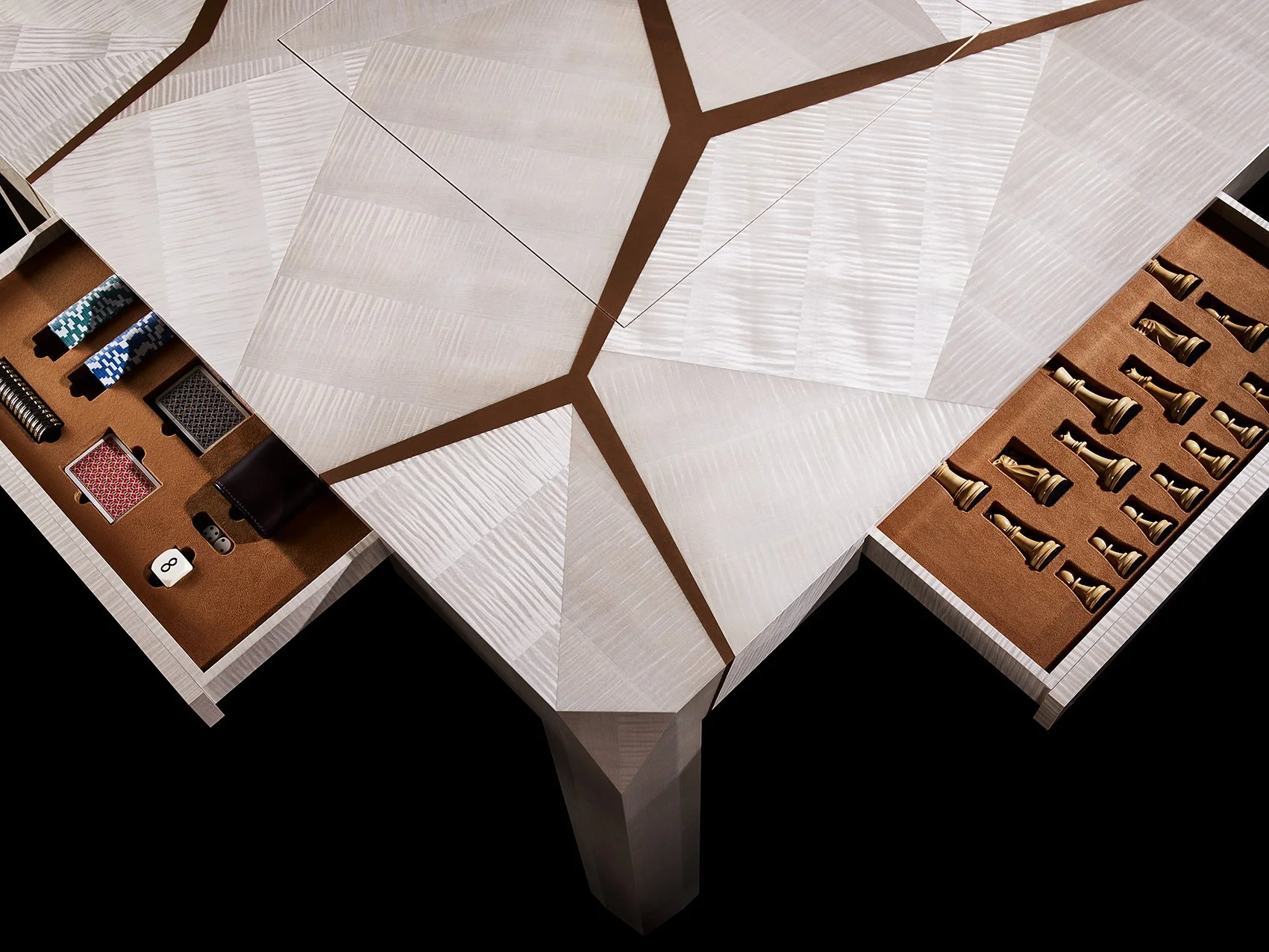
Storage is what makes a games table distinct, and here too the argument is about the people around it rather than the piece itself. A commission built properly contains the game, compartments sized for specific pieces, lined to protect them, organised so that setting up and clearing away is intuitive. The ritual of the game begins when the table is opened, and a well-designed interior is one where that moment feels natural rather than improvised.
Height and proportion matter too, and they matter differently for games than for dining. A card game played at dining table height becomes uncomfortable over time as concentration deepens and players lean in. A games table designed for seated play over several hours keeps guests at the table longer, and the difference tends to change how often the games actually get played.
Designed for Others
Because a games table is designed around its guests rather than its owner, the brief conversation needs to go further than most. The size, the seating arrangement, the way the surface catches light in an evening, the placement of a surface for drinks within reach, none of these are incidental. They are the difference between a table that is used and one that is admired.
A table designed for four players at cards needs a different footprint and relationship to the seating around it from one designed for two at chess or six at a board game. Getting the brief specific at this stage, down to the games the client actually plays and with how many people, produces a commission that fits its purpose precisely. But it also asks a more interesting question of the client: who are you making this for, and what do you want them to feel when they sit down at it?
The later 1700s saw more and more furniture created exclusively for leisure, and the games table was at the centre of that shift. Stylish, ingenious pieces of furniture suited the mood of the times. That mood has not changed. The games table that earns its place in a room is the one designed not just to accommodate play, but to make it feel like an occasion worth gathering for.
Subscribe to our newsletter
Sign-up to receive our newsletter and discover our stories, collections and latest innovations.


