
There is something unusual about a piece of furniture that changes with every hour. A mirror takes on the light of the morning, the weather at the window, the glow of evening lamps and whoever happens to walk past. It can catch our attention from across a room or invite a fleeting glance as we leave. Sometimes we admire the object; sometimes, perhaps, we linger over our own reflection.
A mirror can be the defining piece in an interior. Its character comes from the relationship between form, material and reflection, whether framed, sculptural or composed entirely of mirrored glass. For Studio SL, Silverlining’s in-house design studio, each offers possibilities for invention.
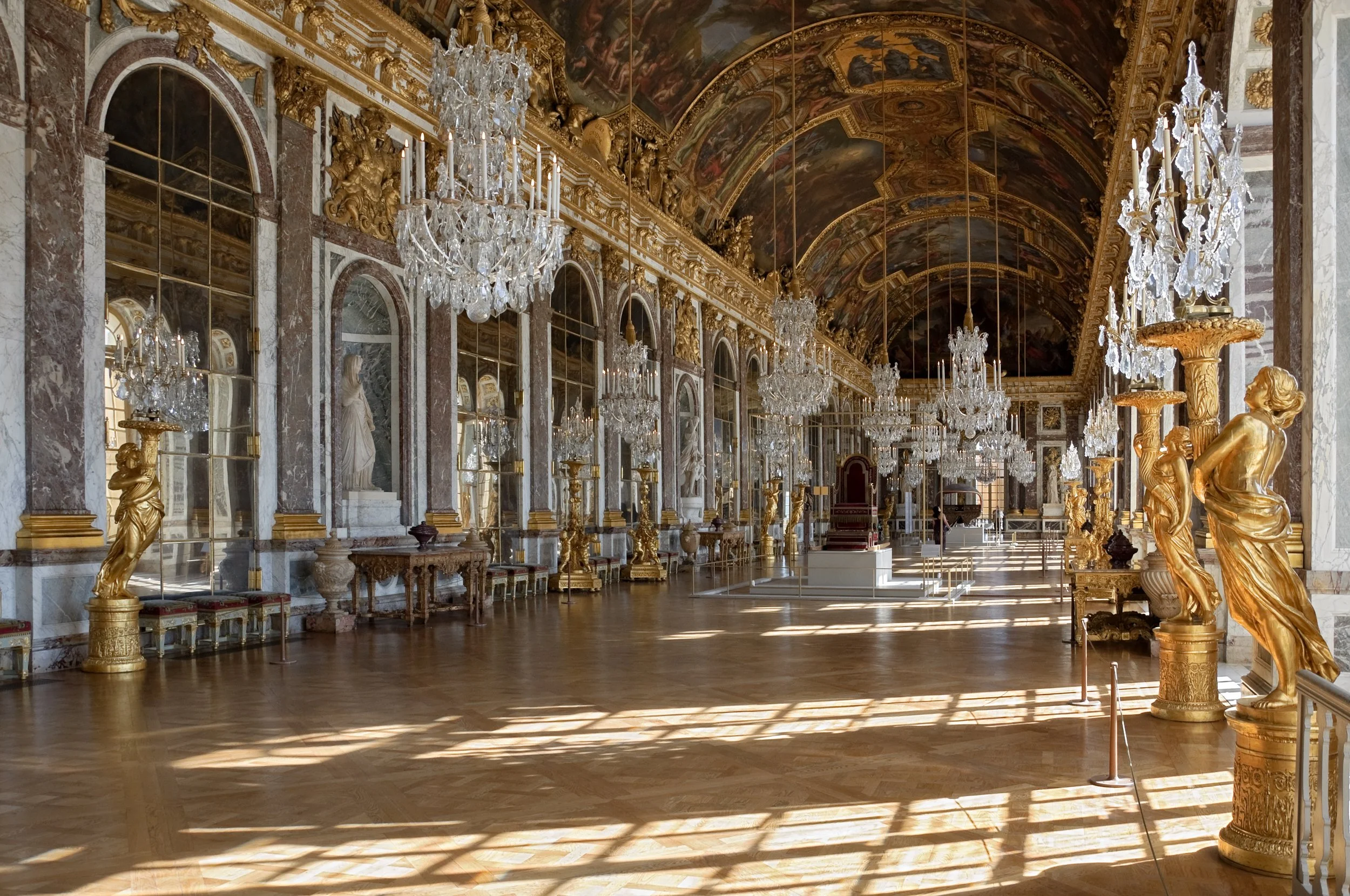
The Hall of Mirrors in Palace of Versailles, France. Paintings by Charles Le Brun, 1686.
A Feat of Making
In seventeenth-century France, mirror making became a matter of royal ambition. Louis XIV’s minister, Colbert, established a royal mirror works and recruited Venetian glassworkers to develop French expertise.
The Hall of Mirrors at Versailles, built between 1678 and 1684, gave that ambition architectural expression. Along the 73-metre gallery, 17 windows face 17 mirrored arches containing 357 mirrors. Their number and size demonstrated that French makers could rival Venice. Together, the glass, gardens and changing daylight created a room whose effect depended as much on reflection as on its physical decoration.
A Matter of Design
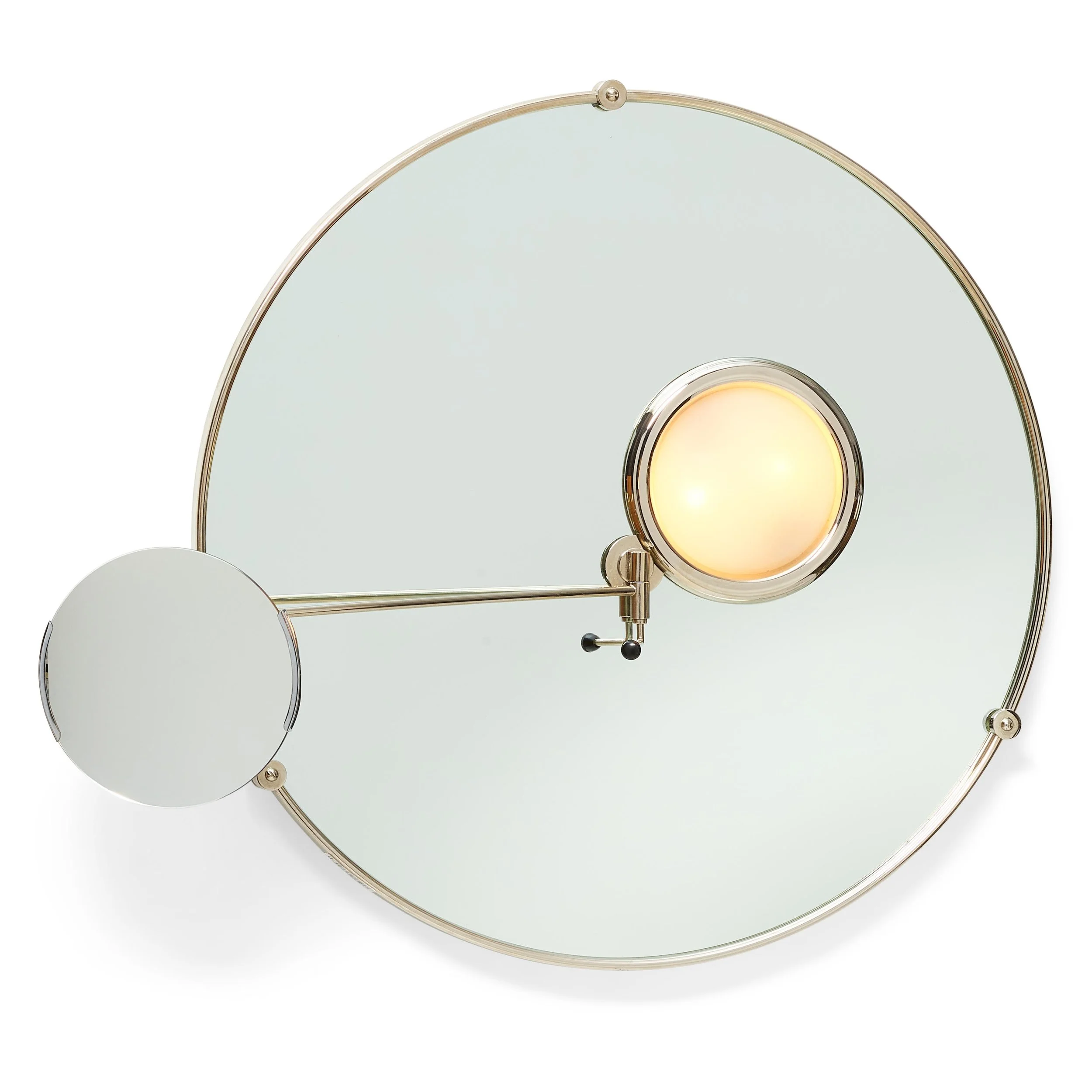
Centuries later, Eileen Gray explored a different relationship between a mirror, its setting and the person using it. Designed in 1927 for Villa E-1027, her Satellite mirror combined a circular mirror with adjustable elements, bringing movement and practical ingenuity to an everyday ritual.
Reissued by Andrée Putman and Ecart International in the 1980s, the Satellite was described as a twentieth-century design icon in Sotheby’s catalogue for its January 2025 Karl Lagerfeld estate sale. Its appeal lies in the way function and sculptural form become inseparable.
Material, Light and Reflection
A mirror can carry daylight deeper into a room, reveal an unexpected view or make a familiar space feel different. Its outline, proportions and surface determine how those reflections are encountered. The material surrounding the glass, where there is one, adds another layer of texture, colour and expression.
In Silverlining’s Layers in Time collection, the Ripple and Chroma mirrors explore these relationships through leather, glass and carefully developed finishes.
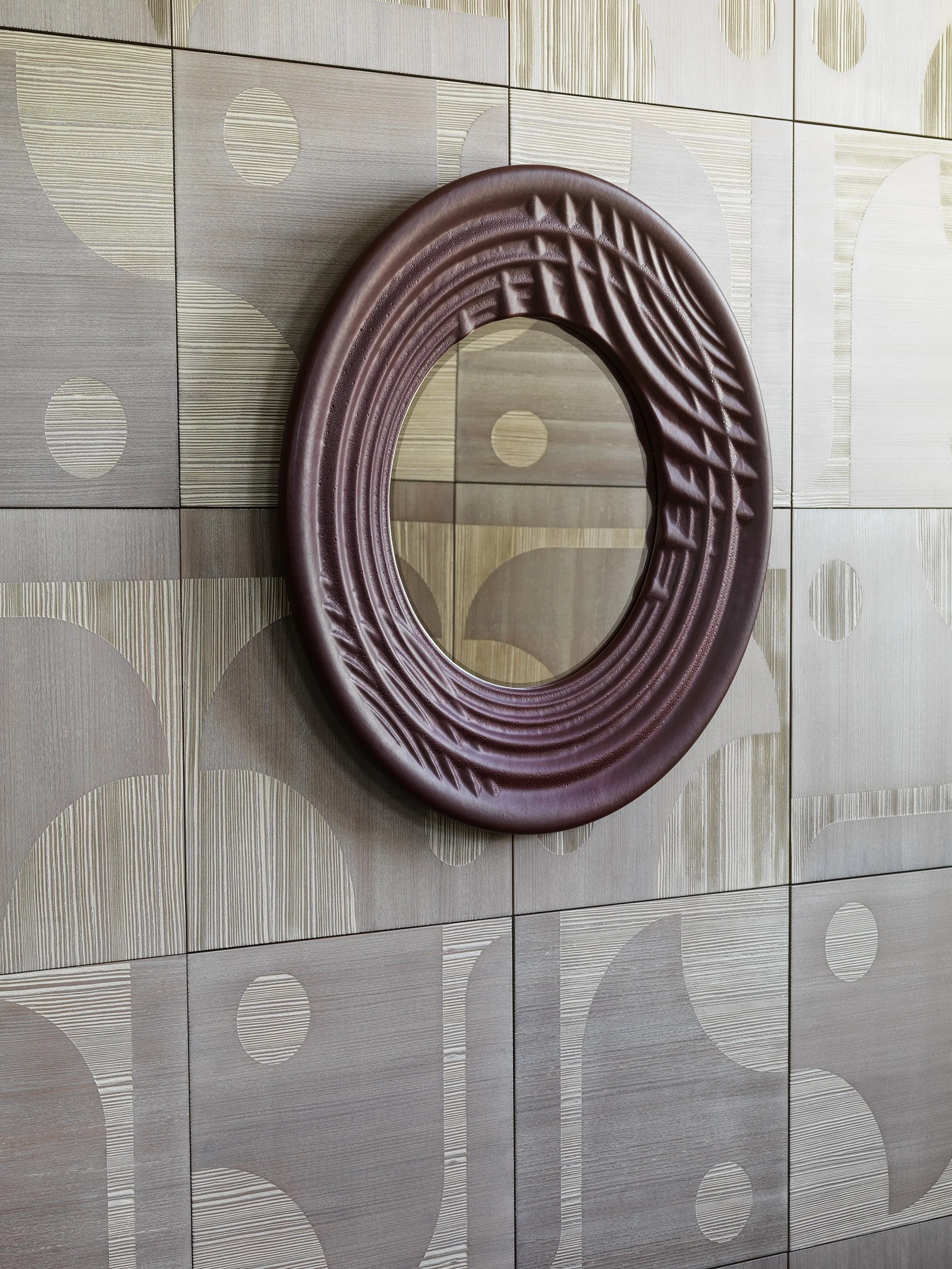
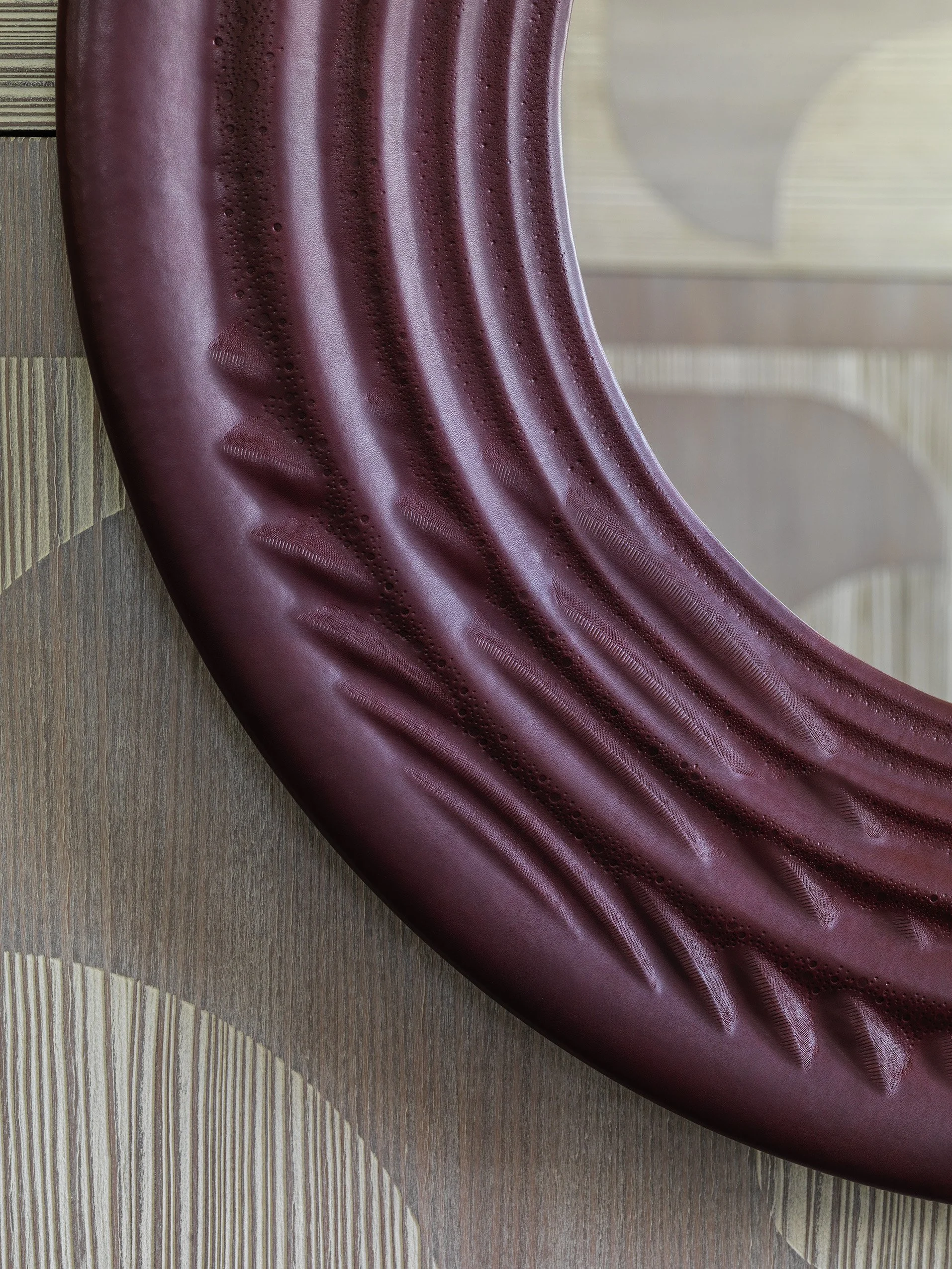
The Ripple Mirror takes its cue from light on water. Burgundy coach-hide is shaped over concentric waves around a hand-silvered centre, with hand-chased texture echoing the highlights and shadows of moving water. Extensive prototyping refined the rhythm and definition of each ripple.
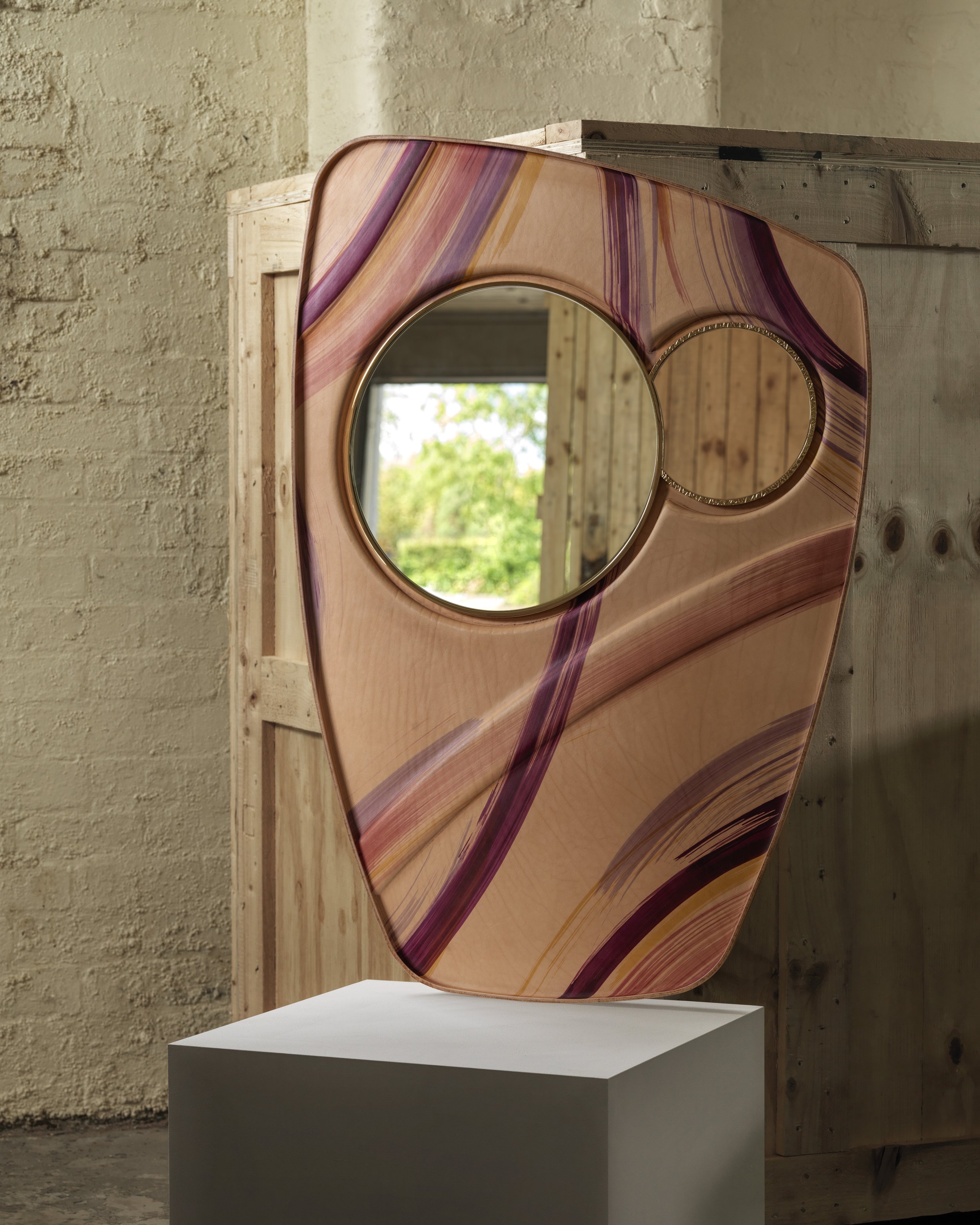
The Chroma Mirror brings together a circular mirror, gold-plated brass and leather painted by hand using water-based dyes and Japanese calligraphy brushes. Silvered and gold glass accents add further points of reflection, creating a composition that shifts with the light and the viewer’s position.
Both invite a closer look, drawing attention to the craftsmanship while reflecting the life around them.
Commissioning a Mirror
A commission begins with the setting and the presence the mirror should have within it. Will it become a focal point, offer a moment of discovery or sit quietly within the architecture? What will it reflect: a garden, a work of art, the movement of people through a room?
These considerations guide its scale, proportions and placement, alongside the choice of materials and finishes. The design develops as a whole, from the treatment of the mirrored surface to the details of its construction, considering how it will be experienced in daylight and after dark.
A mirror becomes part of the life of a room. Like every piece Studio SL designs, it is meant to be looked at as well as looked into.
Subscribe to our newsletter
Sign-up to receive our newsletter and discover our stories, collections and latest innovations.


