
Answering to Something Else: How a Side Table Earns Its Height
Of every piece of furniture in a room, a side table is one of the only ones whose correct proportions is not really its own decision. A dining table answers to the people seated around it. A sofa answers to the body reclining into it. A side table answers to something else entirely, whatever happens to be standing next to it.
A Rule of Thumb, Not a Law
A side table is commonly sized against whatever it will stand beside, close to the height of a sofa or chair arm, level or very slightly below. Where a chair or sofa has no arm to measure against, the table is instead sized against the seat cushion itself, close to its height, so a hand reaching down still lands somewhere natural. A table beside a bed works the same way again, this time measured against the mattress, close to its height so it can be reached without sitting up or leaning over. None of this is an exact science, and no two rooms, sofas or bodies are quite the same, but the underlying idea holds across most interiors: a side table's own proportions are rarely the first thing decided. They follow from whatever it is standing beside.
This is not a unique position for furniture to be in, a dining chair answers to the table, a bar stool to the counter. But a side table takes it furthest. Its entire identity, height, footprint, presence, exists in relation to something else.
The Table That Refused the Rule
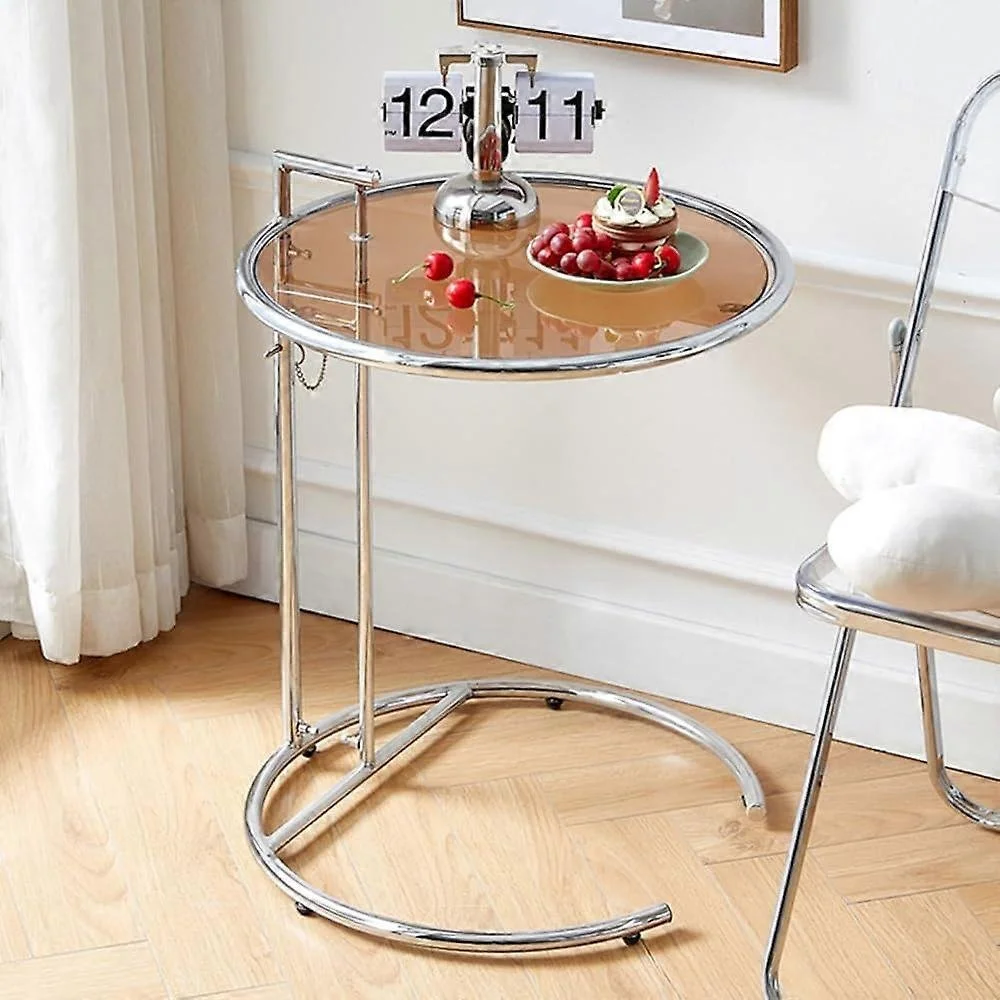
A height adjustable side table
Not every designer has accepted that arrangement quietly. In 1927, Eileen Gray designed the E1027 Adjustable Table for her house of the same name on the French Riviera, built for her sister, who liked eating breakfast in bed and kept finding crumbs in the sheets afterwards. Rather than fixing the table to one height to suit one piece of furniture, Gray gave it a cantilevered steel base that slides beneath a bed or sofa, with a key-lock mechanism holding its circular glass top at whatever height the person using it actually needs. The table does not defer to the sofa, the bed or the chair beside it. It defers to the person. Nearly a century later, the E1027 remains one of the most recognisable pieces in design history, held in the permanent collection of MoMA, proof that the question a side table poses, what should it answer to, does not have only one answer.
Freedom Within the Frame
Even where a side table follows convention on height, everything else about it remains genuinely open. Nesting tables, first recorded by the cabinetmaker Thomas Sheraton in 1803 and later reinvented at the Bauhaus by Josef Albers over a century later, prove exactly how much freedom sits inside that single fixed measurement. Each table in a nest still answers to whatever it needs to stand beside. What changes is footprint, a full set shrinking down to occupy the space of a single table when not needed, then expanding out again when it is. Height might be fixed, but nothing else has to be. A nest of tables shows how much a designer can still shape, how much space a piece occupies, what it is made from, whether it holds something or simply supports it.
Designed to Be Encountered, Not Measured
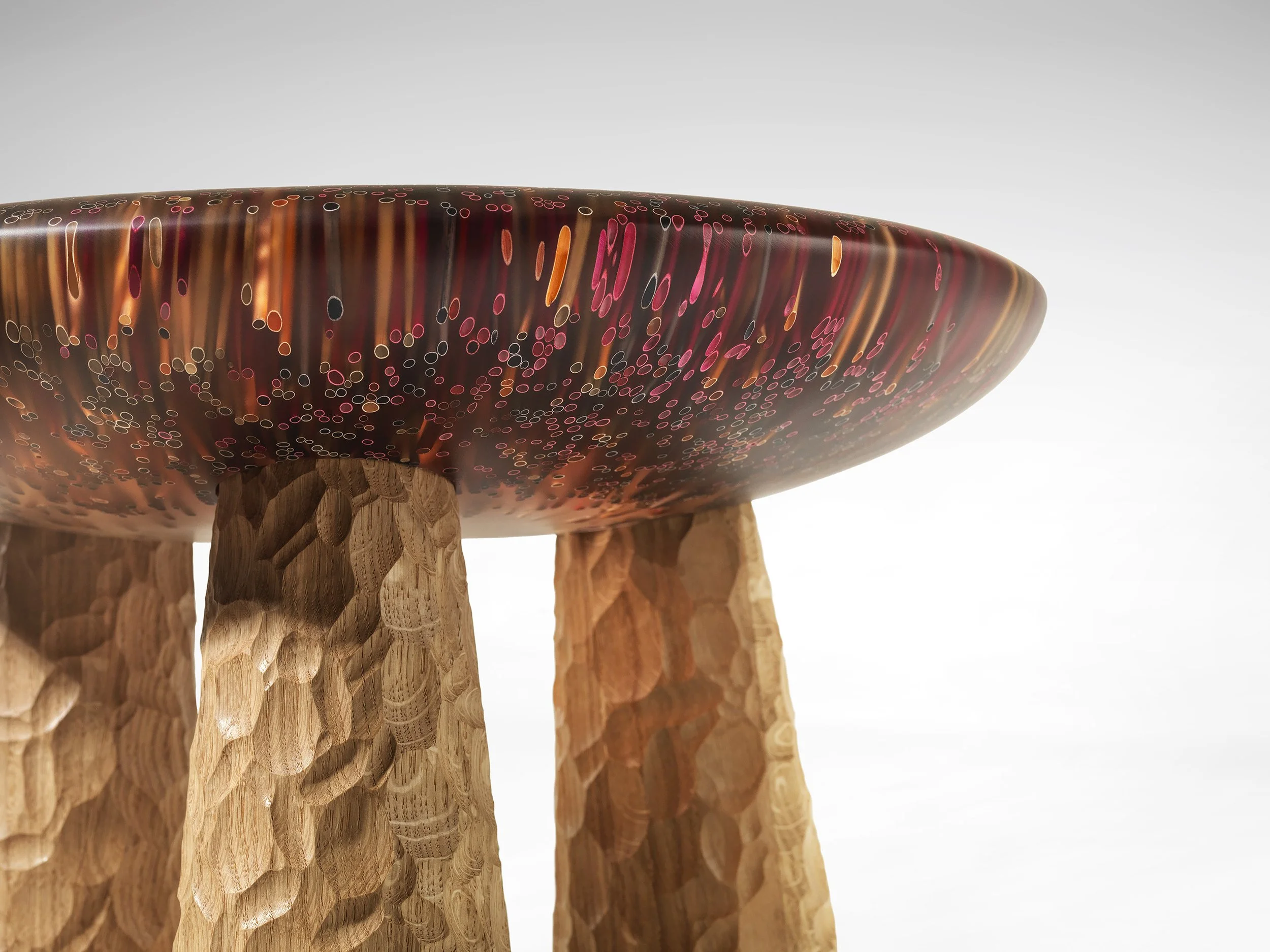
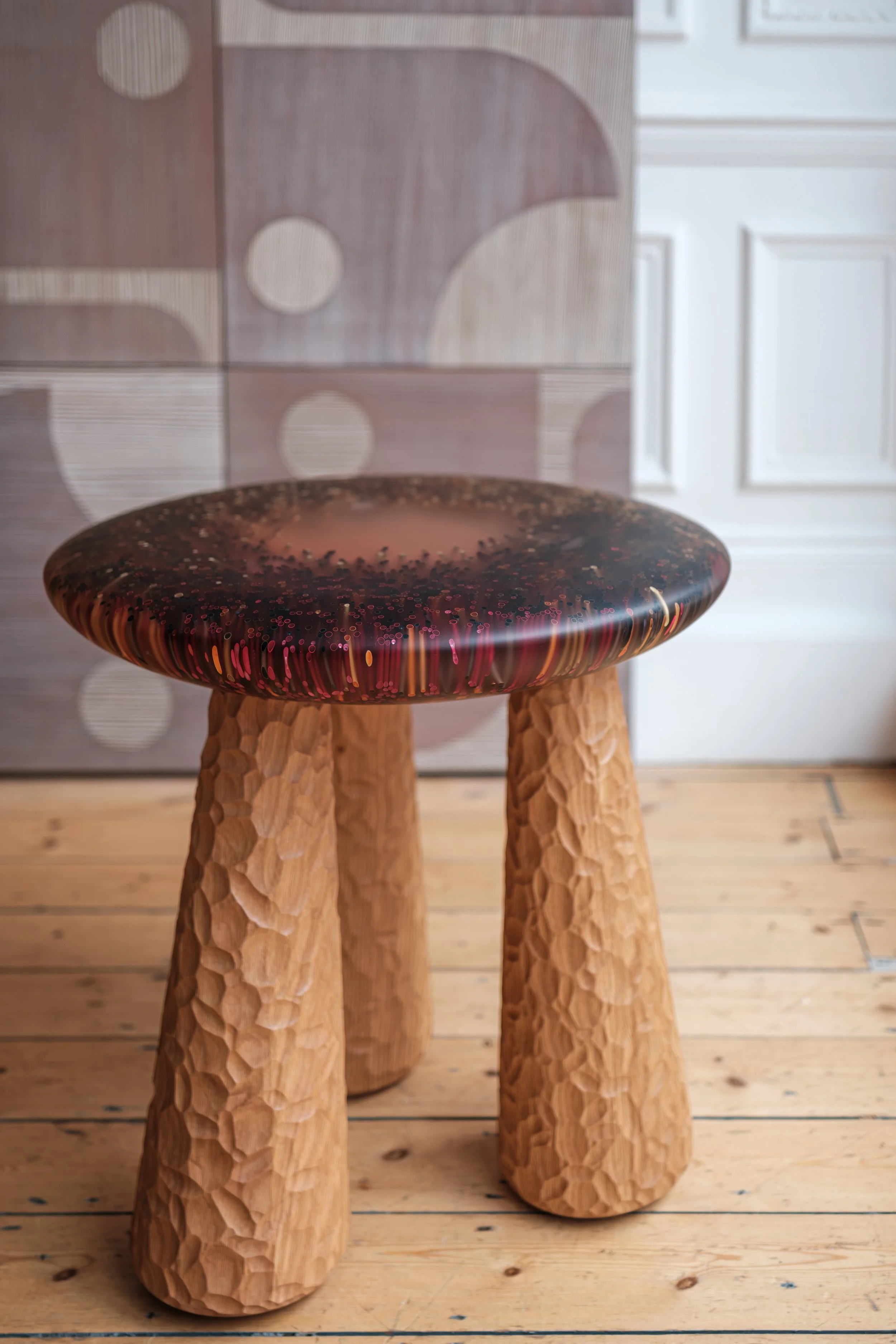
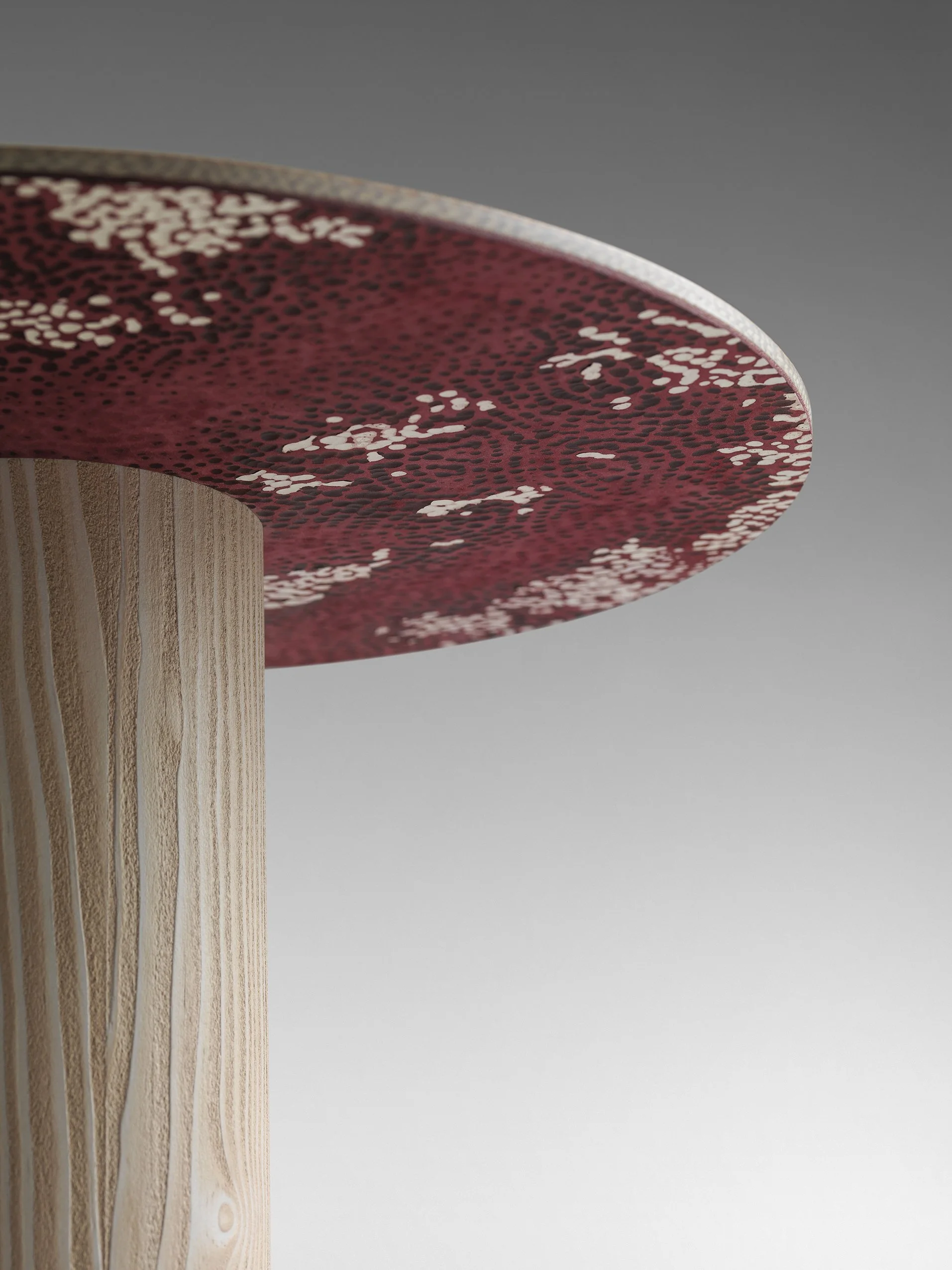
The Lumen Side Table takes a fourth path entirely, neither following convention, rebelling against it the way Gray's table did, nor reinventing what sits inside it the way a nest of tables does. Its height was not measured against a chair or an armrest, but it was still exactingly considered, set by the piece's own proportions, the position of its central resin window, the sightline needed to catch daylight properly, the balance of the legs beneath it. It took seven years to develop, working through how to fully saturate hollow wheat straw with resin without trapping air inside. At its centre, a pebble-shaped resin window acts as a lens, drawing daylight through the piece and casting shifting shadows onto the surface beneath, set on three oversized, hand-turned oak legs finished with individually chip-carved detailing. Every dimension answers to the piece itself, not to whatever might be standing beside it.
What a Side Table Is Really Asking
A side table poses a quiet question that most furniture never has to answer: how much of its identity belongs to itself, and how much is owed to whatever it has been asked to stand beside. Most side tables answer that question through convention. Some, like the nest of tables, answer it by rethinking what convention leaves open. Eileen Gray answered it by building a table that could change its answer depending on who was using it. Lumen answers it by opting out of the question altogether, a piece that asks to be looked at directly, on its own terms, rather than measured against anything standing next to it.
Subscribe to our newsletter
Sign-up to receive our newsletter and discover our stories, collections and latest innovations.


