
Sculpting Leather: Silverlining at Sotheby’s Crafted
Every May, London Craft Week brings makers, collectors and the curious together around a shared conviction: that craft matters, and that the skills behind exceptional objects deserve to be seen, understood and celebrated.
This year, Sotheby's hosted Crafted, a week-long programme of exhibitions, demonstrations and talks dedicated to heritage craft in all its forms. The conversation running through the week was an urgent one: how do we keep vital skills alive? What do these disciplines still offer? And who is pushing them forward?
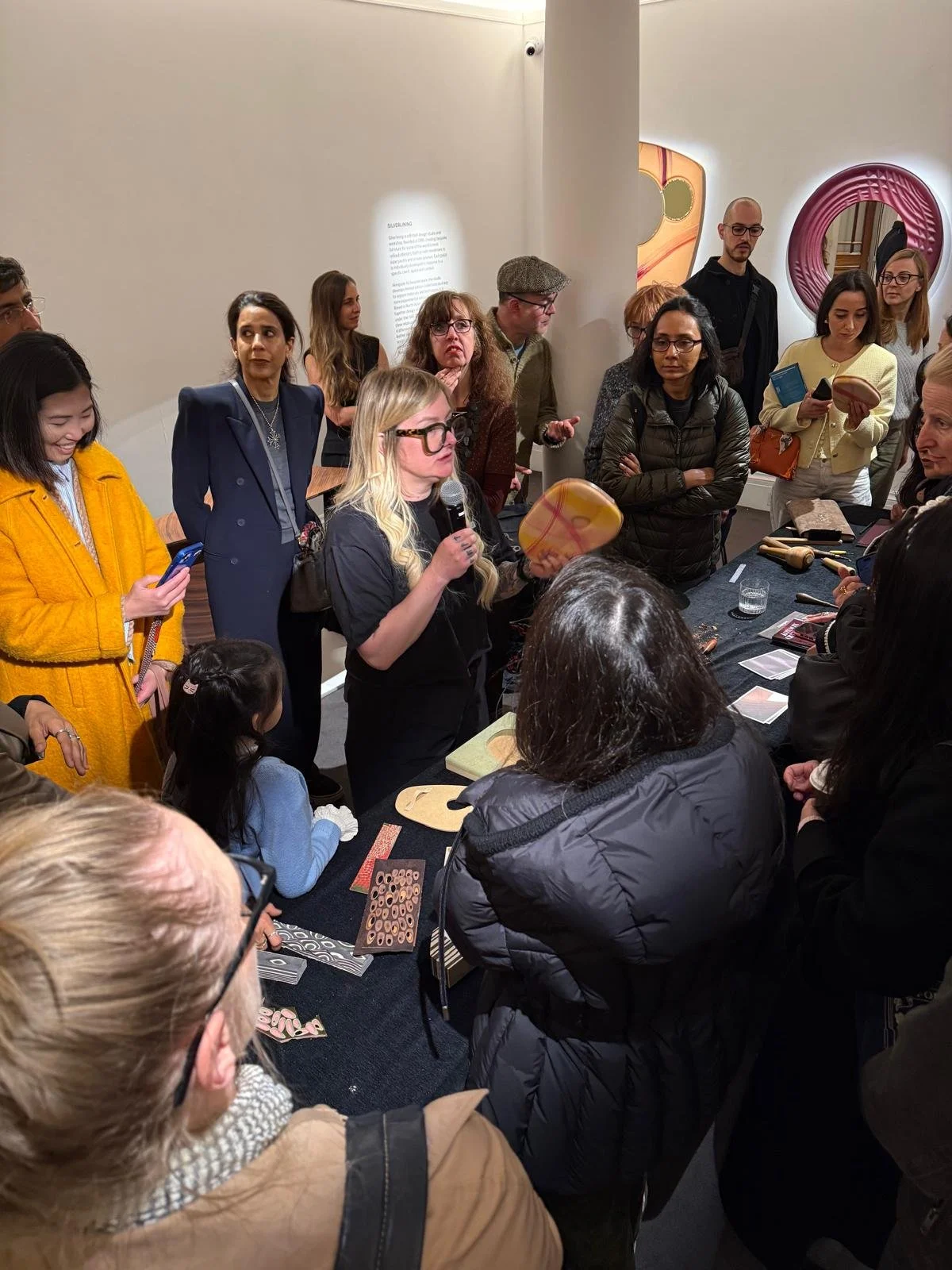
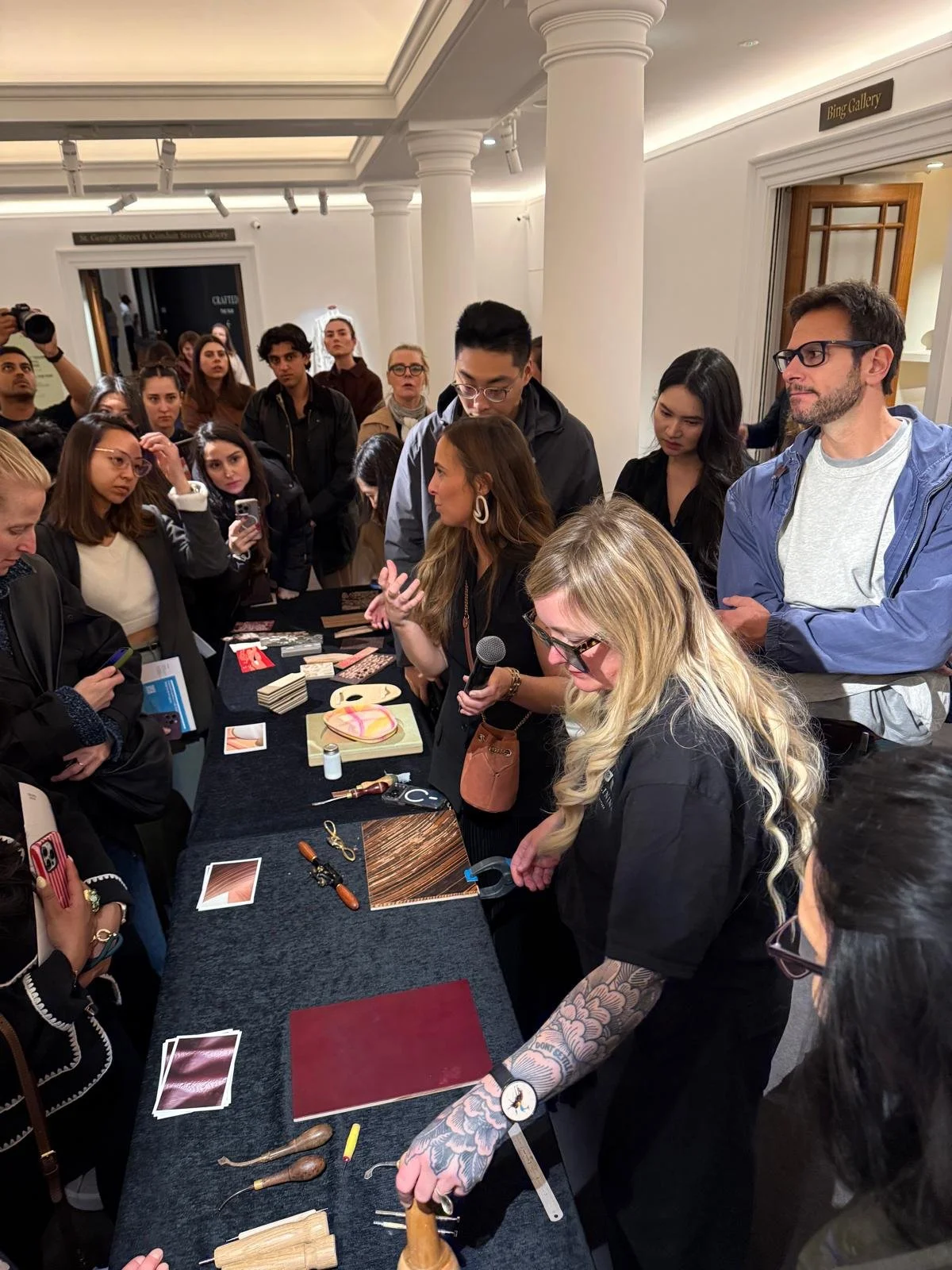
Silverlining spent the week at Sotheby's, presenting three pieces from the Layers in Time collection. On Saturday 16 May, Kate Summerfield, Silverlining's Leather Team Leader, gave a live demonstration as part of Sotheby's Festival of Craft.
The Pieces
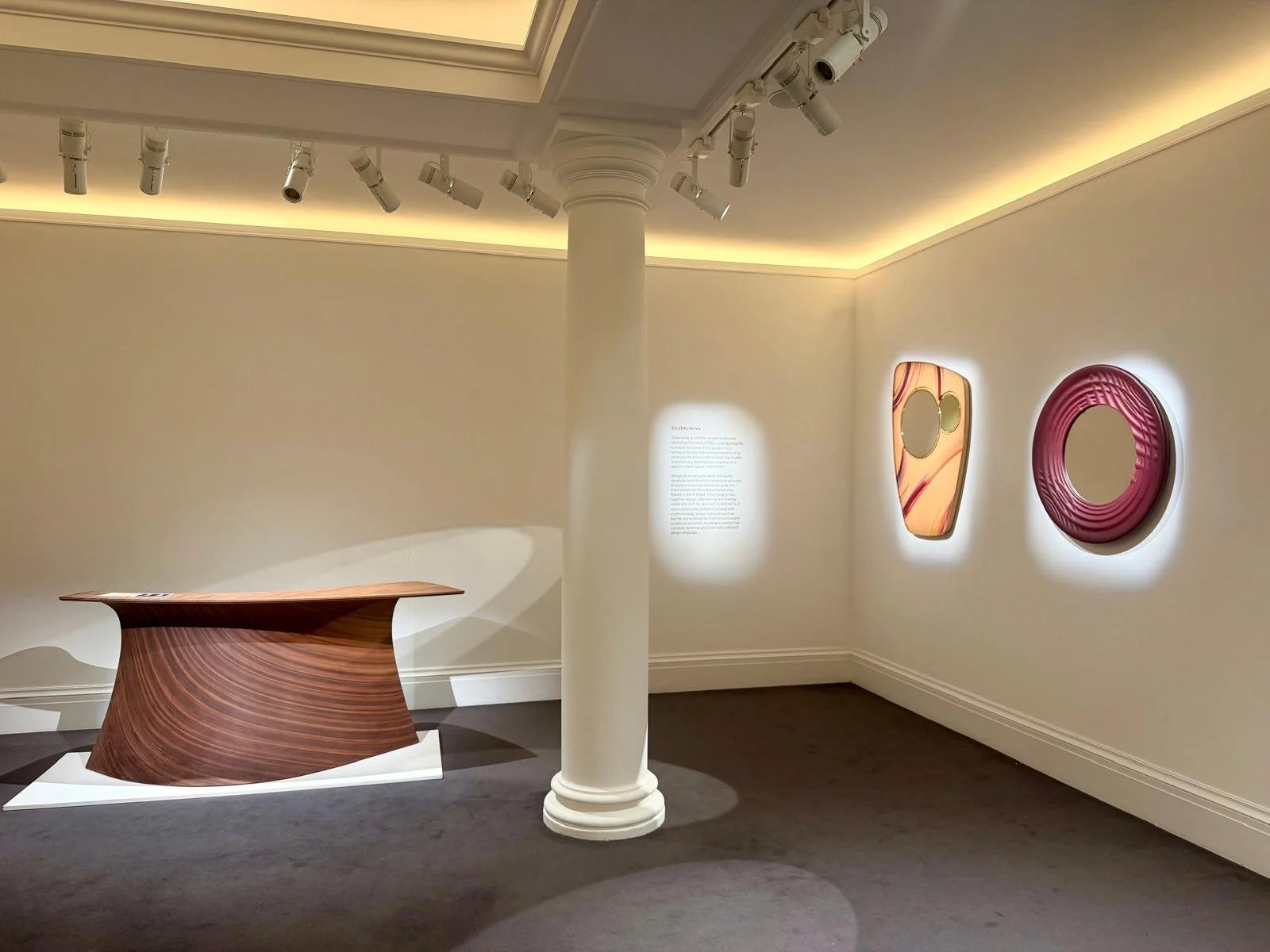
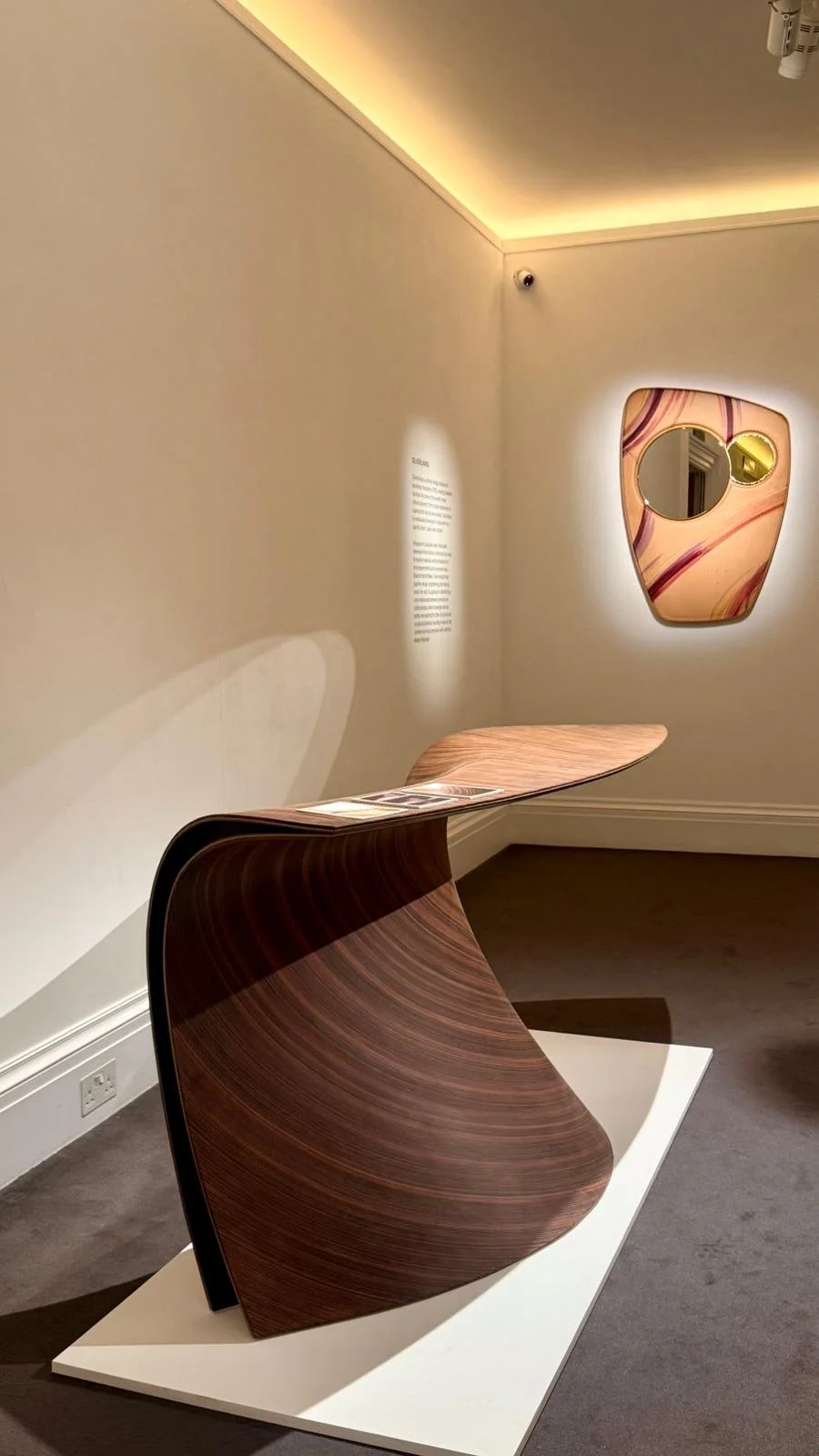
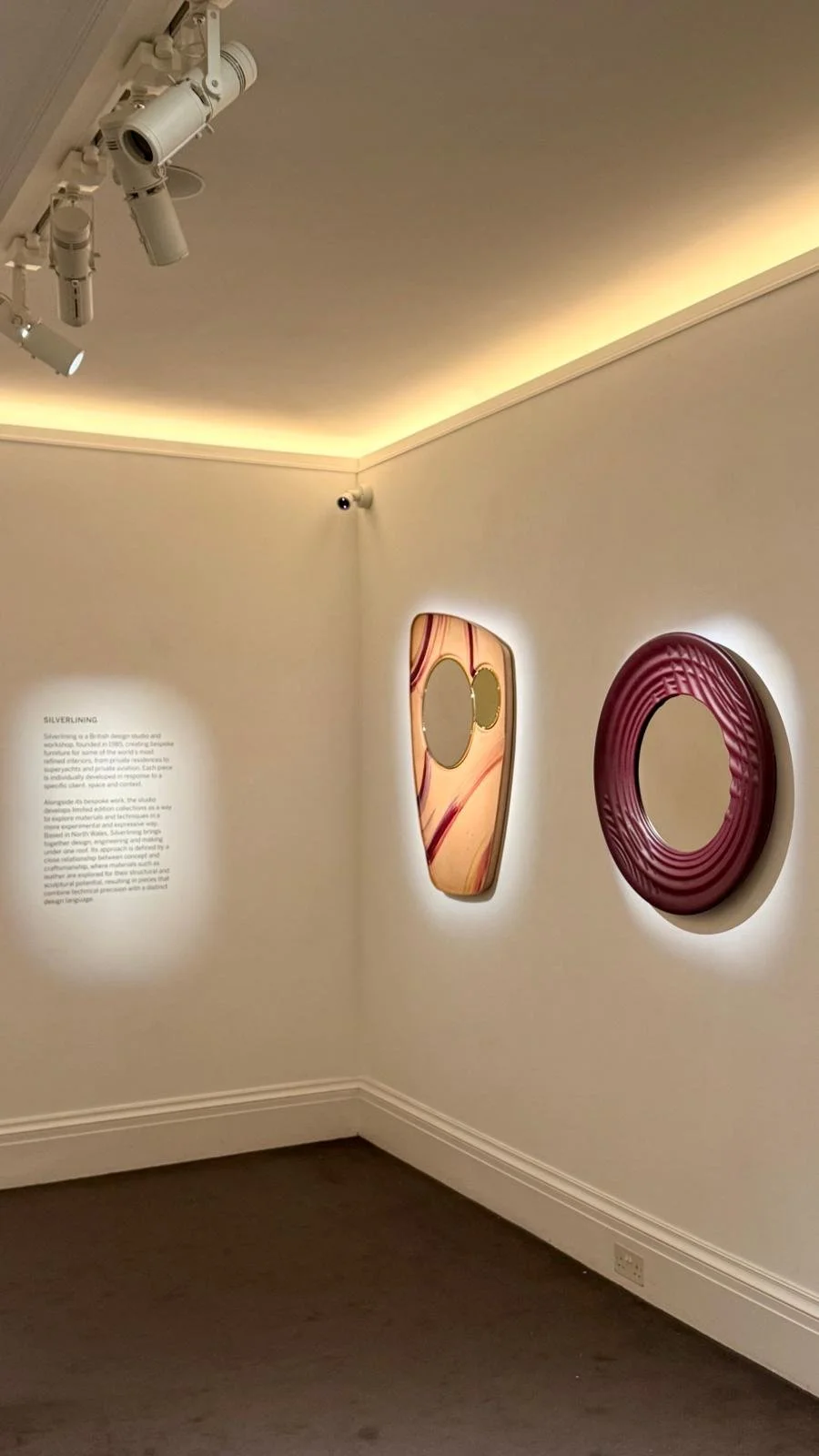
The Wave Console, the Ripple Mirror and the Chroma Mirror each take leather as their starting point and arrive at something entirely unexpected. Together they represent some of the most ambitious leatherworking Silverlining has undertaken, and in the context of Sotheby's Crafted programme, they made a particular kind of argument: that leather, in skilled hands, belongs alongside any other collectible craft.
The Wave Console is defined by its surface. Over twelve hundred individual strips of vegetable-tanned coach hide, each tapered and smoothed before application, follow the flowing curves of a bio-based composite structure in a single unbroken gesture. Up close, the precision of the work becomes visible: strip after strip, each one consistent, each one placed by hand.
The Ripple Mirror draws the eye upward. Two burgundy hides pressed under hydraulic pressure into CNC-machined moulds, then worked across by hand with individual stamps. A process that takes days and produces the impression of water caught mid-movement. The concentric wave forms shift as you move around the piece, shadow and depth changing with the light.
The Chroma Mirror sits differently again. Two hides moulded into soft curves, painted layer by layer with water-based dyes applied using calligraphy brushes, each application building on the grain of the material rather than obscuring it. Two circular mirrors set into gold-plated brass surrounds complete a piece that changes character as the light around it shifts.
Sculpting Leather: From Material to Form
The title of Kate's demonstration at the Festival of Craft said it plainly. This is not leather as covering or decoration. It is leather as a material with its own structural and sculptural potential.
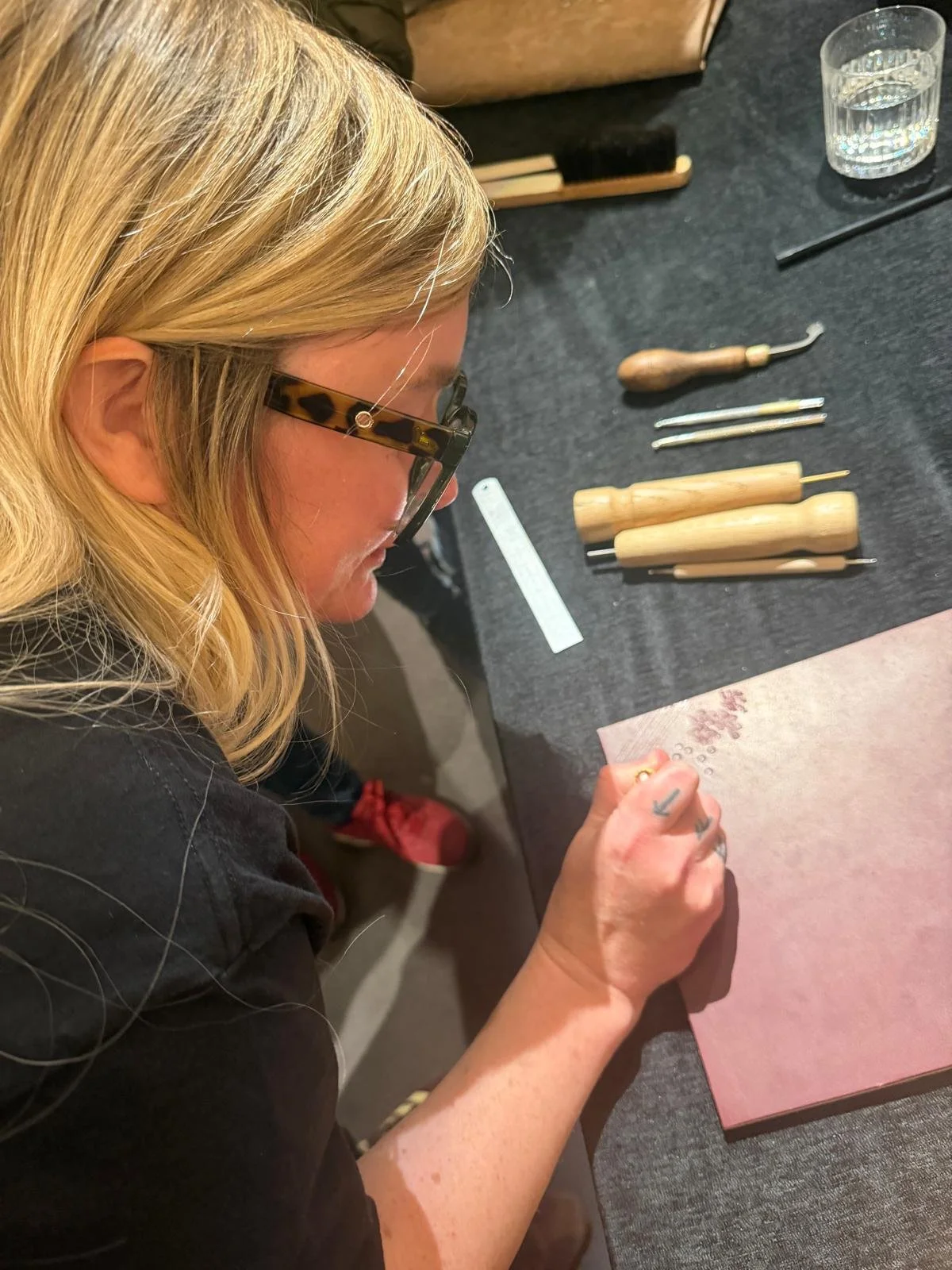
Three techniques were demonstrated live. Spokeshaving, drawing a blade along the hide to taper and refine its edges to a precise and consistent thickness, a tool unchanged in form for centuries but demanding complete accuracy of hand. Texturing, working the surface of the leather by hand to build depth, variation and character that no machine can replicate, because no machine can read the material as it responds. Edge finishing, sealing and smoothing every cut edge to the same standard as those in full view, because at Silverlining no surface is treated as an afterthought.
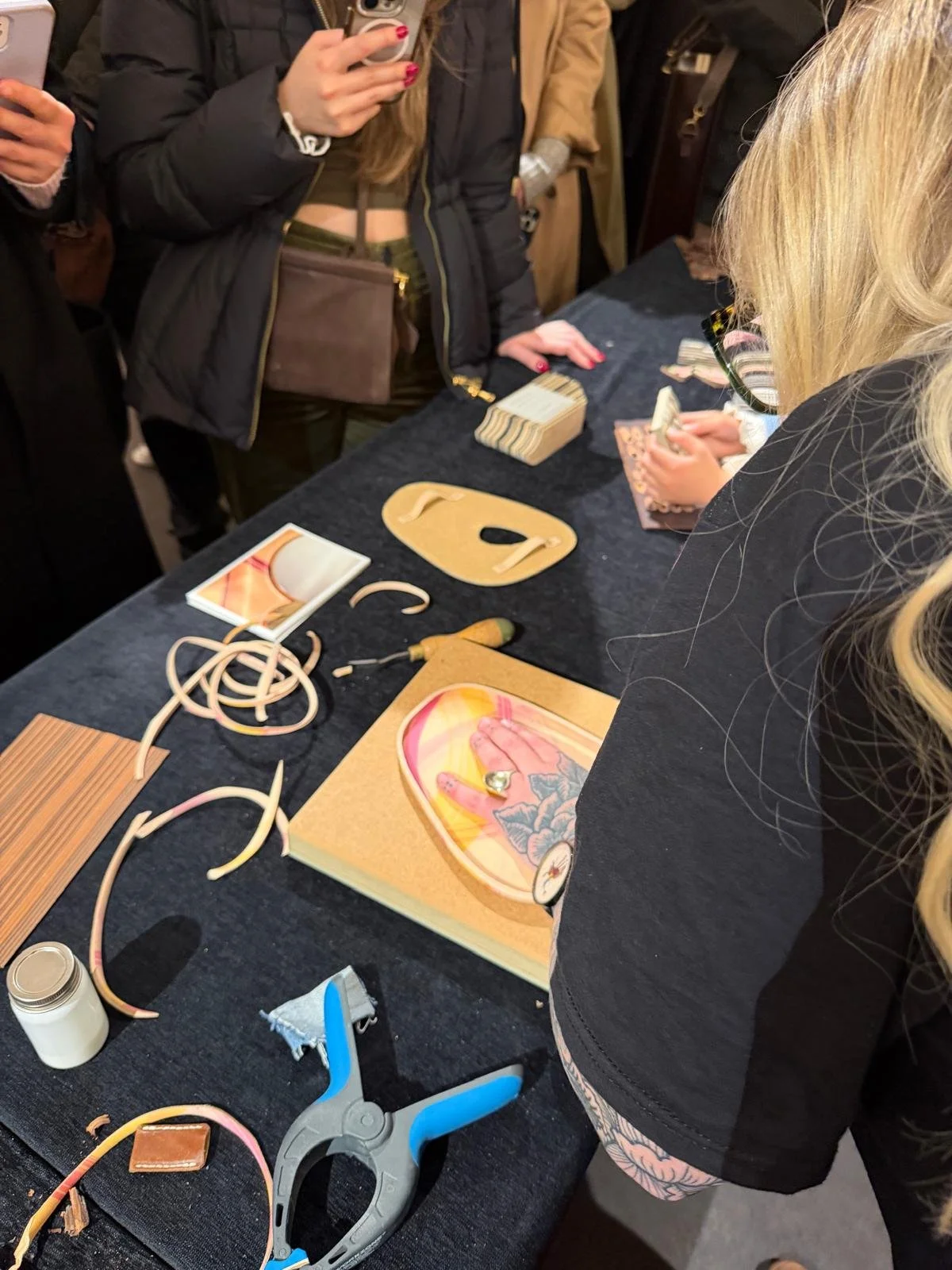
Alongside these live techniques, completed examples of cording and wet moulding were on hand to show where these processes lead in finished form. Cording, the hand application of individual leather strips built up in layers to create surface texture and relief. Wet moulding, soaking leather and pressing it under pressure into a precise form, where it dries into a shape it will hold indefinitely, as seen in the Ripple Mirror and Chroma Mirror.
On Saturday afternoon, the gallery took on a different energy. A crowd gathered around Kate as she talked her way through the demonstration, drawing the spokeshave along a strip of hide and explaining what was happening in the material as she worked. The atmosphere was conversational and warm, questions coming naturally as each technique revealed itself.
The warm overhead lighting of the gallery space gave each piece a quality that studio photography cannot replicate. The leather surfaces shifted as visitors moved around them, depth and colour changing with every change of angle. People leaned in close, studied the surfaces, reached out to feel them. At Silverlining, that is actively encouraged. The making is in the material, and the material is best understood through touch. Seeing the process alongside the finished pieces gave visitors a new way of reading the collection, the techniques visible in the room where the work they had produced was hanging on the walls.
Why It Matters to See It
A finished piece carries everything within it: the hours, the decisions, the material intelligence of the people who made it. That is true whether you encounter it in photography, in a showroom or at an auction house.
What a live demonstration adds is a different kind of understanding. Watching Kate spokeshave a hide, or seeing the surface texture of the Chroma Mirror built up one brushstroke at a time, connects the object to its making in a way that deepens rather than replaces the experience of the finished piece. The skill becomes visible. The time becomes tangible. And the appreciation of what the finished object represents is all the greater for it.
That is precisely the question Sotheby's Crafted was asking: how do we keep vital skills alive? One answer is to make them visible. To bring them out of the workshop and into a space where people who have never held a spokeshave can understand what it takes to use one well.
Silverlining's leather team works in North Wales, in a specialist workshop where skills are passed on through hands-on training that takes years to fully develop. London Craft Week offered the chance to bring those skills into one of the world's most significant spaces for art and craft, and to show, for one afternoon, what those skills actually look like.
Subscribe to our newsletter
Sign-up to receive our newsletter and discover our stories, collections and latest innovations.


