
Reinventing Marquetry: Where Craftsmanship Meets Technology
Marquetry has a history stretching back centuries. It reached its golden age in the courts of seventeenth century France and England, where master cabinetmakers used paper thin veneers to create surfaces of extraordinary intricacy. Then industrialisation arrived, demand collapsed and the craft spent much of the twentieth century in quiet decline.
What is happening now is something different. Marquetry is not simply surviving. It is being reimagined.
The Tool That Changed Everything
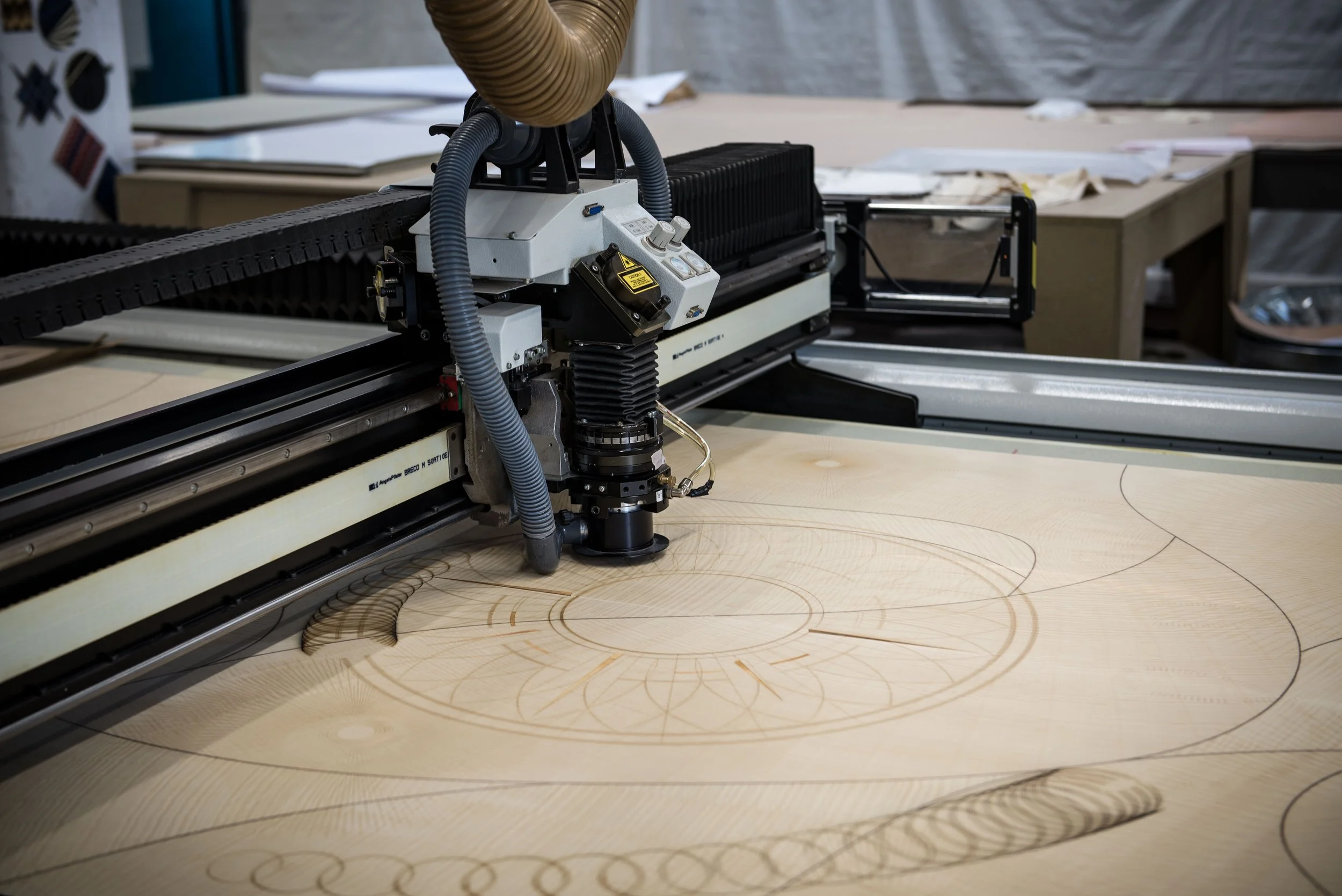
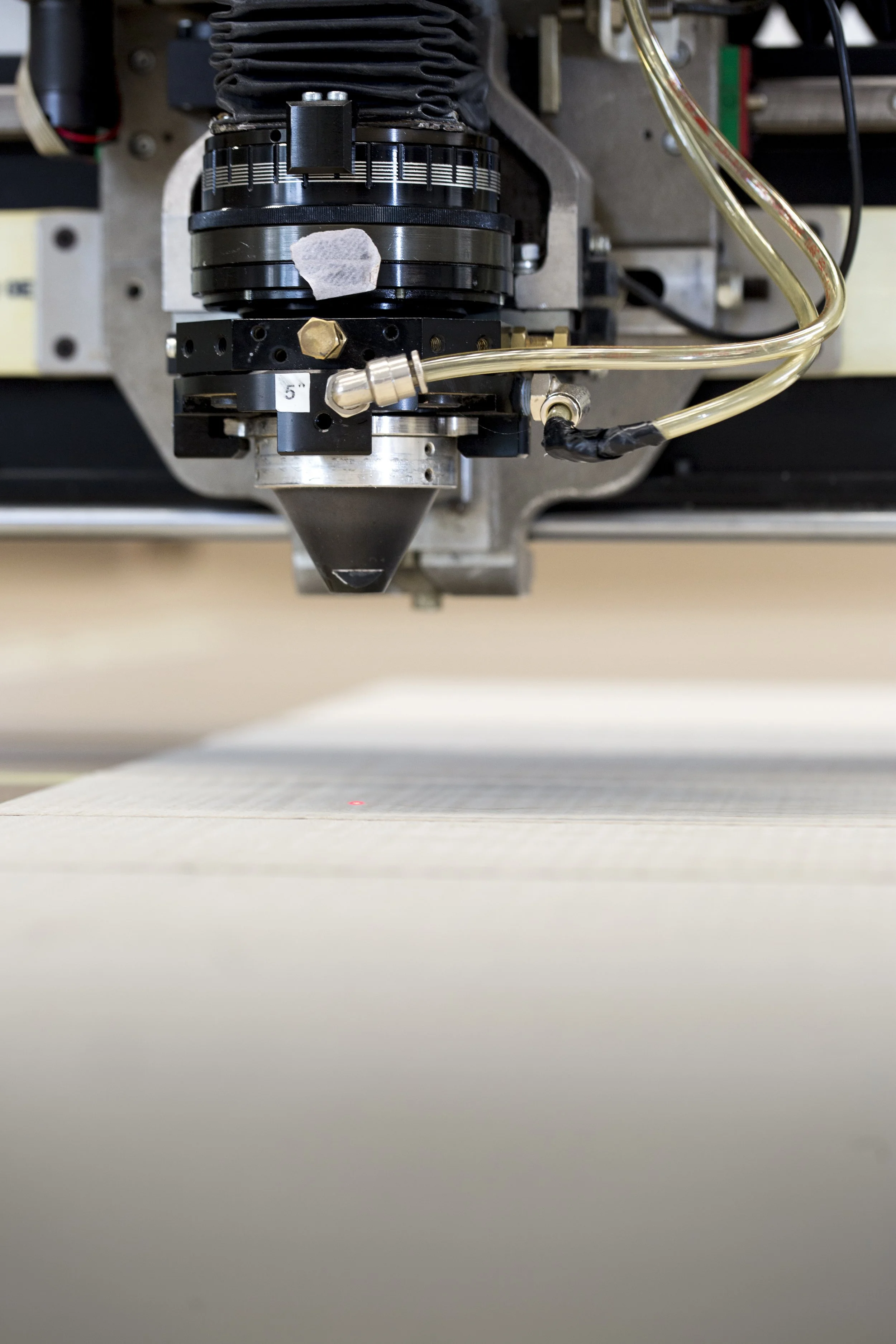
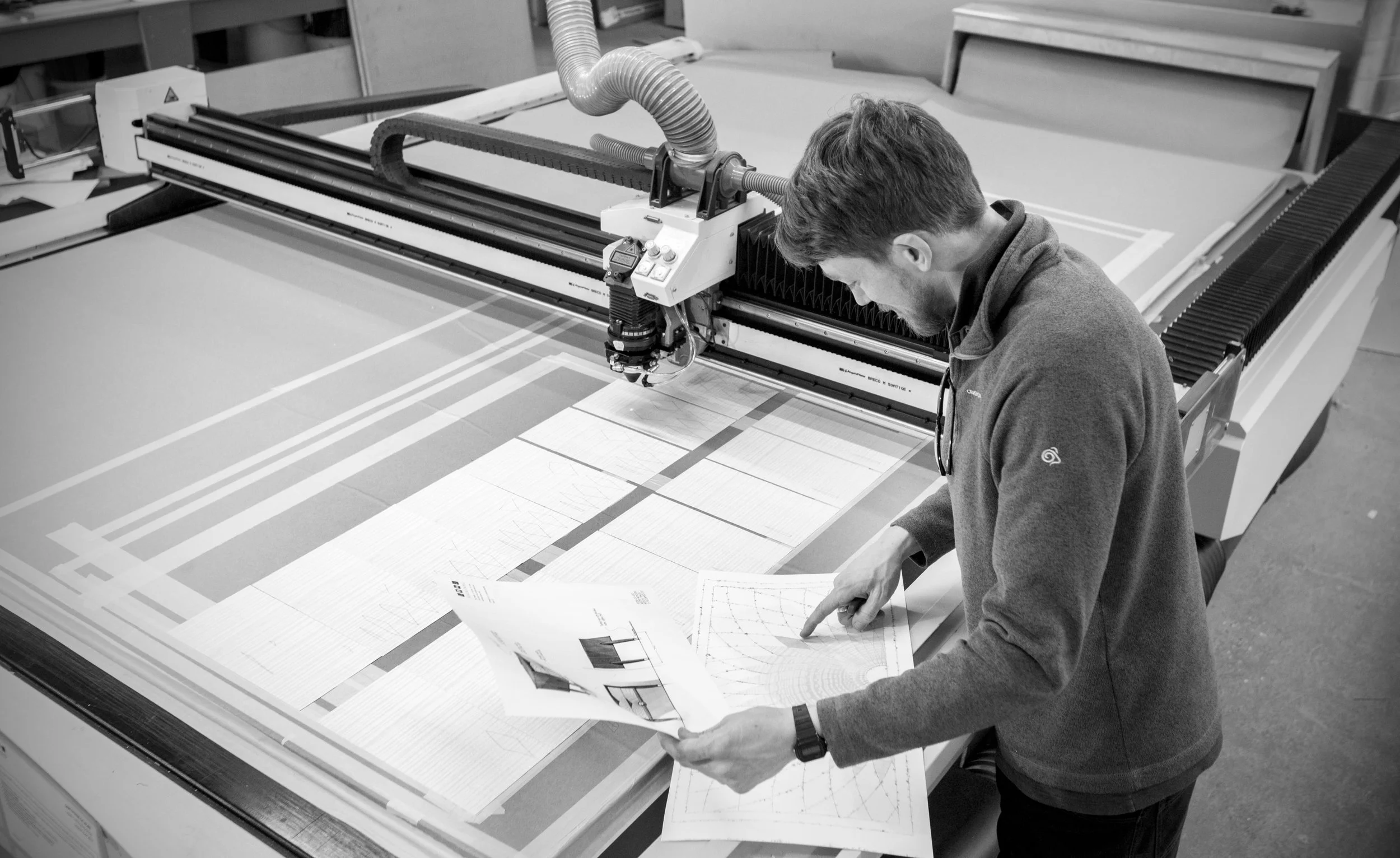
The introduction of laser cutting technology into the furniture workshop did not replace the marquetry maker. It gave them a new instrument. Where a craftsperson with a fine saw might spend days cutting a complex geometric pattern by hand, the laser can produce the same cut in a fraction of the time and to a level of accuracy that opens up entirely new possibilities. Curves that were once prohibitively time consuming become achievable. Patterns of extraordinary complexity become possible at a scale that would previously have been unthinkable.
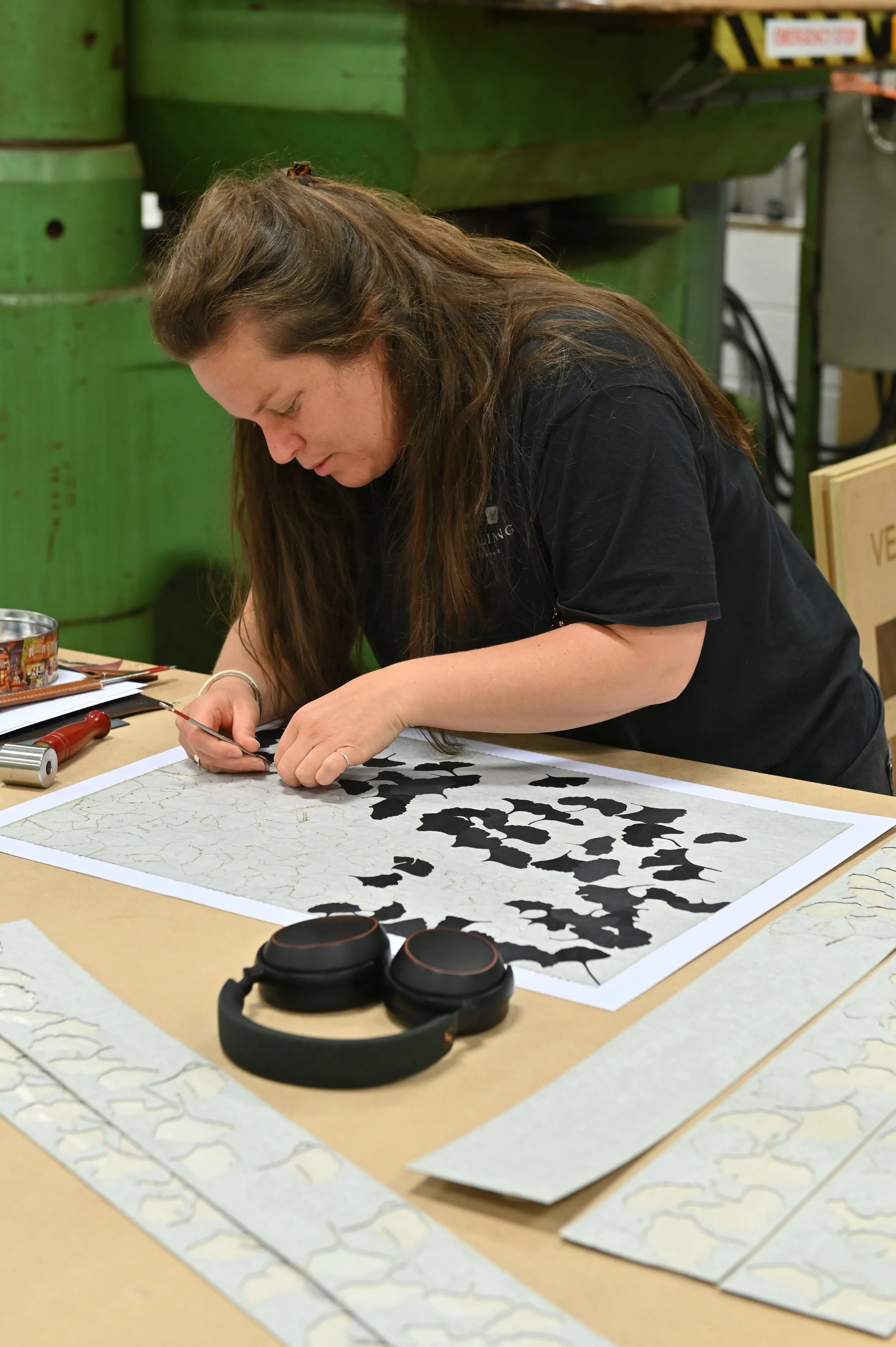
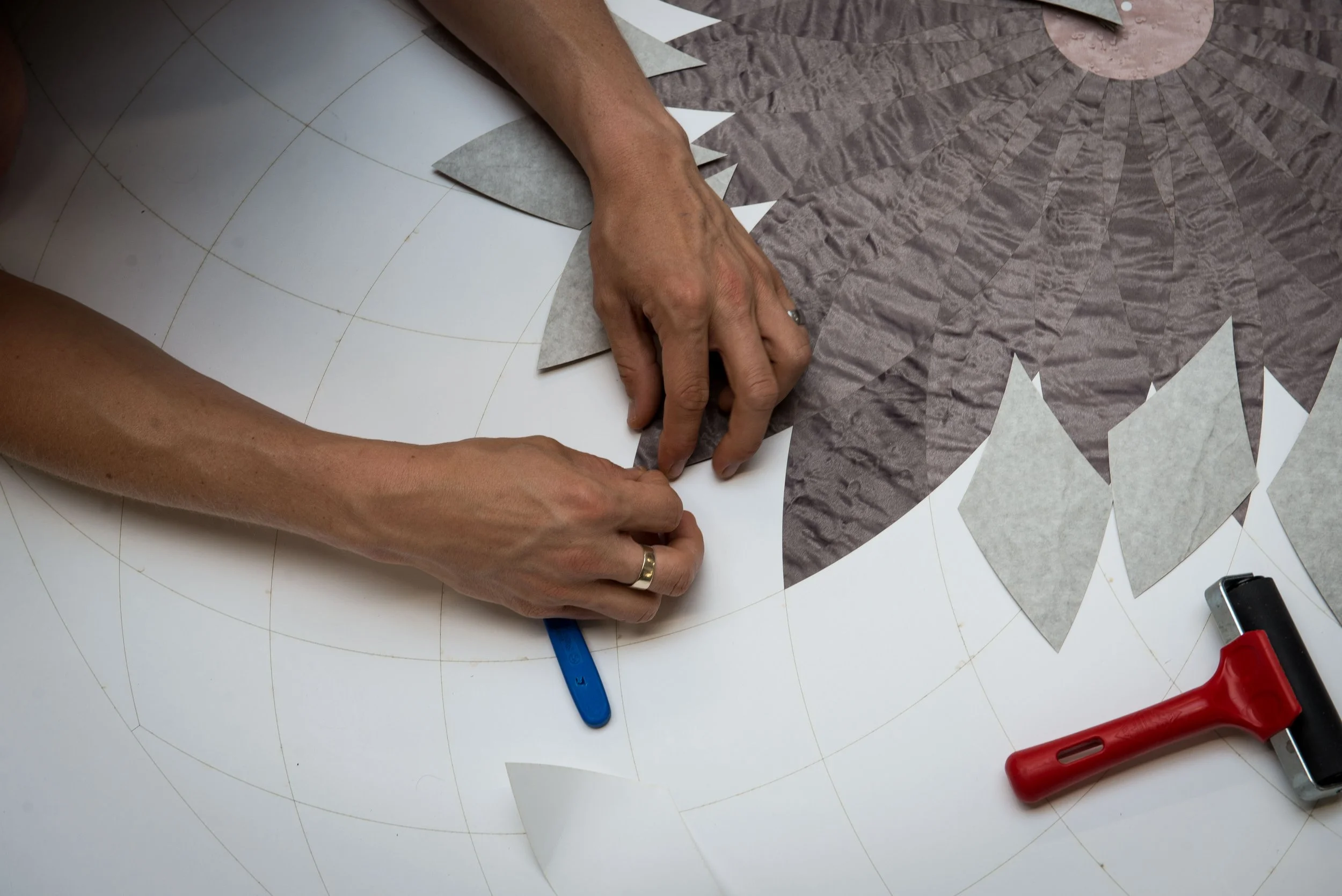
What makes this significant is not the speed. It is what the technology makes available to the maker. At Silverlining, laser cutting and CNC precision are used alongside traditional hand skills rather than instead of them. The technology handles the cutting and the consistency of repeated elements. The craftsperson handles everything that requires judgement, the selection of each veneer for its grain, figure and character, the assembly of the composition, the reading of the material as it comes together. That judgement is not a secondary consideration. It is that judgement which separates a surface that is technically accomplished from one that is genuinely beautiful. No machine can develop an eye for how light will move across a particular piece of figured walnut or understand why one sheet from a log will read differently to the next. Those decisions remain entirely human.
The result is marquetry of a quality and complexity that neither approach could achieve independently. Technological precision gives the maker access to forms and scales that were previously out of reach. Human intelligence gives those forms meaning.
Material as the Starting Point
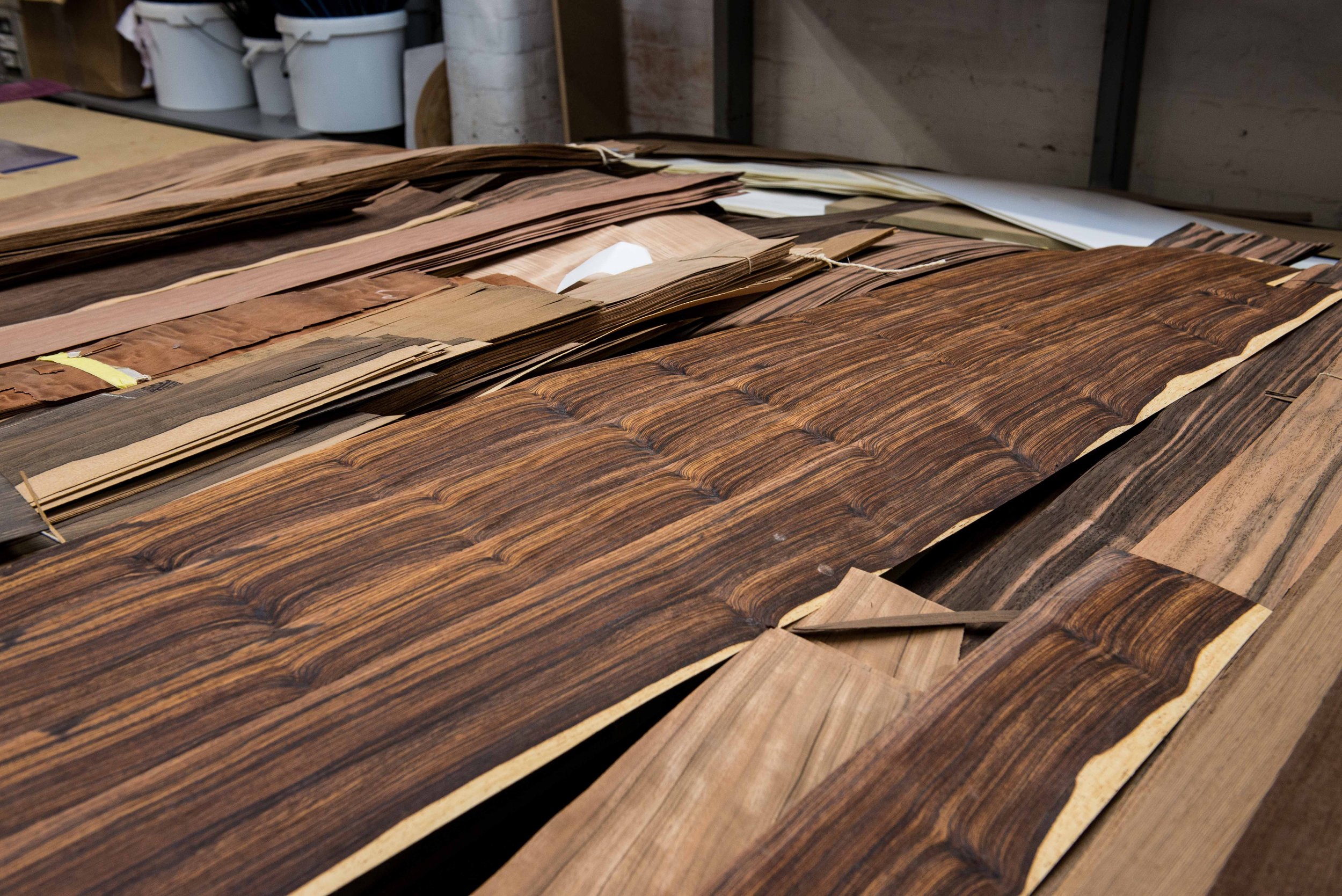
Traditional marquetry worked almost exclusively in wood veneer. What has changed in the modern workshop is the range of materials that can now be incorporated with the same level of precision. Stone inlays, metal stringing and resin elements can all be worked with an accuracy that earlier techniques could not reliably achieve. The boundaries of what constitutes a marquetry surface have expanded considerably.
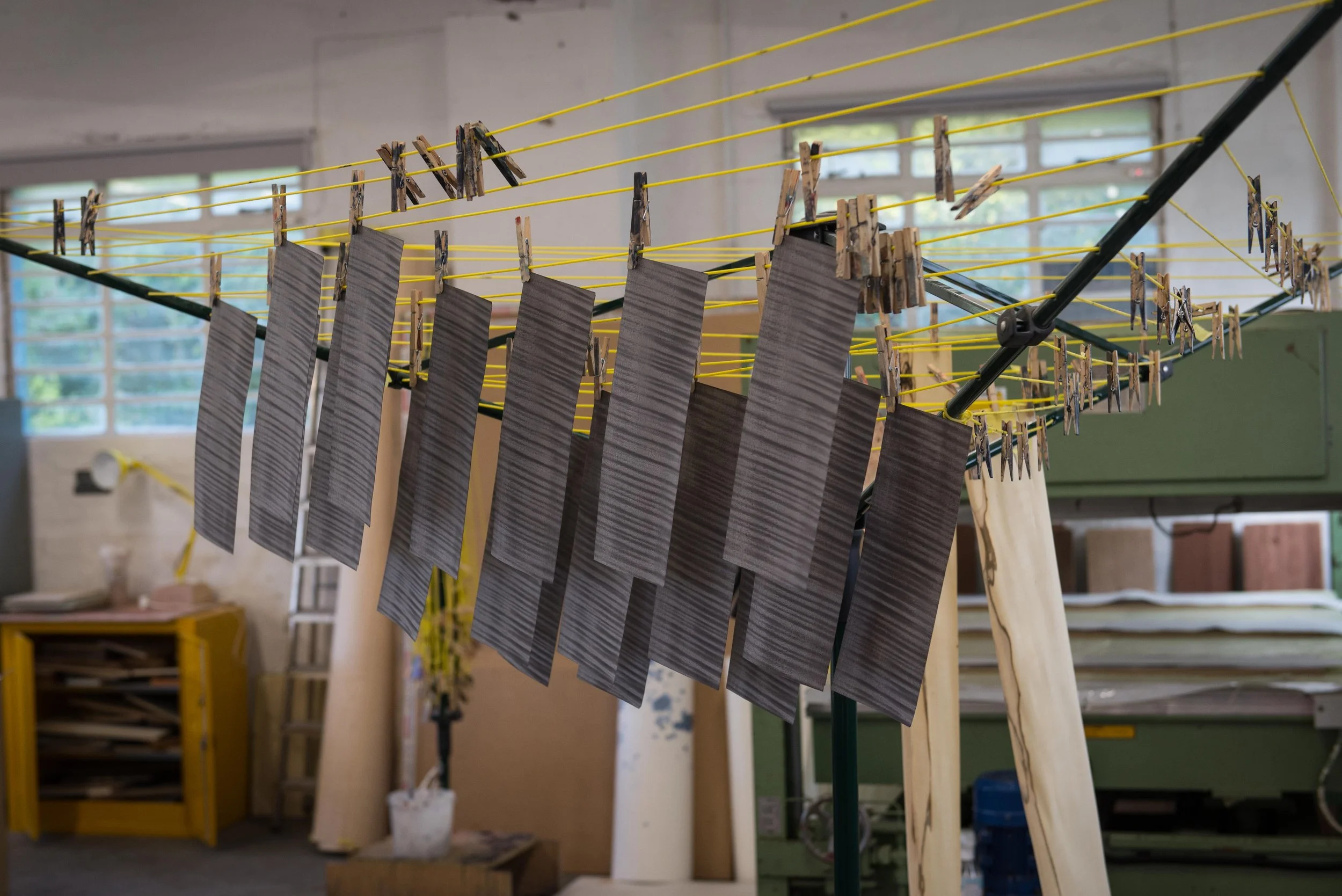
At Silverlining, veneer selection remains the foundation of that expanded material thinking. The choice of timber is not a starting point but a design decision in itself, one that determines how the finished surface will read, age and respond to light over time. Native British timbers including oak, ash and walnut sit alongside rarer species sourced for specific projects. Each sheet is chosen individually for its grain direction, its figure and the way light will move across it in the finished piece. Two sheets cut from the same tree will behave differently and read differently under the same light. That variation is not incidental. It is the material intelligence that gives the surface its life. In a process increasingly assisted by technology, this kind of considered selection is what keeps marquetry connected to the long tradition of the craft.
What Modern Marquetry Looks Like
Two pieces from Silverlining's Provenance and Infinite Possibilities collections demonstrate what has become possible when traditional technique, modern technology and material ambition work together.
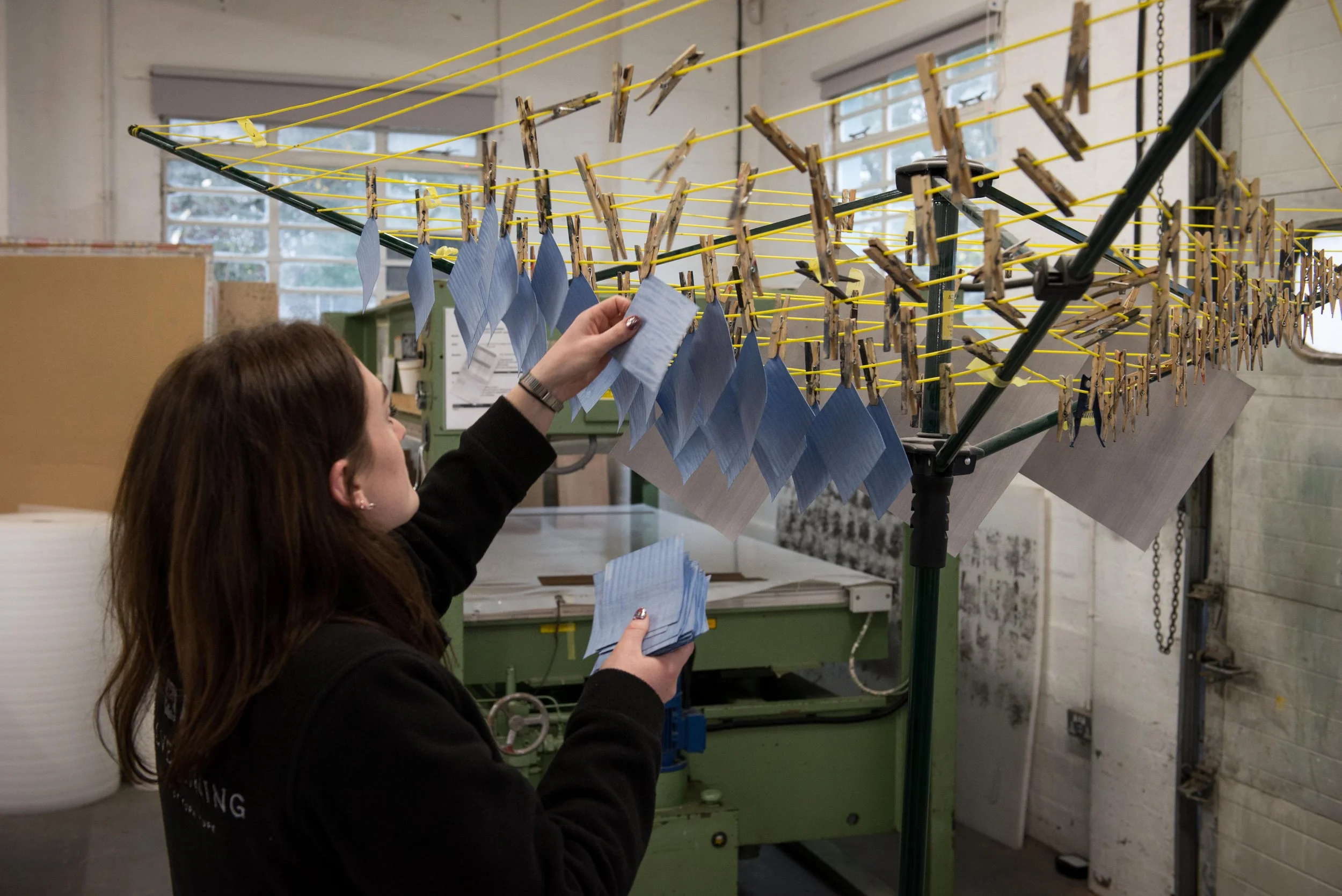
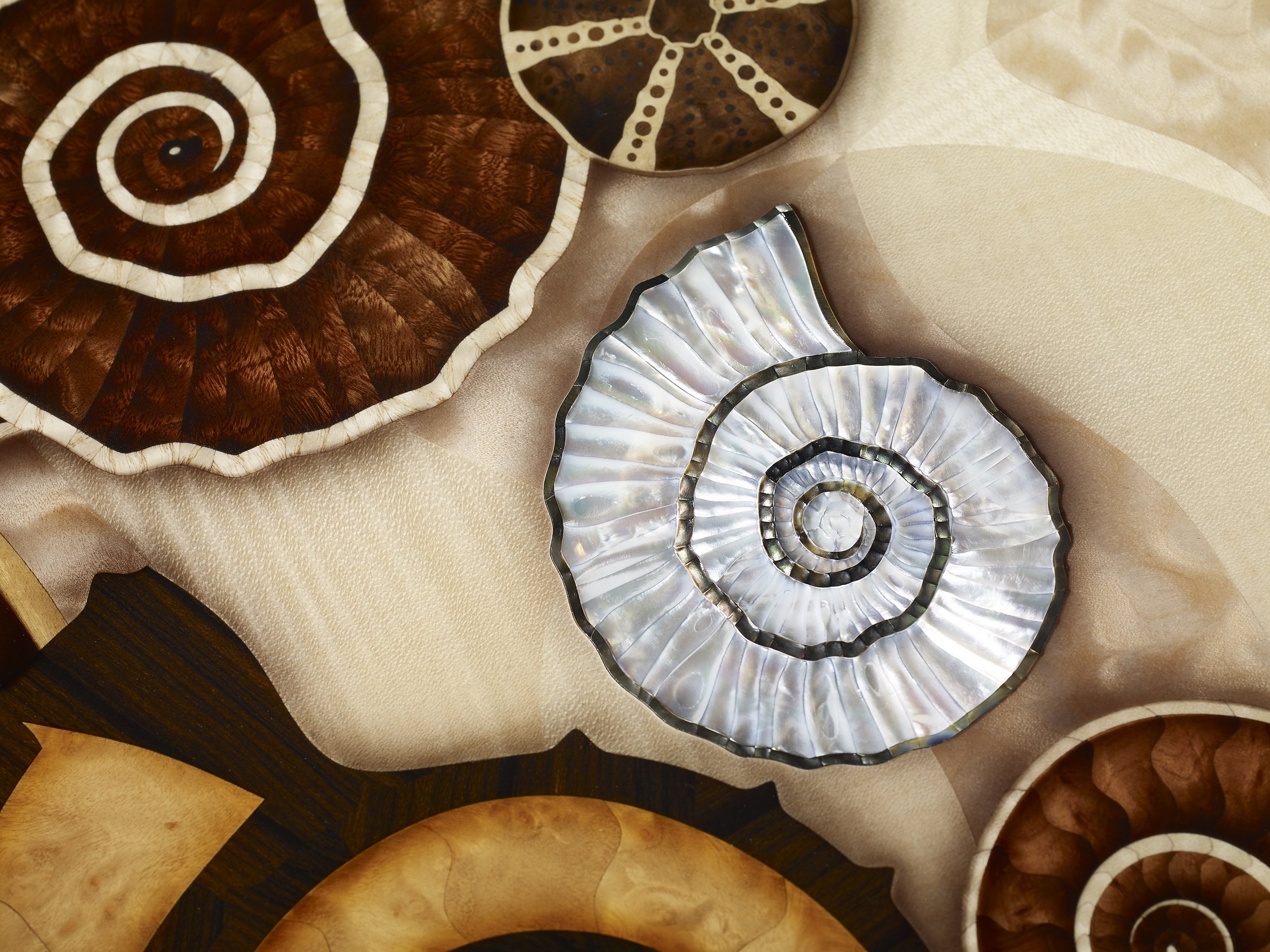
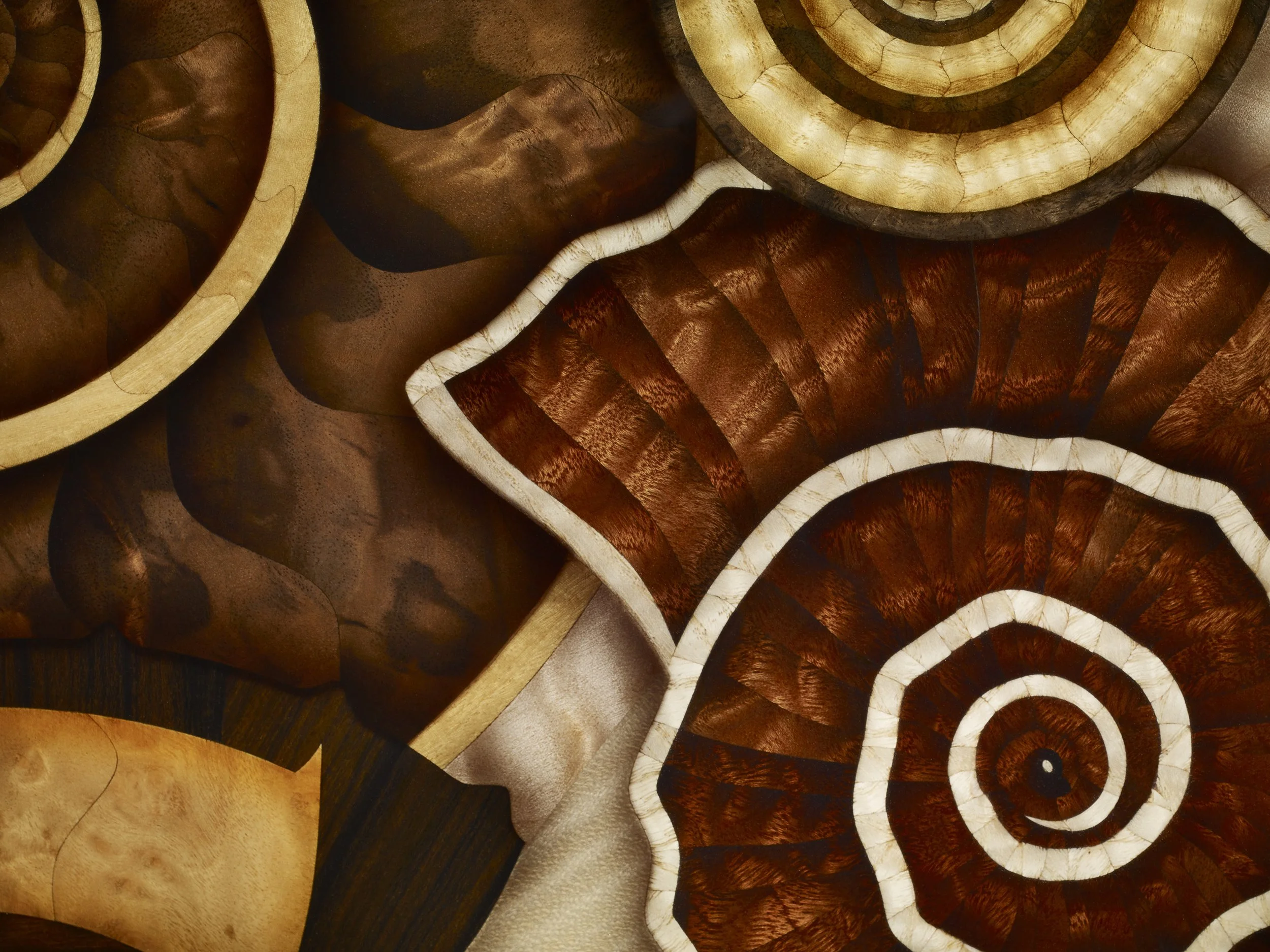
Ammonite Shore takes its inspiration from Britain's Jurassic Coast, the fossils found on beaches such as Robin Hood Bay in Yorkshire translated into surface through a combination of traditional hand-cut wood marquetry and sand shading. The trompe-l'oeil effect, which tricks the eye into perceiving the fossil forms as three-dimensional and lifting from the surface, is the result of painstaking heat shading and considered wood grain selection. At the centre of the composition, a three-dimensional mother-of-pearl detail is achieved using laser and machining technologies, bringing a level of precision to that element that hand cutting alone could not reliably produce. Old and new techniques within a single piece, working together toward something neither could achieve alone.
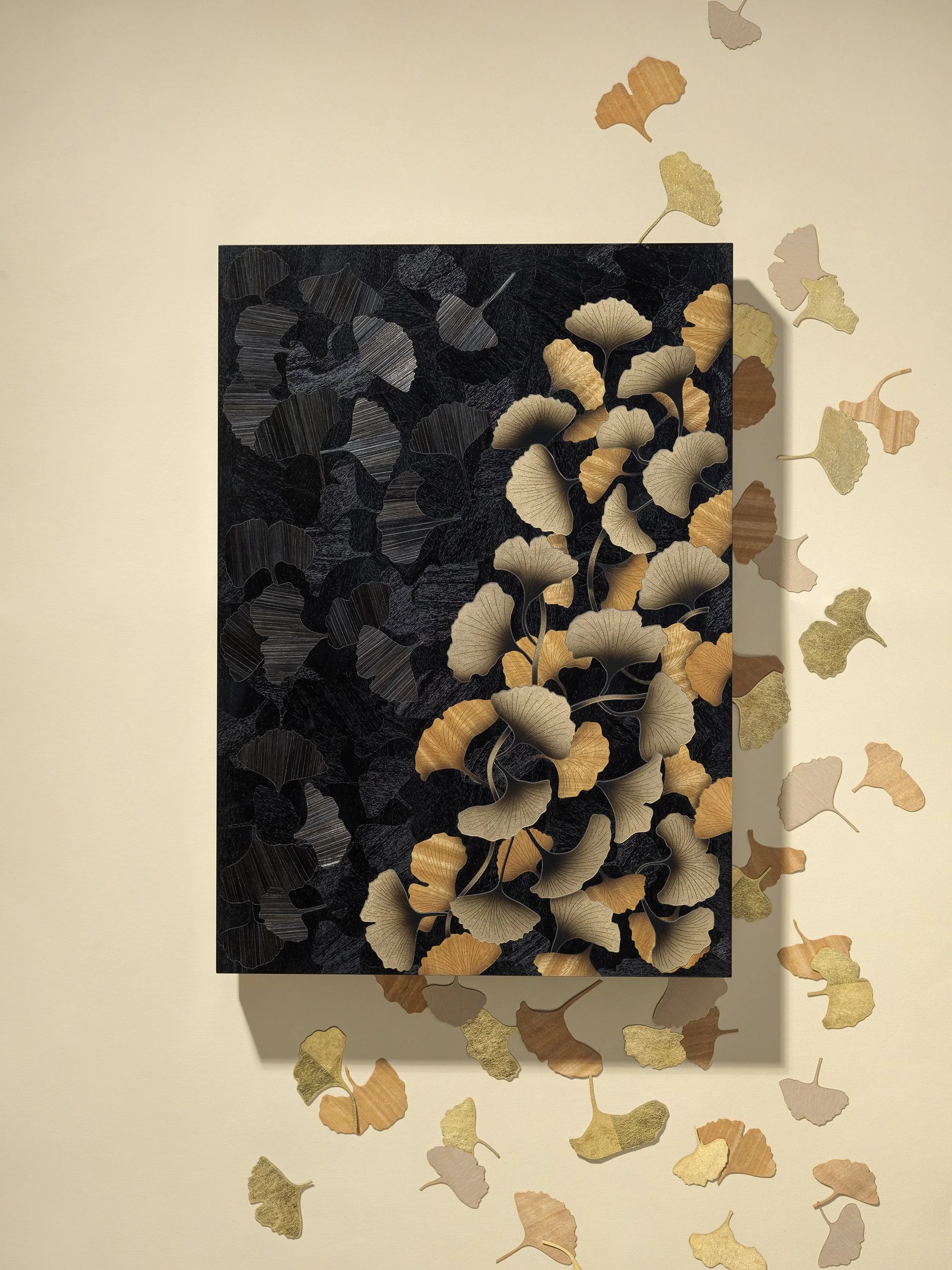
Ginkgo Gold goes further still, introducing artificial intelligence into the design process itself. The ginkgo leaf, one of the oldest living tree species on earth and a symbol of resilience and longevity, was the starting point. AI-enhanced patterns, developed from intricate hand sketches and photography of ginkgo leaves, were then refined before being translated into material. The result is a composition of ebonised Bolivar, satinwood, dyed straw and moon gold leaf of a density and intricacy that could not have been conceived, let alone executed, a generation ago. It is marquetry at the furthest edge of what the discipline has ever attempted.
Together, these pieces describe the full range of what modern marquetry has become. Not a departure from tradition, but an expansion of it, made possible by tools and technologies that the craft's original masters could not have imagined.
A Craft With New Ambition
What technology has given marquetry is not just efficiency. It has given it ambition. The constraints that once limited what was achievable, the time required, the physical difficulty of certain cuts, the inability to maintain consistency across large surfaces, have been significantly reduced. The craftsperson working today can attempt compositions that have previously been beyond reach.
At Silverlining, that ambition is expressed in work that spans private residences, superyachts and collectible design. The techniques evolve with each project. The materials expand. The possibilities continue to open.
Marquetry spent decades defined by what it was losing. It is now defined by what it is becoming.
Subscribe to our newsletter
Sign-up to receive our newsletter and discover our stories, collections and latest innovations.


