
For centuries, a dining table was expected to look the part and to seat however many guests a gathering required. A cloth was thrown over the surface to dress it. A second table was wheeled in when the first would not stretch far enough. Not until the turn of the nineteenth century was either problem solved by the table itself.
A Habit Older Than the Reason for It

The earliest table coverings, the Roman mappa, existed purely to catch mess, doubling as a napkin for wiping hands and mouths during a meal. That practical role held for centuries, a cloth caught spills and protected the wood beneath, nothing more. It was in the Victorian era, as textiles grew more elaborate, that cloth shifted from protection into something closer to a marker of status, dressing a table the way a room might be dressed with curtains or a rug. That shift is barely two hundred years old, closer to a trend than a fixed rule.
A surface built to be looked at, rather than simply protected, was never really part of the original idea. It is something a bespoke table has to earn for itself, and it can only make that case once a piece is designed with enough intent, in material, pattern and form, that covering it would mean hiding the very thing that makes it worth having.
Solving the Size Problem First
The same instinct, solving a table's shortcomings by adding to it rather than redesigning it, shaped how a table grew to fit more guests. Before 1800, seating more people meant adding an entirely separate table alongside the first, which is where the old auctioneer's term "a set of dining tables" comes from. Richard Gillow patented the telescopic extending table in May 1800, known as the "Patent Imperial," the first table designed to grow and shrink as one object rather than several. The idea proved so useful that a dozen further patents followed across Britain and France over the next sixty years, each one refining how a heavy leaf could be moved into place without strain or damage.
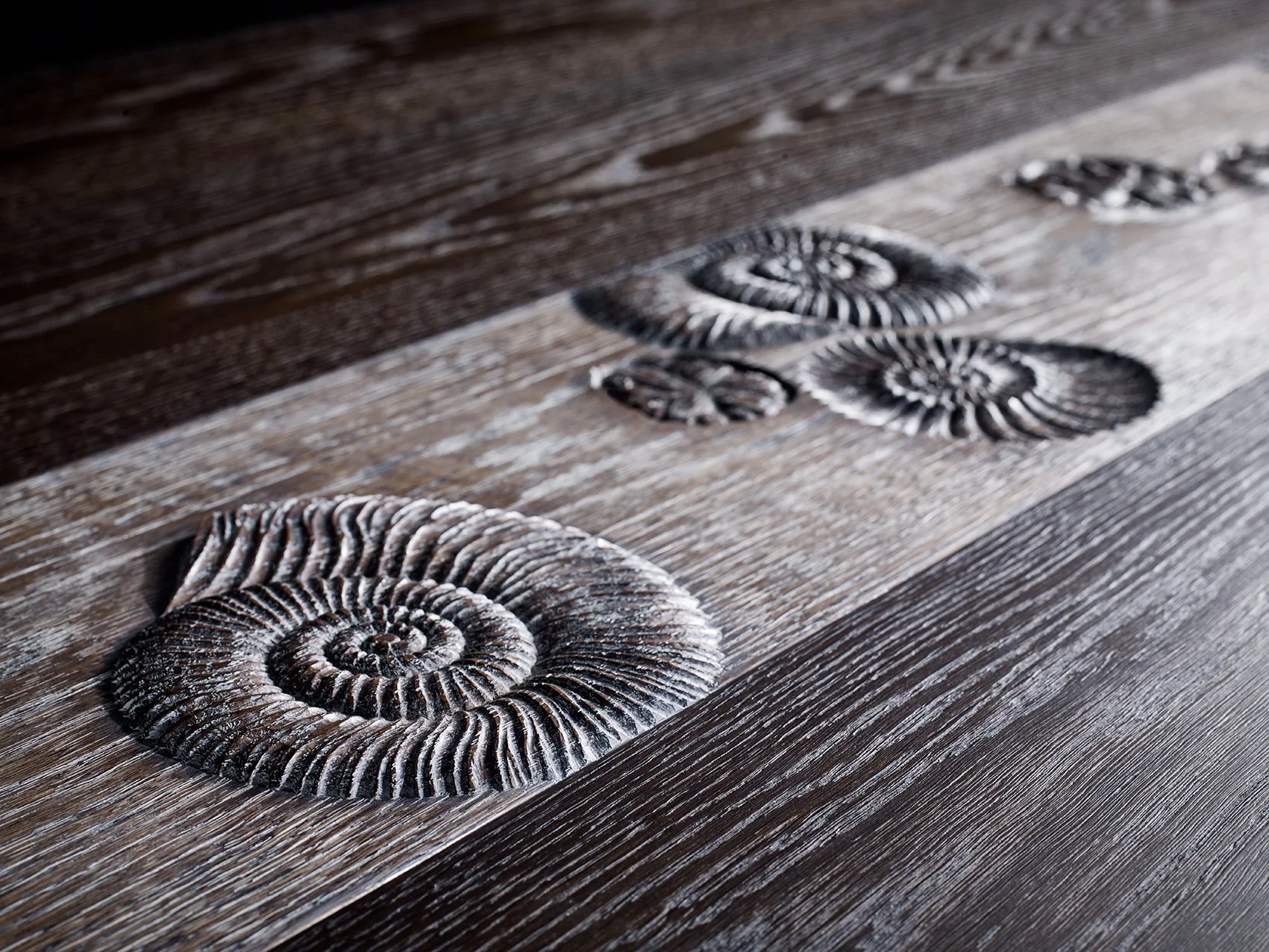
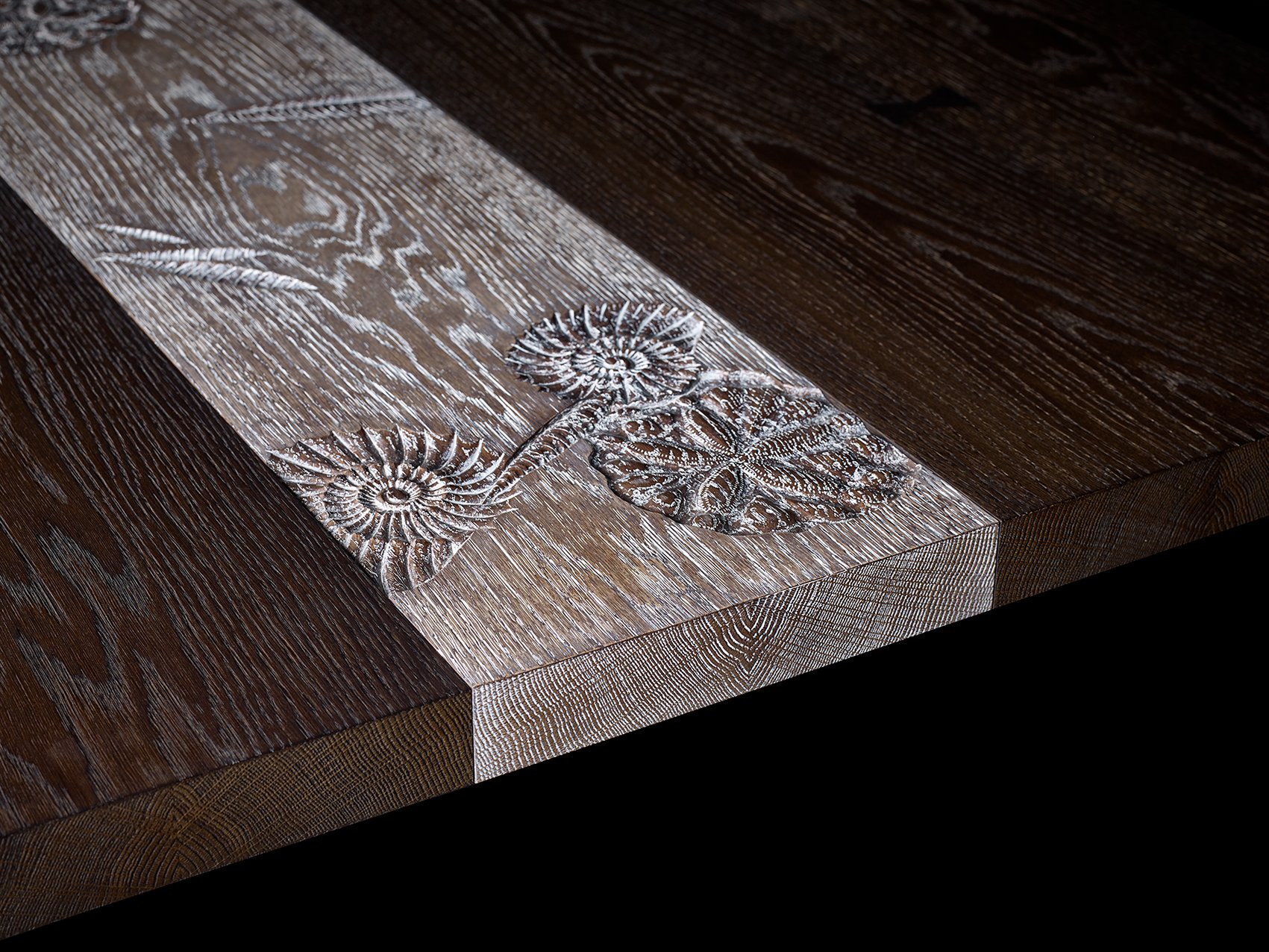
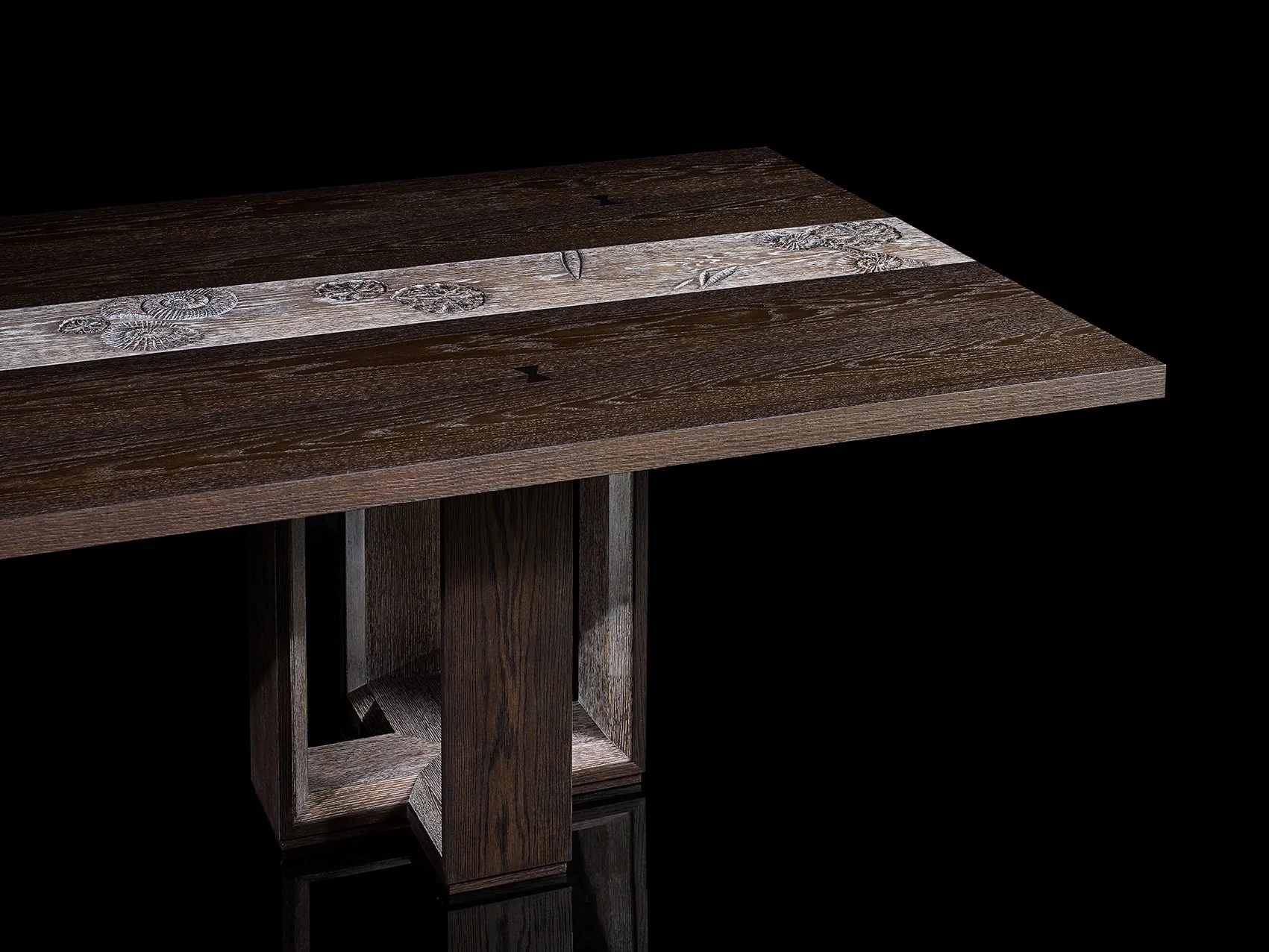
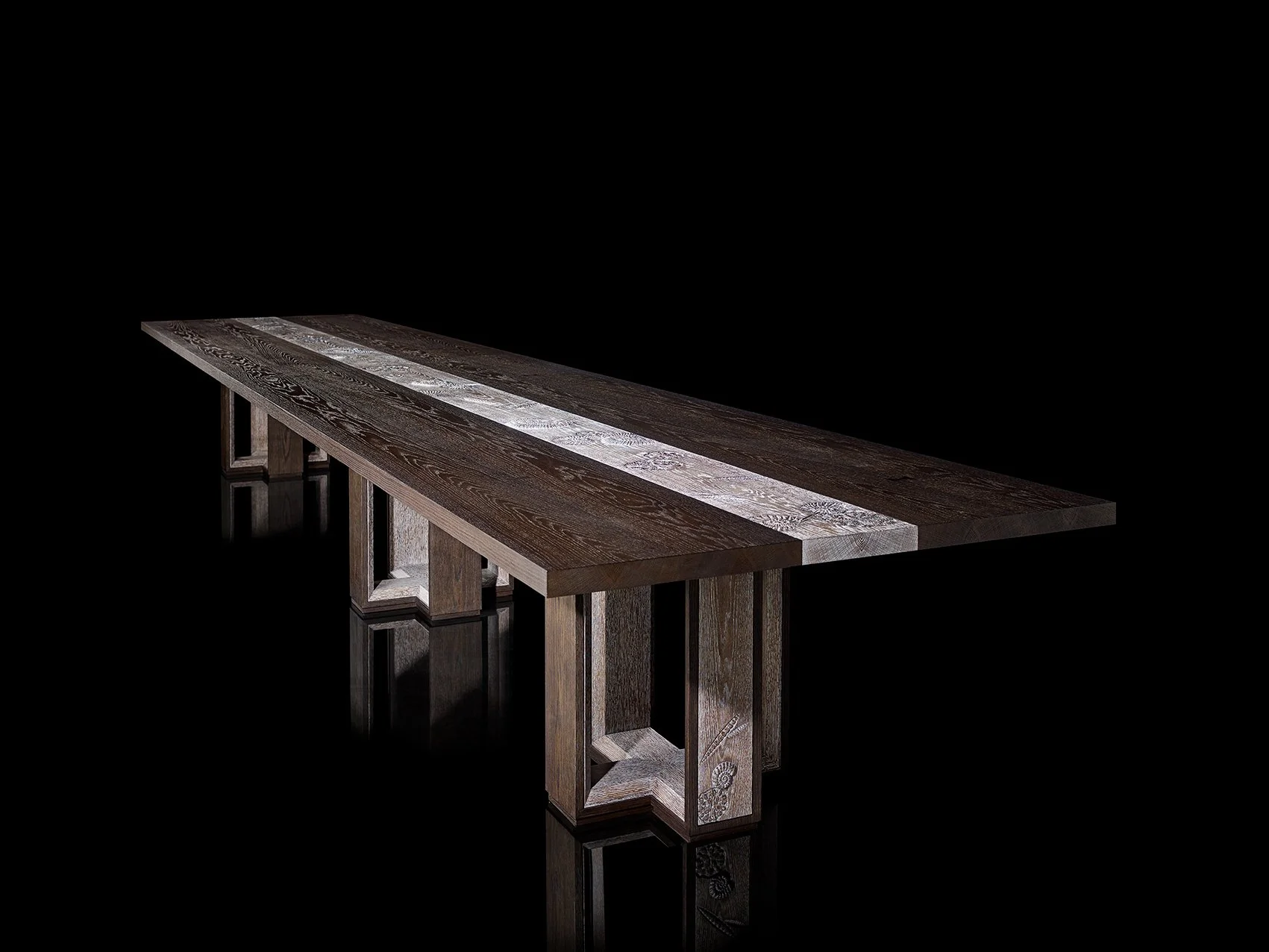
The Fossil Dining Table, made for a Cotswolds residence in collaboration with interior designer Taylor Howes, extends on exactly this principle, its fumed oak pedestals and top built to shift in size without losing the line of the piece. Its central spine, carved in shallow relief, meaning the fossil forms sit gently raised from the surface rather than deeply cut into it, draws on the Jurassic geology of the surrounding landscape. It proves the two problems were never separate. A table built to change size without losing its identity can carry a surface worth close attention at the same time.
Why the Surface Started to Matter
The idea that a tabletop could carry its own decoration, rather than simply be covered, took hold once veneering made it possible. Thin sheets of wood, cut with precision once the fretsaw arrived in the sixteenth century, meant a surface could carry pattern and detail directly, rather than relying on carving or paint. André-Charles Boulle is the name most closely tied to pushing that idea onto furniture specifically, tortoiseshell, brass and pewter set into wood across tabletops and cabinets in intricate pattern. A table's surface stopped being something to protect and became something to design.
At the quiet end, the Fossil table's carved spine makes its case through a single material and a single technique, oak carved and left otherwise plain, trusting the story in the surface rather than adding to it.
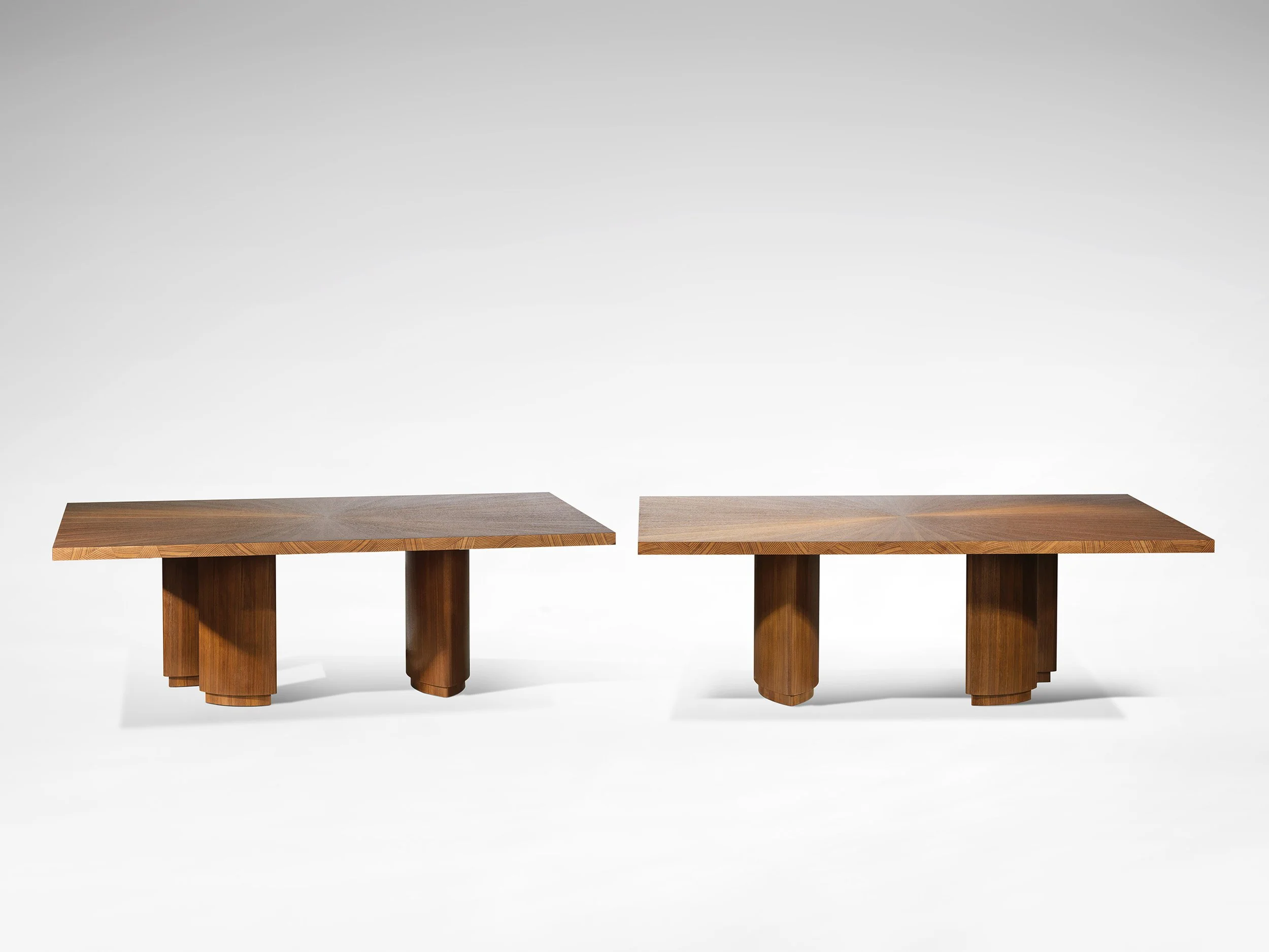
At the far end sits the Duo Dining Table. Where the Fossil table still hides the mechanism it depends on, revealing only the surface above it, Duo goes one step further and hides nothing at all. Made for a private residence in London to answer a very specific brief, a table that could seat everyone for a weekend gathering, then shrink back down for everyday, intimate use, the commission rejected an extending mechanism entirely. Two whole tables were built instead, each with its own complete starburst pattern in walnut marquetry radiating from its own central medallion. The two patterns are engineered to align precisely where the tables meet, the starburst rays continuing cleanly across the seam when joined, while a stacked leather edge, layered with enough precision to be mistaken for solid timber, frames each table and marks the join when they are used apart.
Two centuries after Gillow solved the sizing problem by building the mechanism into the table and hiding it from view, Duo solves the same problem by doing the opposite. The join is not disguised. It is the most deliberate part of the piece.
Subscribe to our newsletter
Sign-up to receive our newsletter and discover our stories, collections and latest innovations.


