
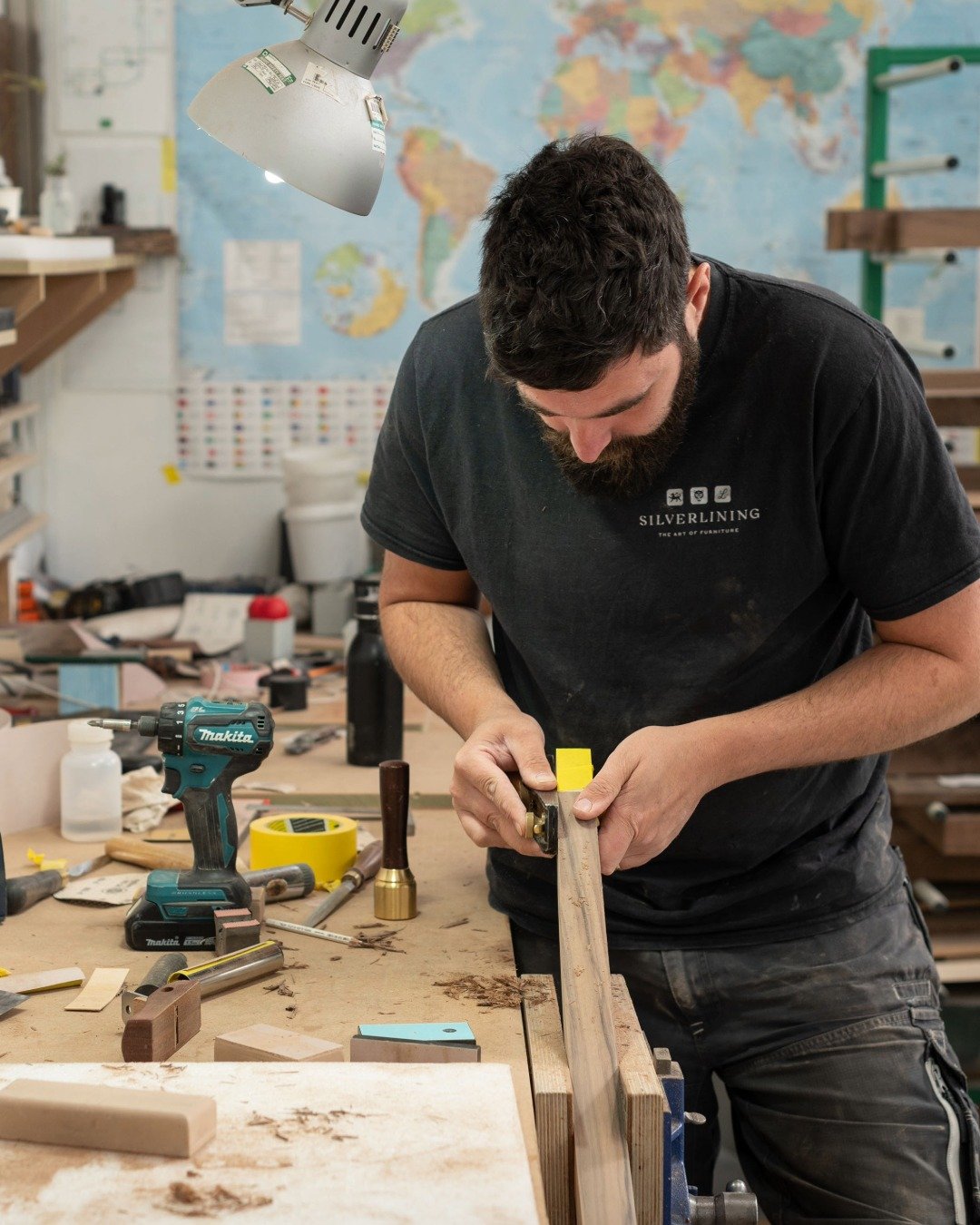
Silverlining is a place where traditional hand skill and new technology exist side by side, each given room to do what it does best. That is not a compromise, and it is not two things in tension with one another. It is how the workshop has evolved, and how the craft continues to move forward.
The Case for Redefinition
Heritage Crafts' 2025 Red List of Endangered Crafts assessed 285 traditional UK crafts and found 165 at risk, 72 critically endangered and a further 93 endangered, up from 84 just two years earlier. The reasons cited are consistent across almost every craft on the list: an ageing workforce, difficulty recruiting apprentices, shrinking markets, and the rising cost of materials and workspace.
These figures reflect a genuine risk, one Silverlining takes seriously rather than dismissing. The real question is not whether hand skill is under threat, but what a workshop does about it. Retreating from new tools out of loyalty to tradition does not solve any of the problems on that list. What does help is a workshop willing to invest in people, adopt new tools deliberately, and give a craft new reasons to matter to the next generation of makers. That is the position Silverlining has chosen to take.
Technology in Service of the Craft
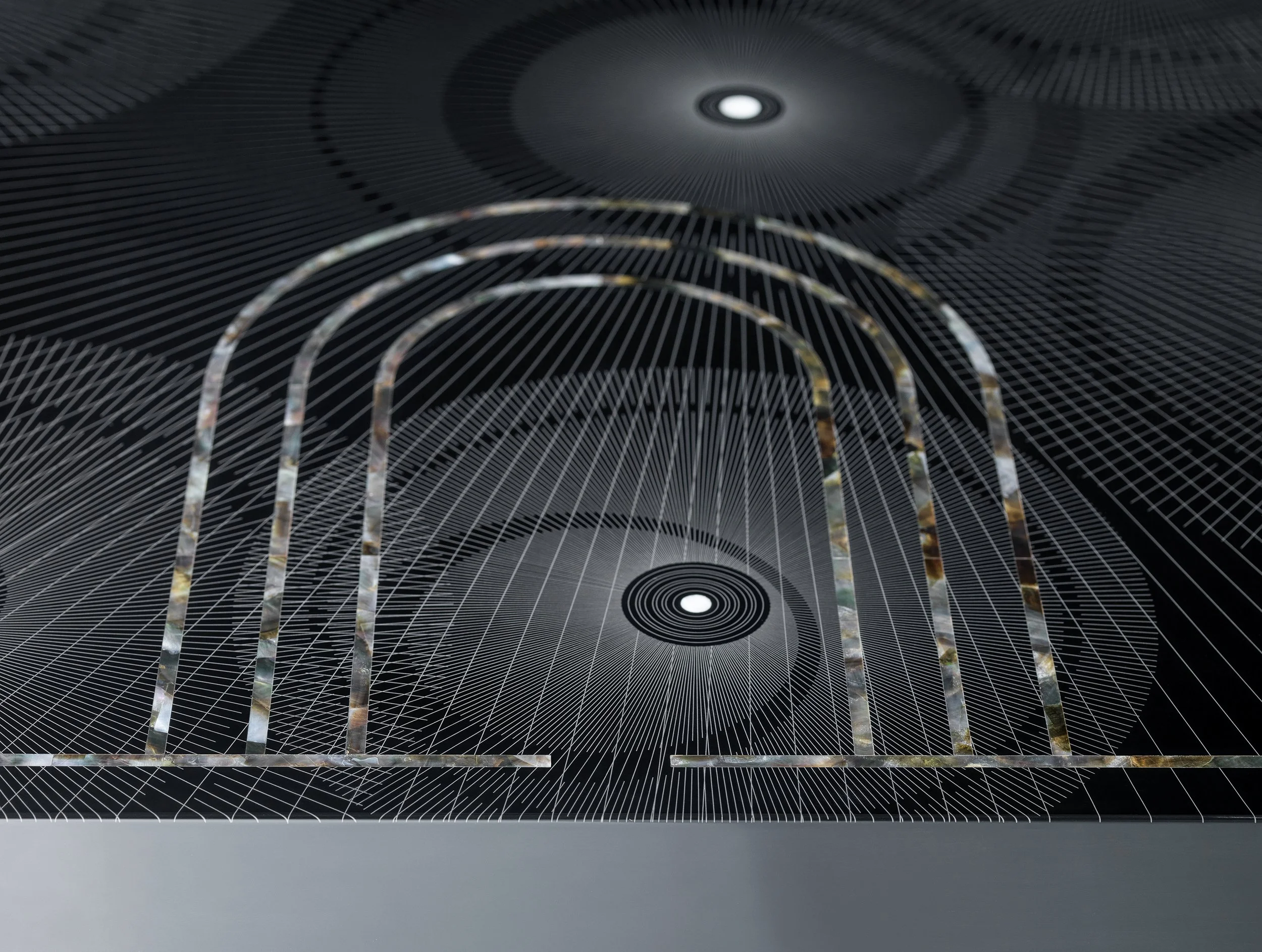
CNC machining and laser cutting were brought into the workshop not as a shortcut, but as a way of taking the craft further, opening up forms, patterns and levels of precision that push what a piece of furniture can become. The Owner's Desk, made for the 122-metre motor yacht Kismet with Reymond Langton Design, is finished entirely by hand, from the pedestals in black shagreen and coach-hide leather to the drawer interiors in American black walnut. At its centre, a micro-etched "Cosmic Compass" pattern in white bronze metallised resin and mother-of-pearl brings laser etching into that same hand-finished piece, a level of intricacy no hand tool could achieve at that scale. The piece itself is described as uniting time-honoured hand skill with the latest laser etching technology, and that pairing captures exactly how the two work together at Silverlining, each bringing something new.
At Silverlining, learning a new tool sits alongside mastering a traditional one, both are simply part of what it means to keep developing as a maker.
Why Hand Skill Still Leads
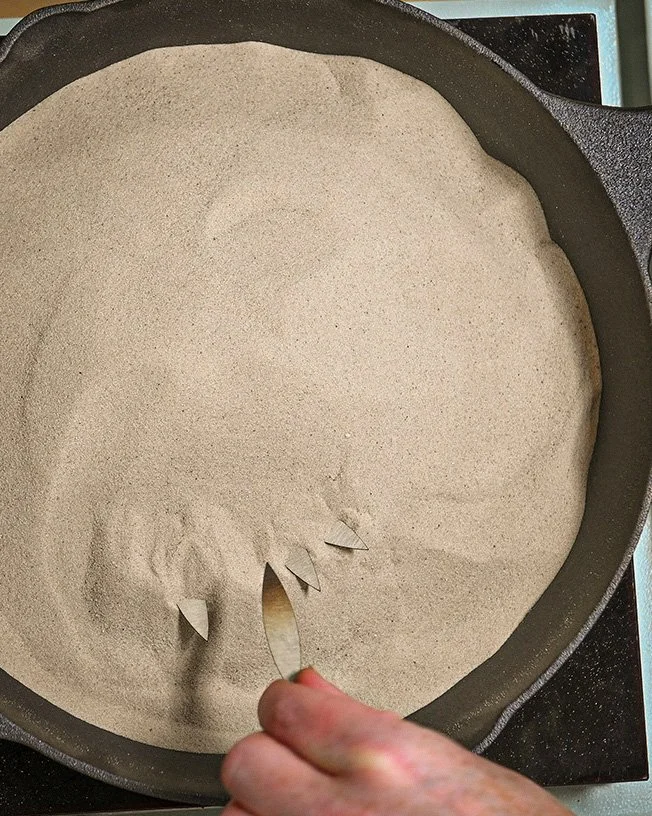
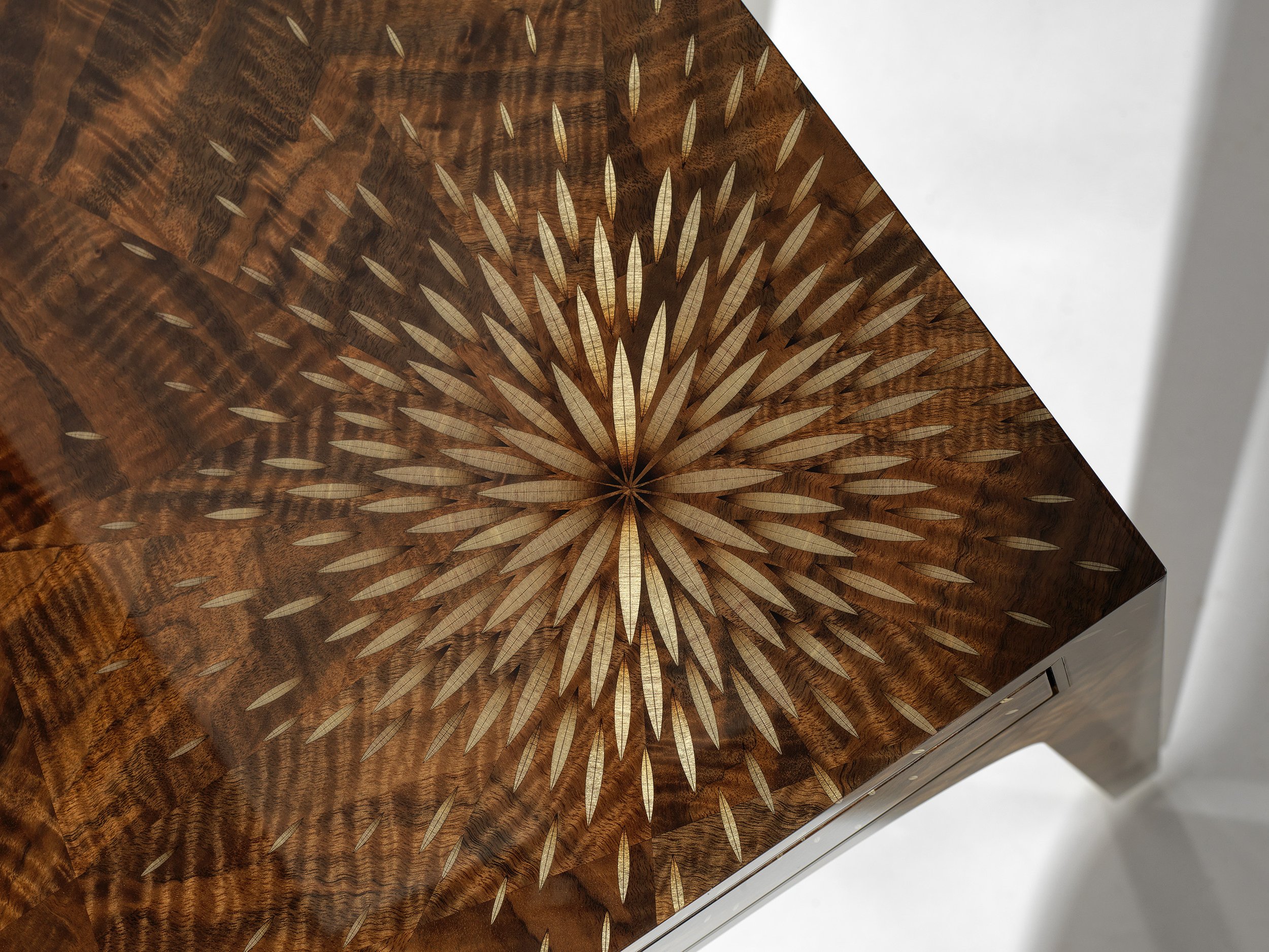
Some techniques are chosen deliberately, not because a machine could not replicate the pattern, but because nothing else produces the same result. The Firework Desk, designed with Studio Lodha, carries hand-cut maple veneer in radiating bursts, finished using sand-shading, dipping veneer in hot sand to scorch graduated shading into the grain. Every scorch mark varies slightly from the last, shaped by the maker's hand and eye in the moment, giving the piece a character entirely its own. Choosing this technique is what keeps the skill genuinely alive rather than preserved as a museum piece. A technique only survives if it keeps being used on real, current work, and Silverlining treats that as a responsibility, not a nostalgic choice.
A Culture That Pushes Further
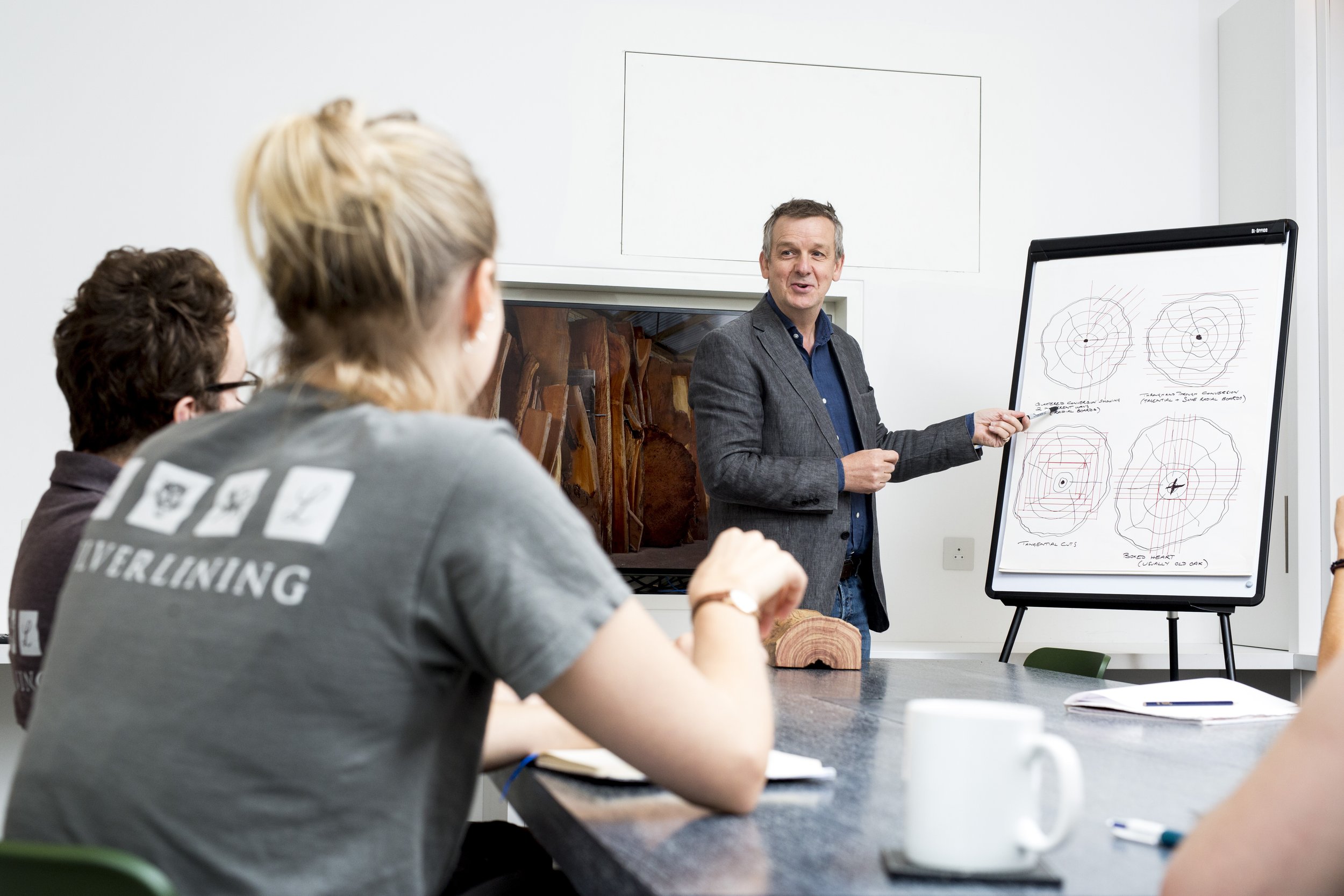
None of this happens by accident. Craftspeople at Silverlining are actively encouraged to take their own skills further, to explore new techniques, test new materials, and push a familiar process somewhere it has not been before. That culture is what allows new tools to be adopted without ever losing the depth of hand skill behind them, and what allows centuries-old techniques to keep being reinvented rather than simply repeated. Across more than forty-five years, Mark Boddington has personally trained and mentored over 112 craftspeople, work that continues today across thirty four craft disciplines under one roof, a workshop built specifically to give skill room to keep growing.
When the Finished Piece Demands Technology
There is a real difference between technology used to make a piece and technology built into what a piece does. The first asks a maker to direct a tool with precision. The second asks something harder, to take engineering that belongs to an entirely different discipline, mechanical, electrical, and make it disappear seamlessly inside a piece of furniture, so it still feels handmade rather than assembled. That is a new kind of craftsmanship, not a threat to the old one. A maker trained only in hand tools would find a brief like this daunting, wiring, electronics and mechanisms sit entirely outside traditional training. A maker who has also learned to work alongside technology is better equipped for exactly this kind of demand, one that is only becoming more common as clients expect furniture to do more than simply look and feel right.
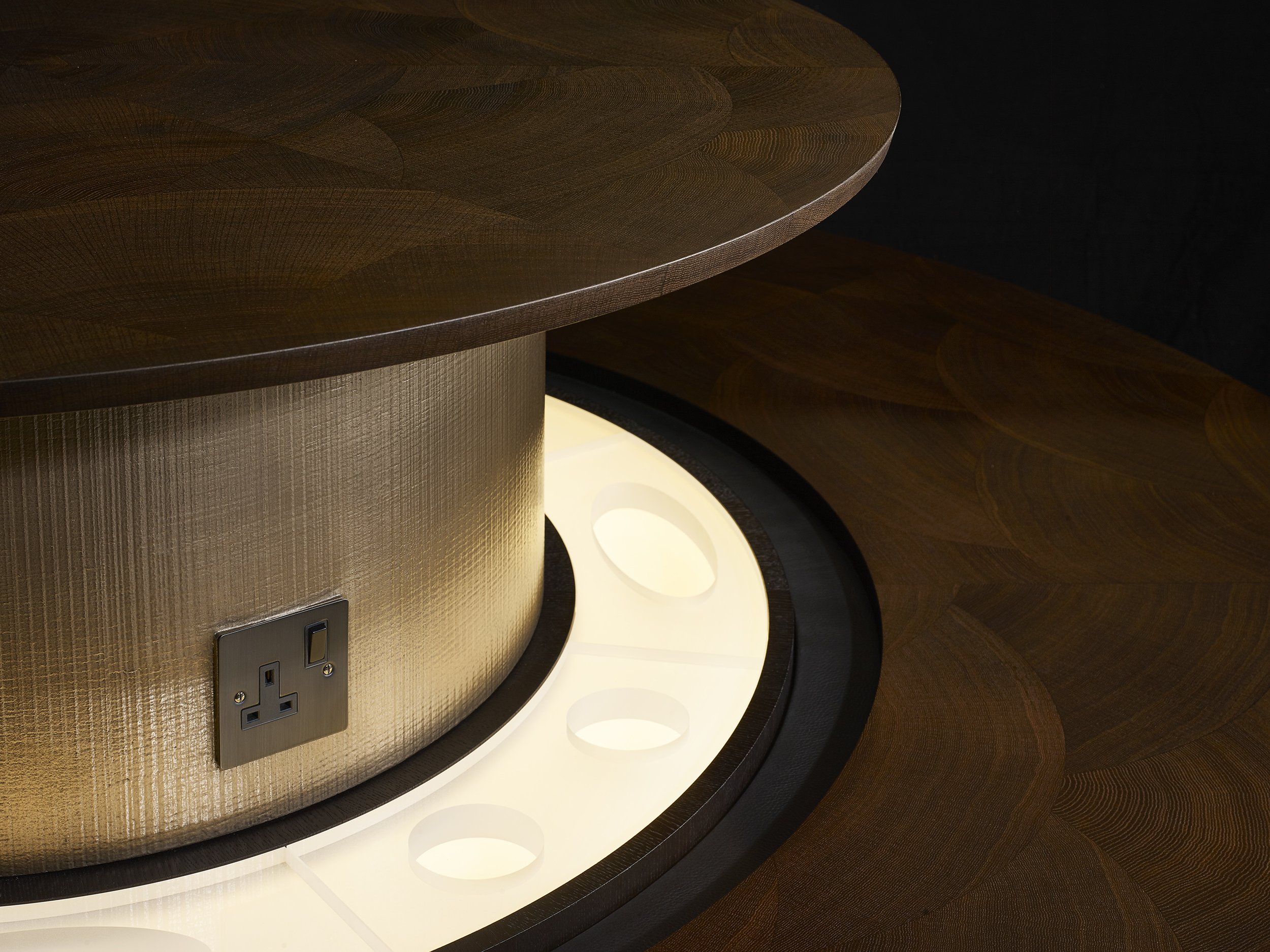
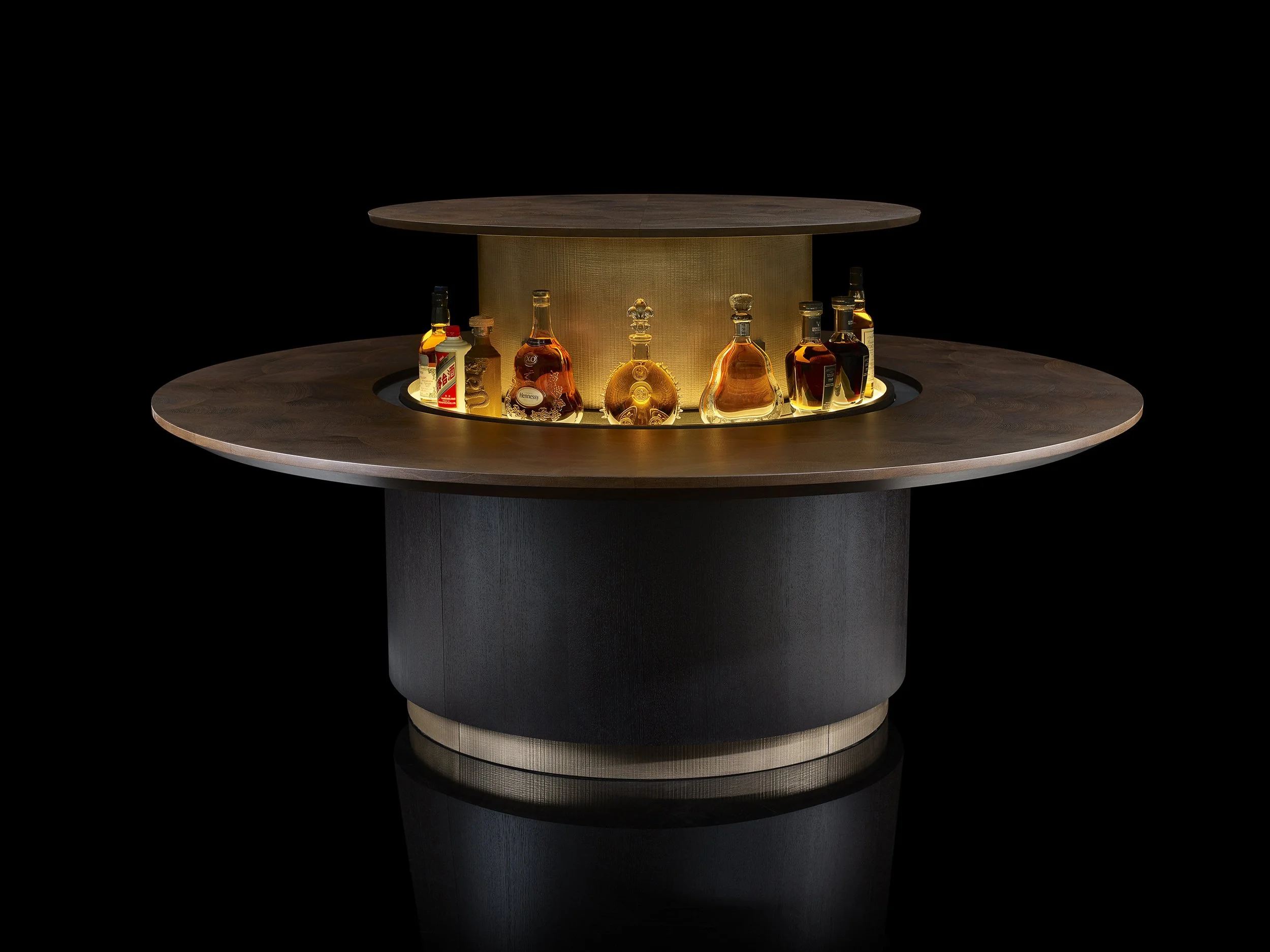
The Entertainment Dining Table, designed with GDA Architects, carries an electronic rotating lazy Susan and a backlit pop-up drinks cabinet, technology that has nothing to do with how the table was built, and everything to do with what it needs to deliver once finished. Making mechanics like this disappear entirely into fumed oak and bronze metallised resin, so the piece still reads as furniture rather than a mechanism on display, takes exactly the same eye and patience that shapes a hand-carved surface, applied to a genuinely new problem.
Silverlining's View
Craftsmanship at Silverlining is not standing still, and it never has been. It continues to grow, taking on new tools and new techniques exactly where they help take a piece further, while holding onto everything that has always made the workshop what it is, judgement, patience, and the eye of a maker who knows when a piece is truly finished. That is not a departure from craftsmanship. It is craftsmanship, continuing to define itself.
Subscribe to our newsletter
Sign-up to receive our newsletter and discover our stories, collections and latest innovations.


