
There is something unusual about designing a piece of furniture for one person alone.
A vanity is experienced at close range, as part of a daily ritual: the way someone sits, what they reach for first, where their jewellery is kept, how a drawer opens, how the light falls across a mirror. Where much furniture is measured by how it serves a room full of people, a vanity is measured by how precisely it answers the habits of one.
Perhaps that is why designers have returned to it again and again.
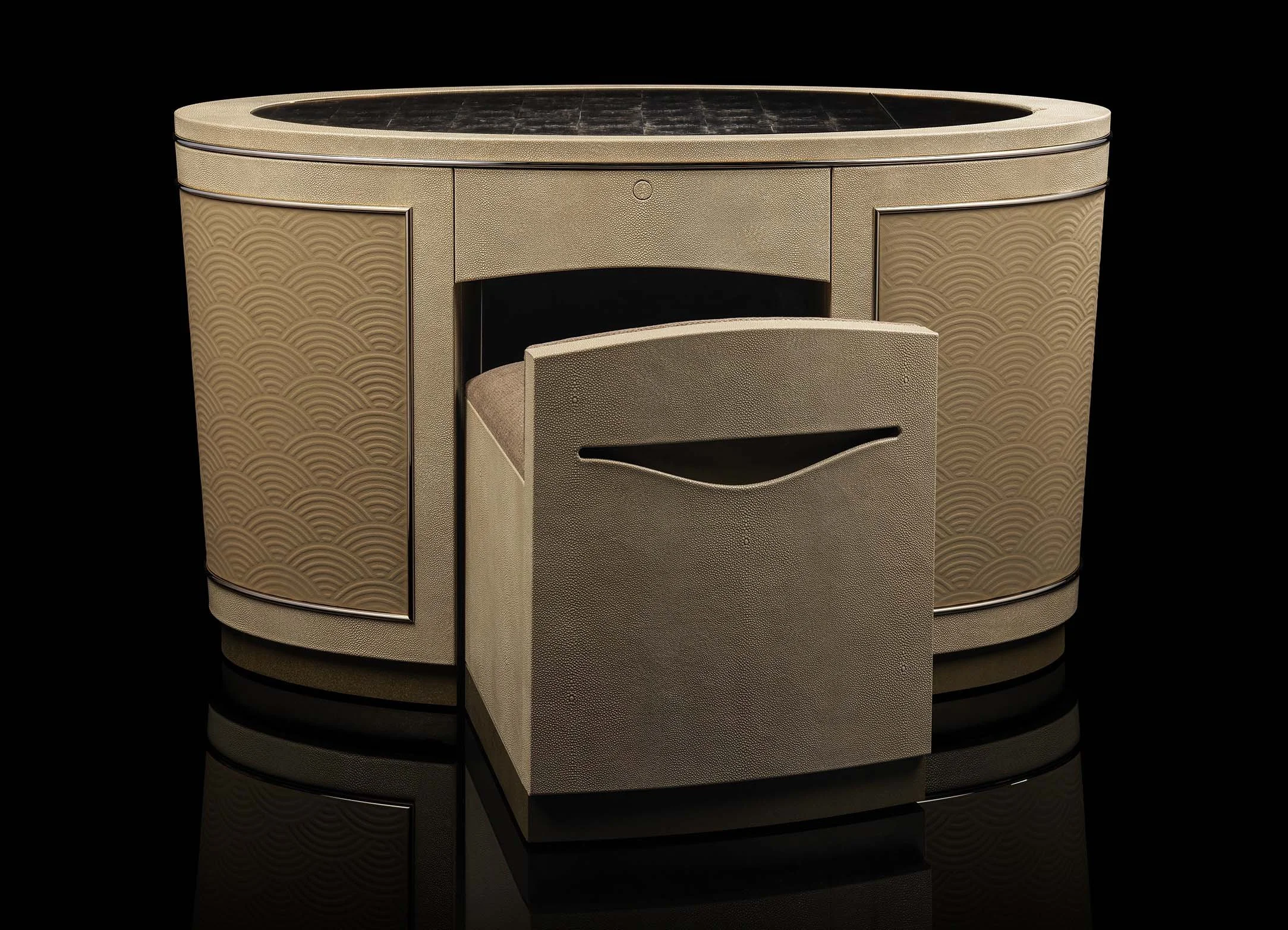

Neoclassicism Enthusiast, CC BY-SA 4.0 <https://creativecommons.org/licenses/by-sa/4.0>, via Wikimedia Commons
A Brief Designers Keep Returning To
Émile-Jacques Ruhlmann, one of the defining figures of Art Deco, made a vanity in richly figured Macassar ebony, with a shagreen inset in the top, a brass-framed mirror and its own chair. Its back is finished as carefully as its front, so it can stand clear of a wall and be seen from every side.
Others have taken the brief in very different directions. Around 1938, Gio Ponti paired walnut with brass, mirrored glass and leather in a dressing table and chair. In 1981, Michael Graves designed the Plaza vanity for Memphis, a piece that rises to more than two metres in maple root, lacquered wood, mirrored glass and brass, produced in an edition of 45. Each answers the brief in its own way, and together they show the freedom the vanity allows. There has never been one way to design it, because there has never been one way to use it.
Where Bespoke Begins
That freedom is where the vanity becomes most interesting today. Bespoke, at its best, begins with understanding the person who will live with the piece. What do they keep close to hand? How do they move through their morning or evening? Is it mainly for beauty, jewellery or fragrance? How should the surface feel under the hand, and where should the light come from? What should be on show, and what should disappear completely?
The answers begin to shape the design. Proportion, seat height, storage, lighting, materials and mechanisms all follow the individual rather than a predetermined furniture type. In that sense, the person who will use the piece writes the brief, and the designer's work is to read it closely.
How Silverlining Answers It
This is where the vanity sits naturally within Silverlining's approach to bespoke design. Each commission offers the chance to make something that could belong to one person alone.
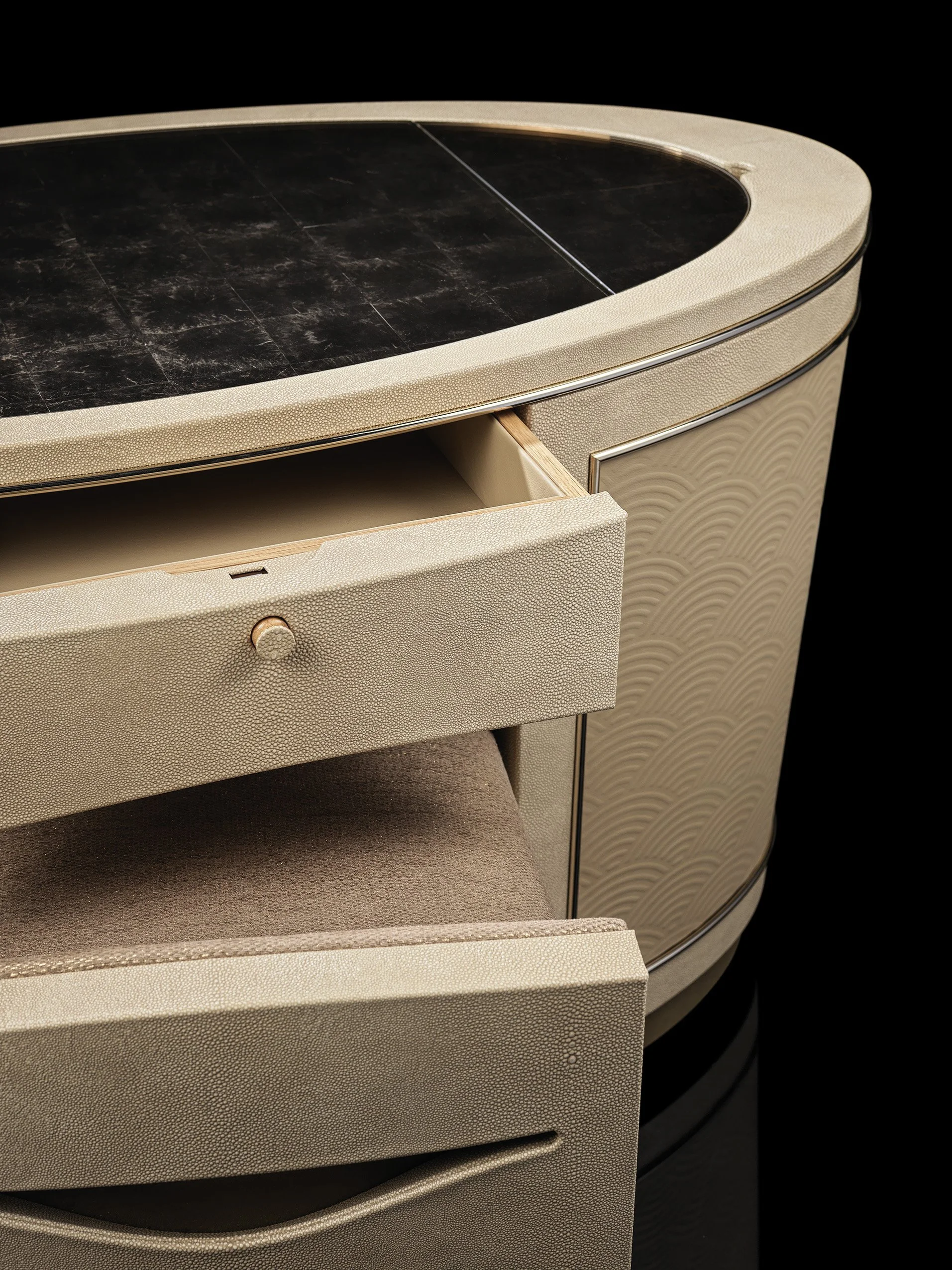
For one motor yacht, the brief called for a dedicated manicure station. Its elliptical form is wrapped in black faux shagreen, a contemporary take on the material Ruhlmann set into his vanity, and topped with glass gilded in champagne gold leaf, while water-droplet-textured resin ribbons in Dubai gold flow around the surface. A matching removable stool completes the piece. Form, function and material all grew from one particular ritual and setting.
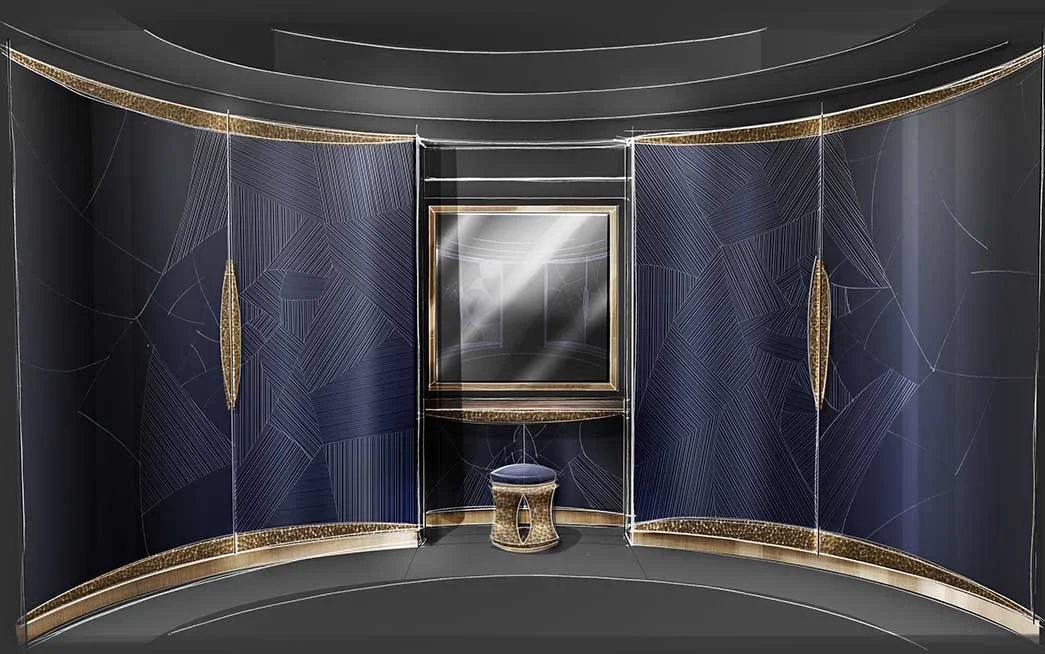
Material can become just as personal. Prussian Vectors, developed as part of Silverlining's Elements of Time material research, takes its pinstripe from wind-direction vector charts and the language of a Savile Row suit. Dark blue coach-hide leather is cut to expose the lighter fibres beneath, then bordered in chip-carved, oxidised teak. Imagined within a dressing room, it shows how a surface can bring another layer of character to a personal space.
The history of the vanity is rich, but its purpose has stayed intimate. A vanity asks for a brief that only one person can write.
For a designer, there are few greater opportunities than creating something for an audience of one.
Subscribe to our newsletter
Sign-up to receive our newsletter and discover our stories, collections and latest innovations.


