
Pushing Materials Further
How does a piece of furniture begin? Often with an idea, a form imagined and drawn, and then a decision about what to make it from. Designers answer differently, and there is no single right way. Silverlining's answer is that the idea and the material belong together from the first sketch, and that pushing both further is a dialogue between the design studio and the workshop, with each informing the other.
The Material Makes It Real
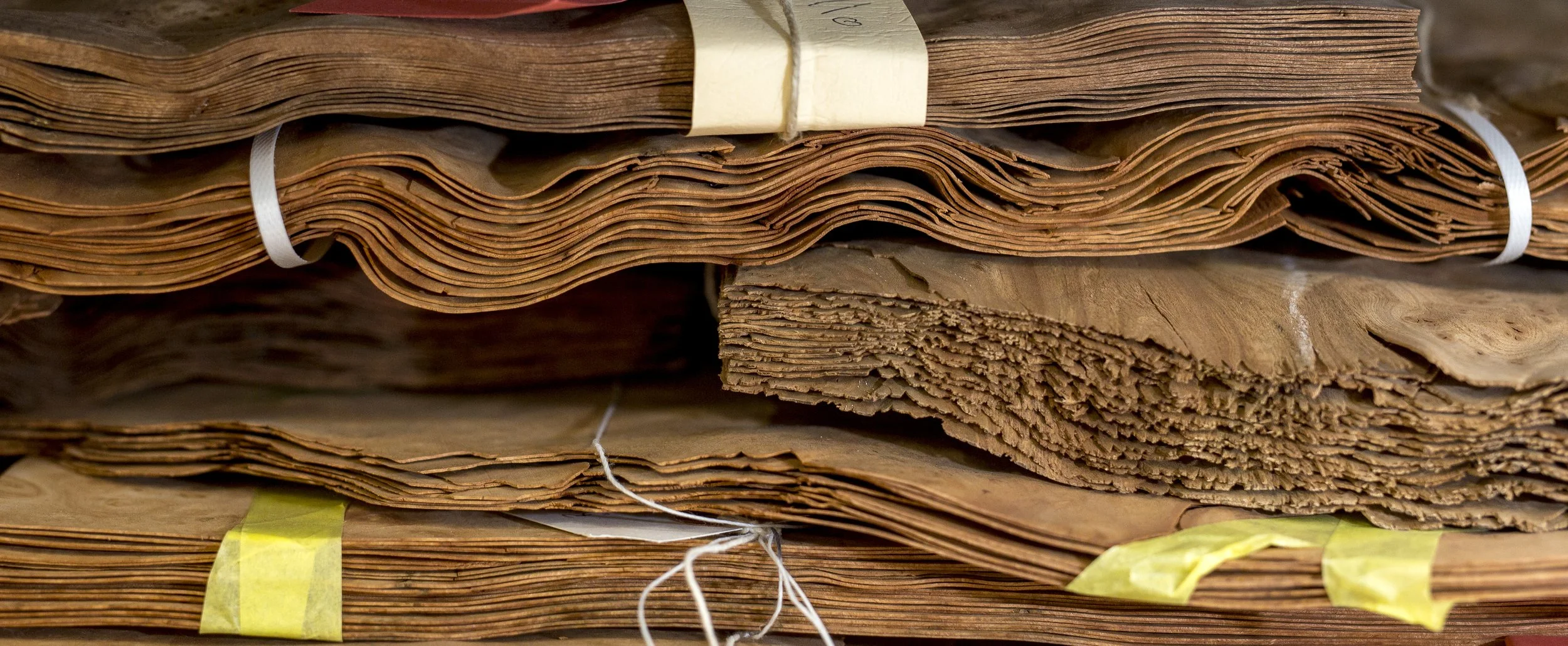
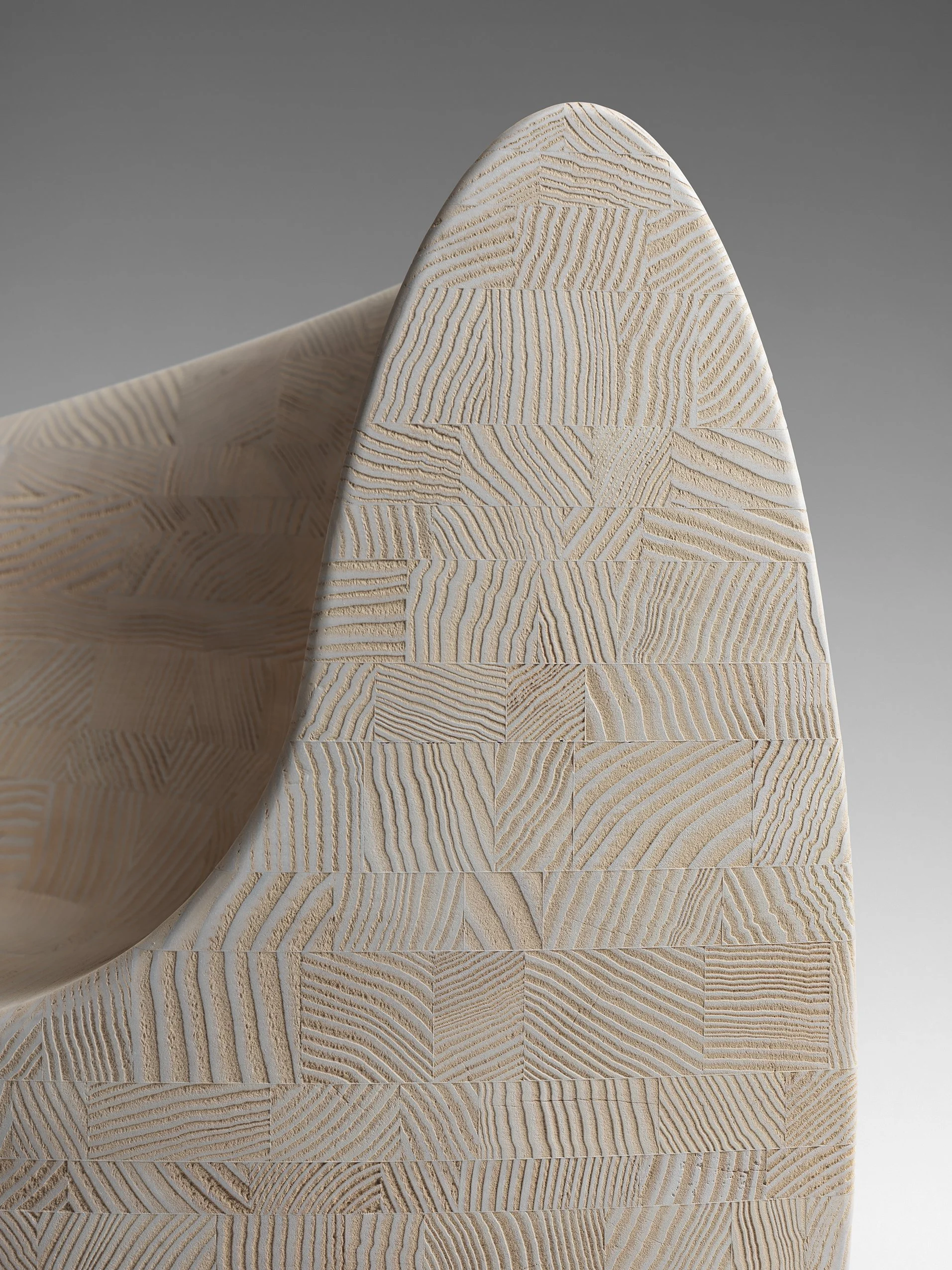
An idea becomes a design when it can be touched, and it is the material that makes it tactile. Timber brings grain and weight, leather brings warmth and give, and resin brings depth and light. Choosing the material is therefore one of the first design decisions, because it brings the idea to life in the hand. Studio SL's Dôl Chair, from the Reverie collection, is carved from locally felled Douglas fir, and the natural variation of the timber means no two chairs will ever look alike, each revealing its own pattern of side and end grain.
The designer's idea gives the chair its form, and the material gives each one its character.
The Finish Is Already There
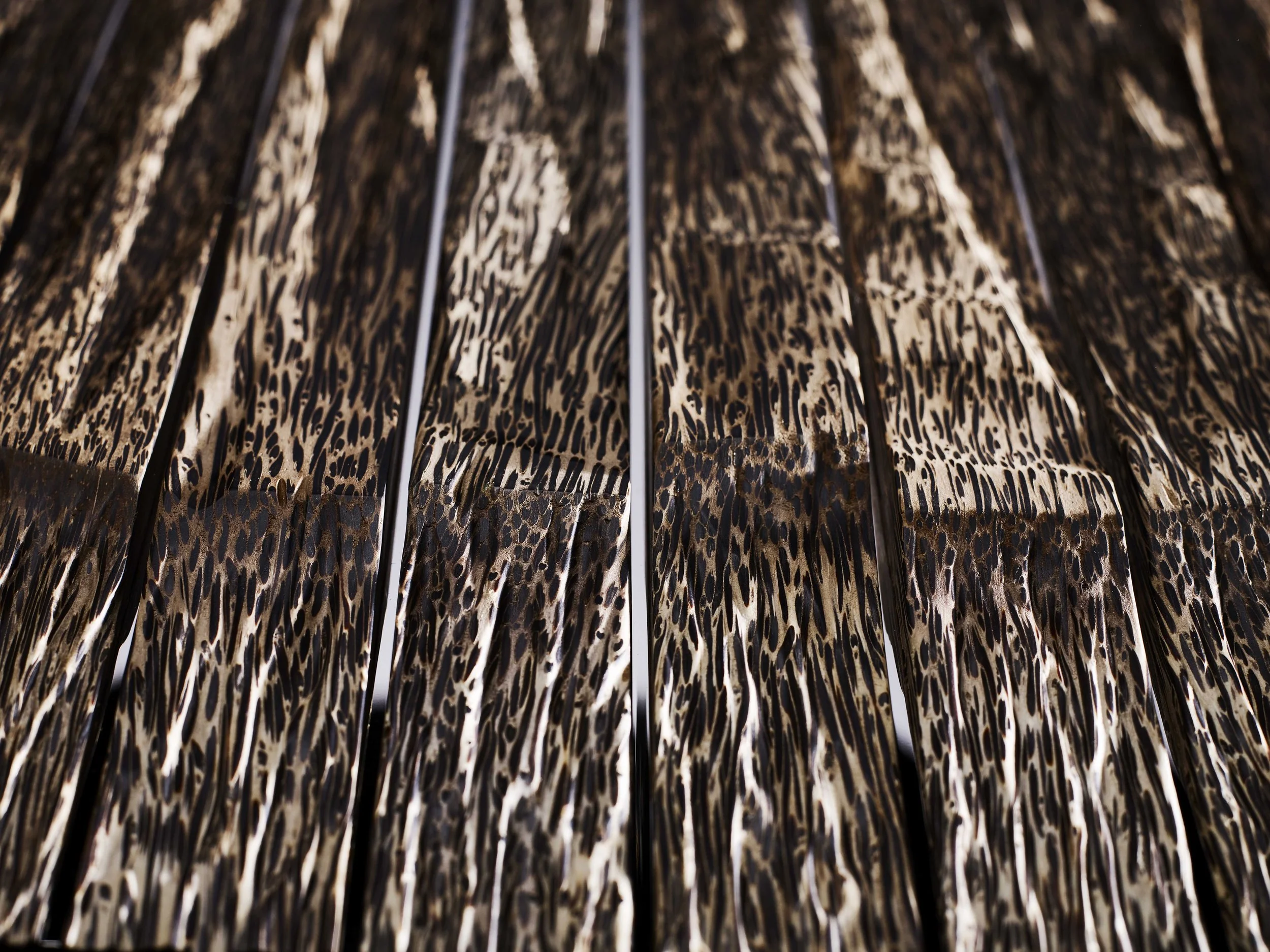
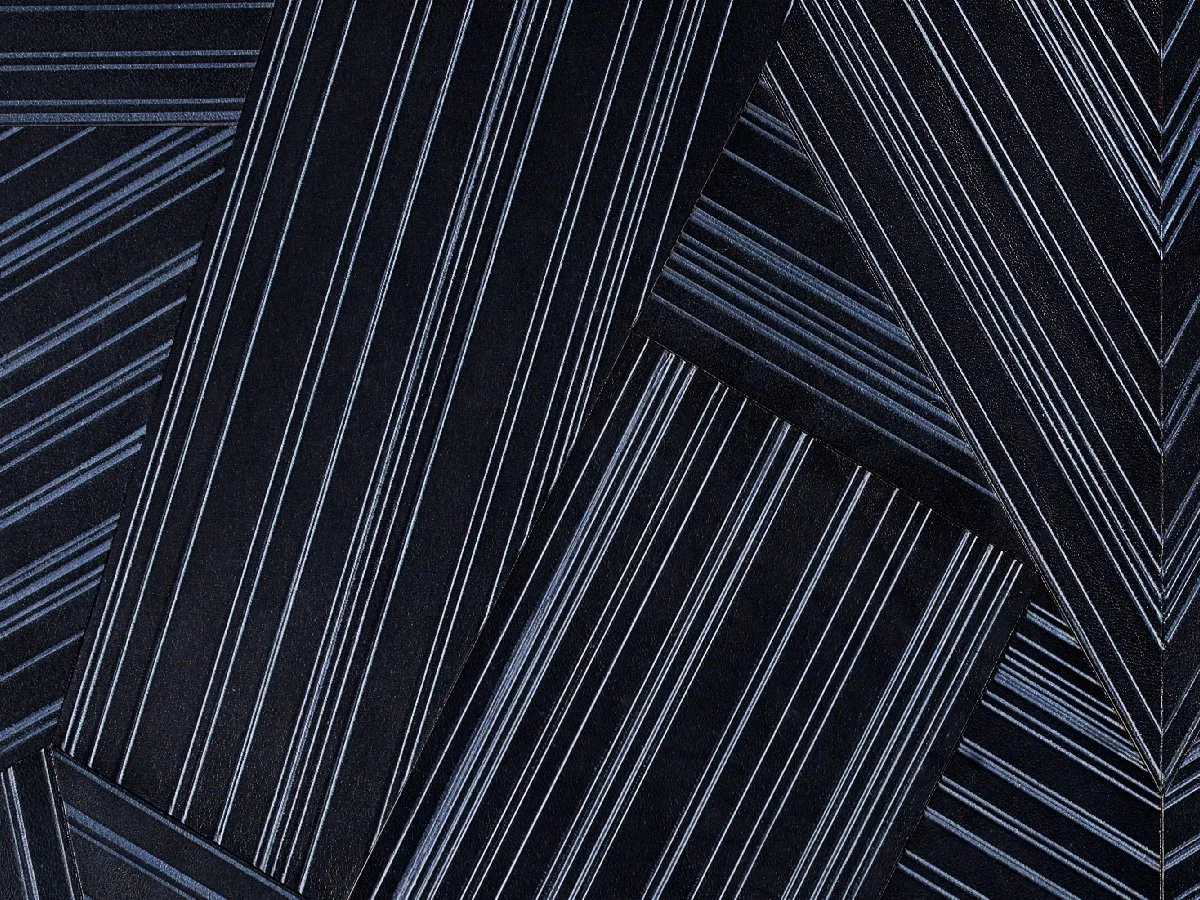
A finish does not always have to be added to a material. Sometimes it is already there. Palm wood, botanically a grass with a high resin content, takes a natural high sheen when it is burnished by hand-applied friction, which is the finish of Palm Striation, from Silverlining's Elements of Time collection. In Prussian Vectors, a pinstripe appears when a cut through dark blue polished leather reveals the lighter fibres at its core.
In both, the work is to reveal what the material already holds. A design that works with the material from the start can find finishes that nobody needs to apply, and the skill lies in knowing where they are and how to bring them out. That knowledge also shows where a material's limits lie, and where they can be moved.
Beyond the Usual Limits
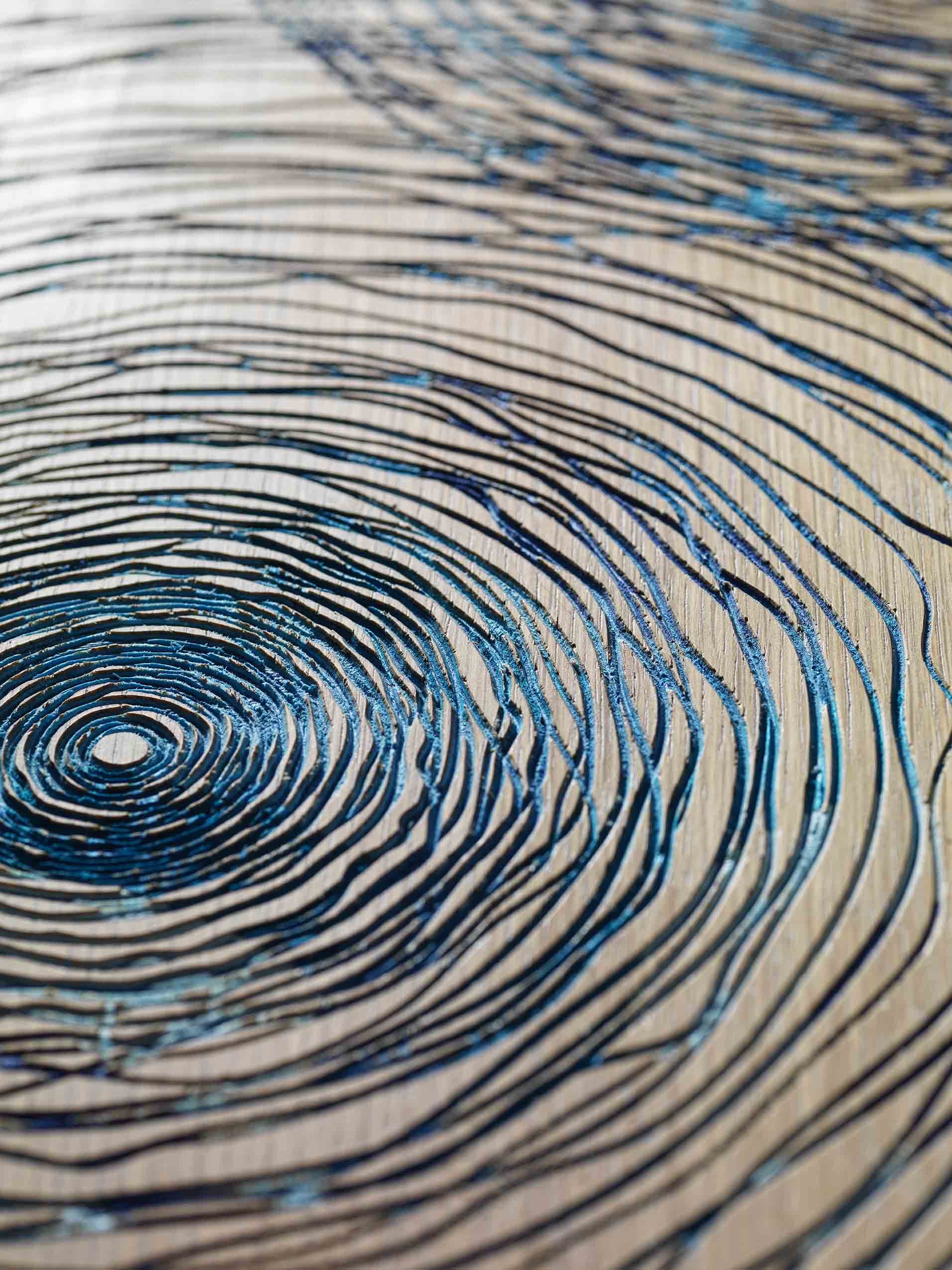
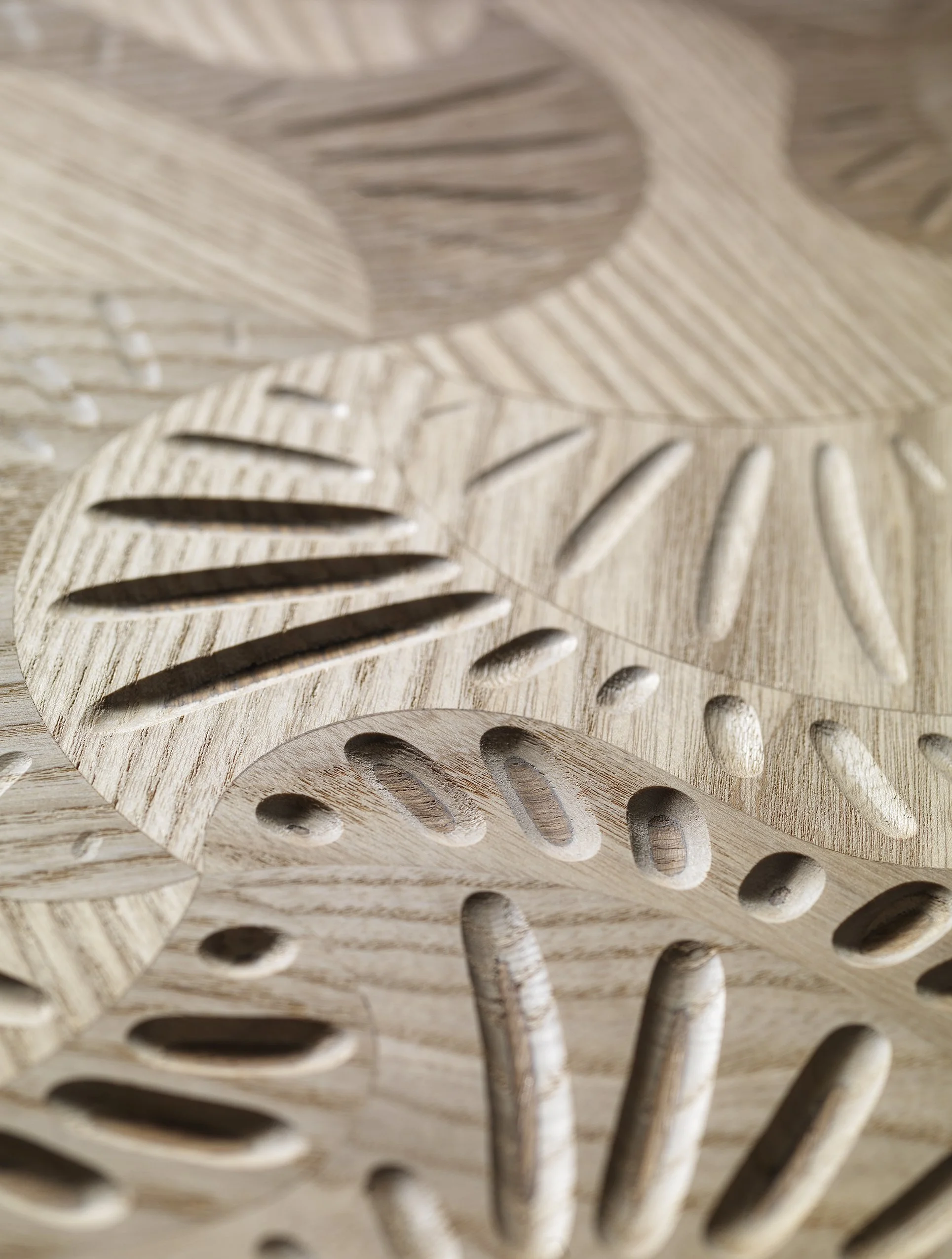
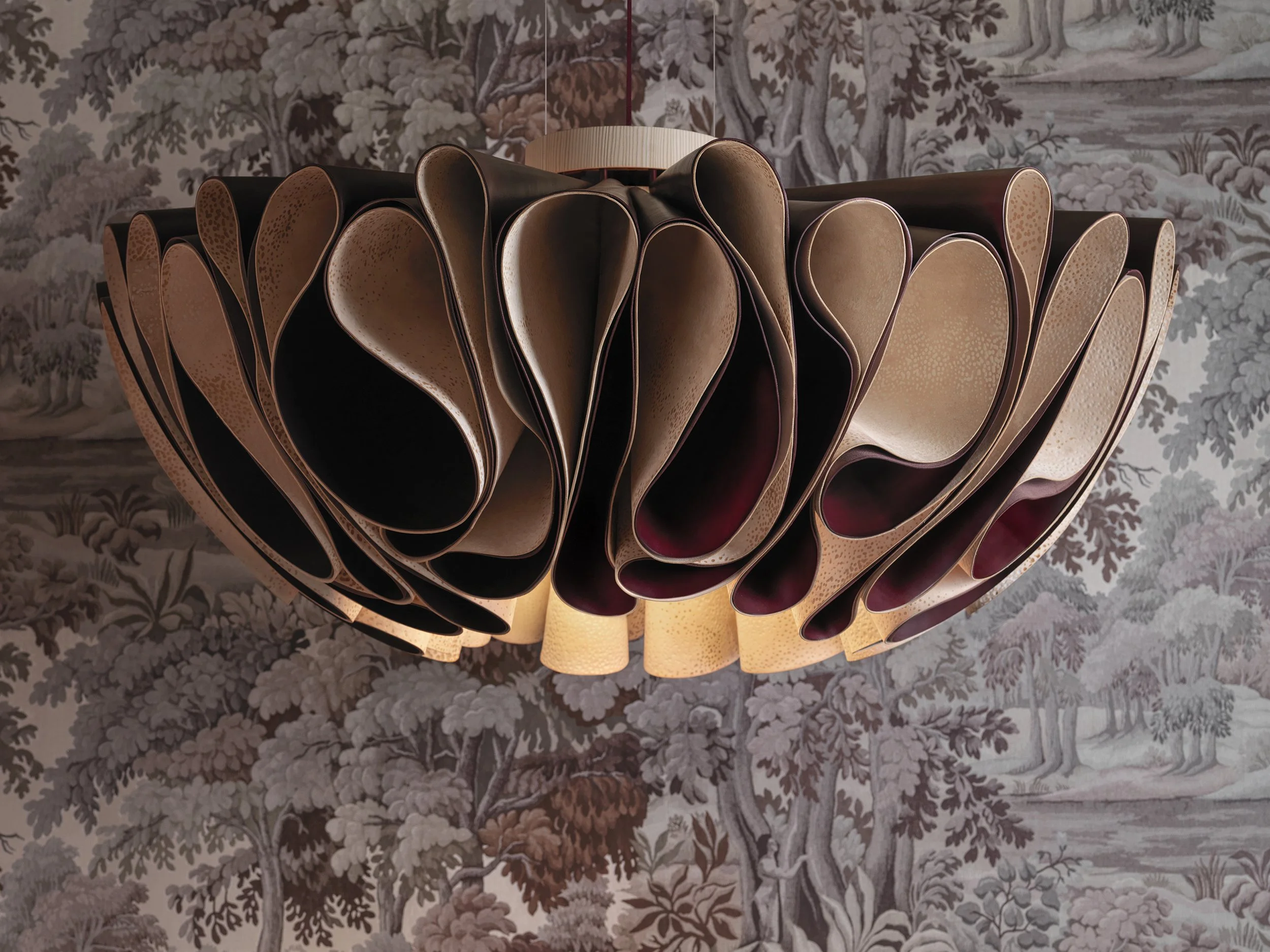
Once a material is understood, the next question is what else it can do. Marquetry has traditionally been the decorative face of a piece, its pattern meant to be seen. In Echo, from Beyond Boundaries, it is hidden beneath a layer of English oak, and the depth of each carved circle decides how much of the blue sycamore beneath shows. In Terra Carta, Studio SL explored what Paper Factor, an innovative evolution of papier-mâché, could do as a surface, bringing out an unusual, weathered stone texture in this humble, time-honoured material. The Awen Chandelier asked leather to keep its organic fluidity at a diameter of 1.5 metres while holding its intended shape. Studio SL describes the leather's own character as both the central challenge and the animating spirit of the piece.
Pushing a material is not the same as forcing it. In Descending Swirl, carving opens the surface to a contrasting layer beneath, deepest along one edge and fading towards the centre, and the skill lies in knowing how deep to carve and when to leave a surface alone. Going further depends on judgement as much as ambition.
Tested for the Long Term
Pushing a material only makes sense if the result lasts. Silverlining uses an artificial weathering chamber to see how materials such as straw, leather and lacquer respond to humidity and ultraviolet light over time, so that owners can make informed choices, particularly when a piece uses something new.
Silverlining's R&D department sits at the centre of this work, spending significant time on how new materials behave and on developing the techniques to work with them. Going further is curiosity backed by evidence.
Where Silverlining Stands
Silverlining's position is that the dialogue between the design studio and the workshop is what makes a piece. It brings character, a form shaped by the material as well as by the designer's idea, and assurance, because each material is pushed further and then tested for its durability and suitability for its intended use. The Studio SL team puts it simply: "We are always encouraged to challenge what is possible with the skills and materials we have."
For the person who commissions a piece, that means furniture with a character of its own, built for the way it will be used. For Silverlining, the question stays open: how much further can both go?
Subscribe to our newsletter
Sign-up to receive our newsletter and discover our stories, collections and latest innovations.


