
Leather is one of the oldest and most extraordinary materials in the world. It ages with intention, deepening in character with every passing year. In the hands of a skilled craftsperson, it transforms from a natural hide into something that transcends its origins, acquiring structure, texture, and a life of its own.
At Silverlining's specialist leather workshop in North Wales, that transformation is pursued with an uncommon level of dedication. Here, leather is not treated as a surface finish or an afterthought. It is elevated into structural form, worked with techniques that demand years of training to master, and applied with a precision that defines what luxury craftsmanship can be.
Inside The Workshop
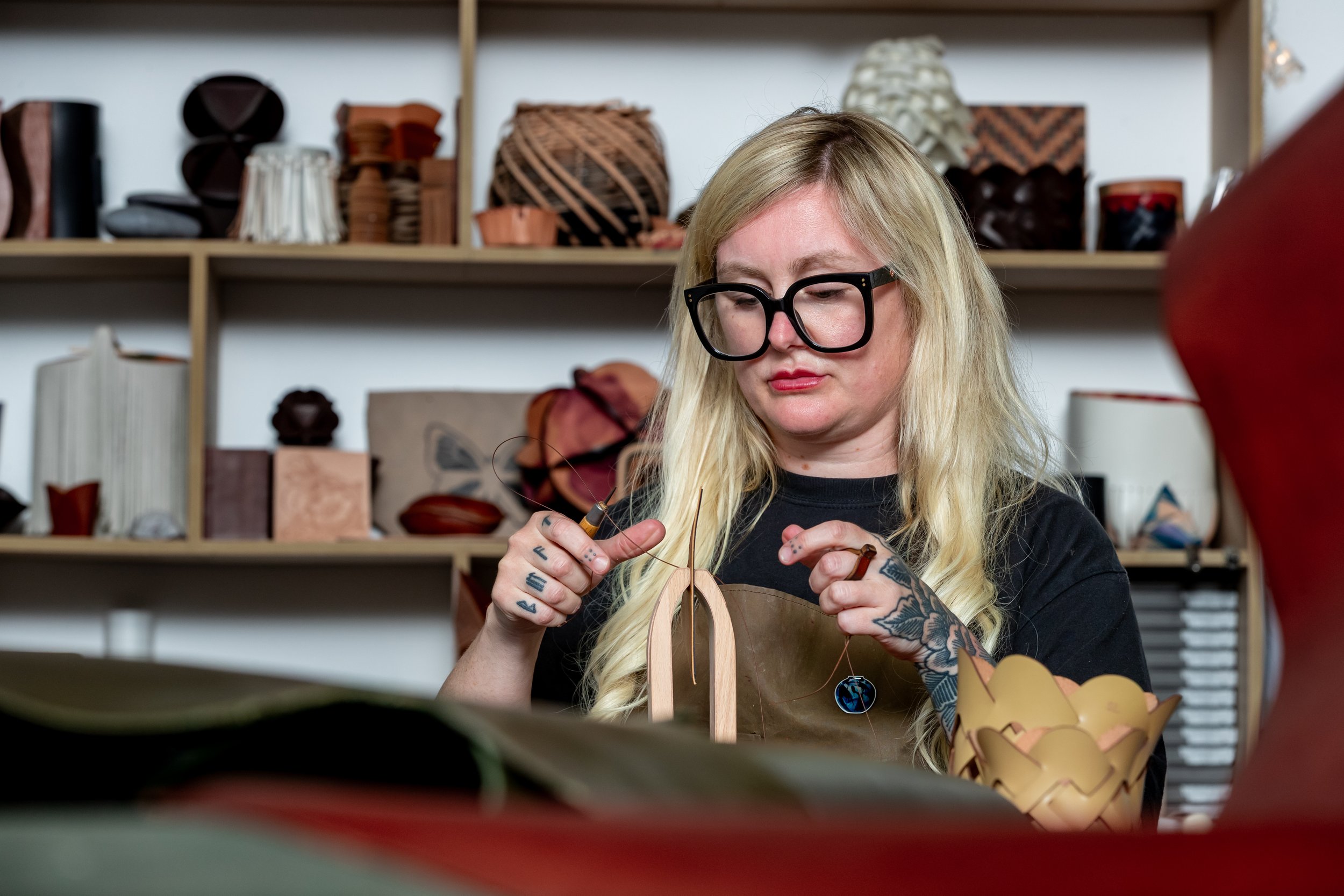
Kate Summerfield - the current Leather Team Leader - has spent twelve years at Silverlining developing a level of leatherwork expertise that is rare in the industry. She both guides and works alongside her team of two craftswomen, her hands as active in the making as her eye is in the mentoring. Her skills across the intricate techniques of stacked leather, hand texturing, and precision cutting set the standard for the whole team. Workbenches line the workshop space, each set with the tools of the trade. Spokeshaves for tapering leather edges, swivel knives for precise cutting, bone folds for clean creasing, and hand stamps for surface texturing, some of which have been in use for over a century. Rolls and panels of leather in varying weights and tones line the storage walls.
Working with natural leather demands a particular kind of skill: the ability to read a material and respond to it. Every hide arrives with its own character. Variations in grain, natural markings, subtle shifts in texture. For a skilled craftsperson, these are not obstacles. They are part of the conversation between maker and material.
A Tale of Three Leathers
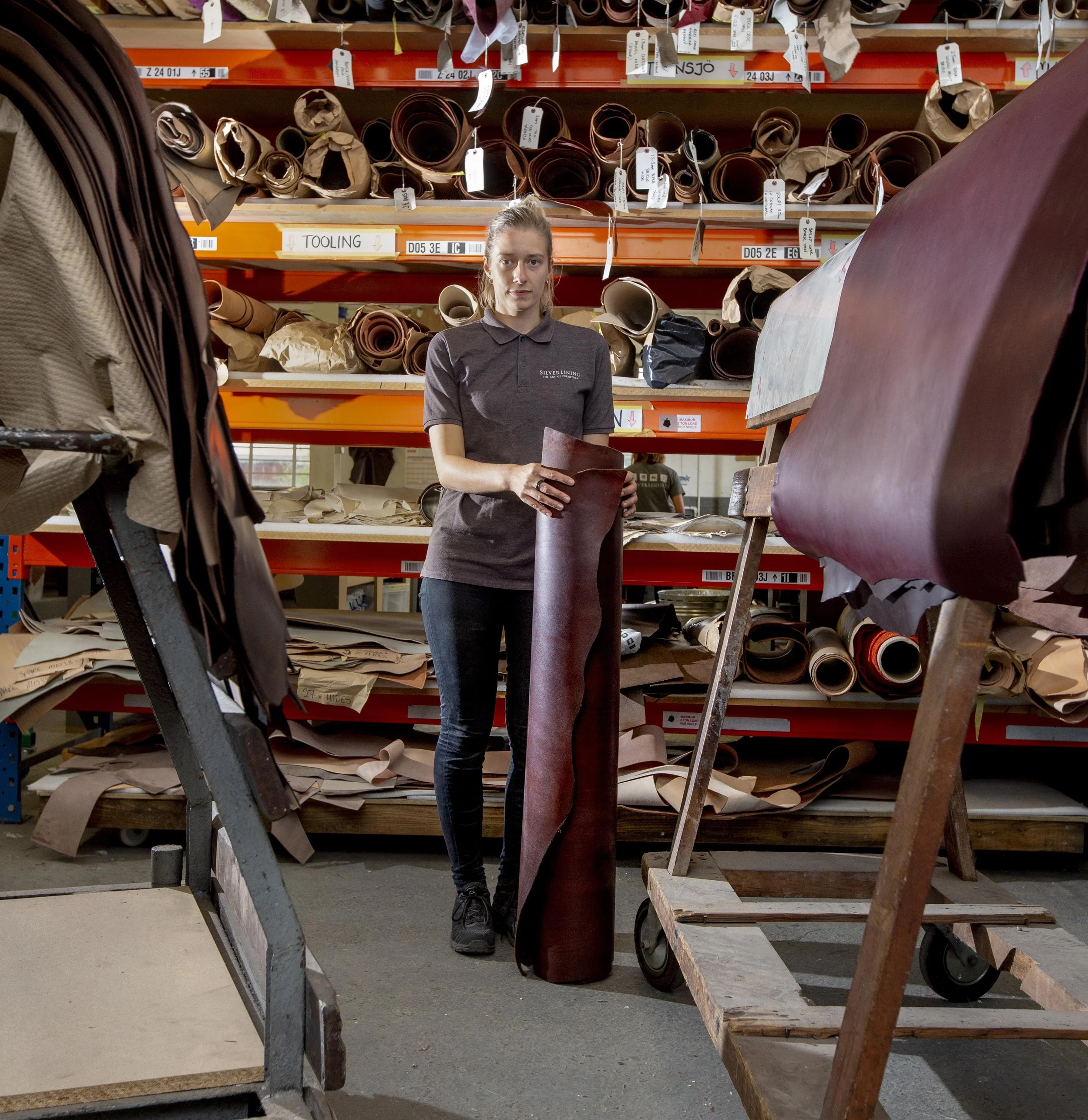
The workshop works primarily with three leather types: vegetable-tanned coach hides, tooling hide, and upholstery leather.
Coach hide is firm and dense, making it ideal for structural applications such as cording and stacked edges. It darkens and develops patina over decades of use. Tooling hide is worked at a precise moisture level: too dry and it resists impression, too wet and the detail will not hold. Upholstery leather is the most supple of the three, draping and stitching with a flexibility the others cannot match, softening further with use over time.
Precision In Training
Training to reach Silverlining's standard takes a minimum of twelve months, and that is only the beginning. A scalpel cut must be clean the first time, there is no correcting a line once it is made. Stacked layers must align within millimetres. Hand-applied cordings must taper smoothly and consistently across twelve hundred individual strips. Each of these demands exists for the same reason: to achieve a level of craftsmanship that simply cannot be found anywhere else. The precision required is built through repetition, reading the material, and understanding where natural variations will enhance a piece rather than compromise it. Maisie Hill completed her training in only nine months.
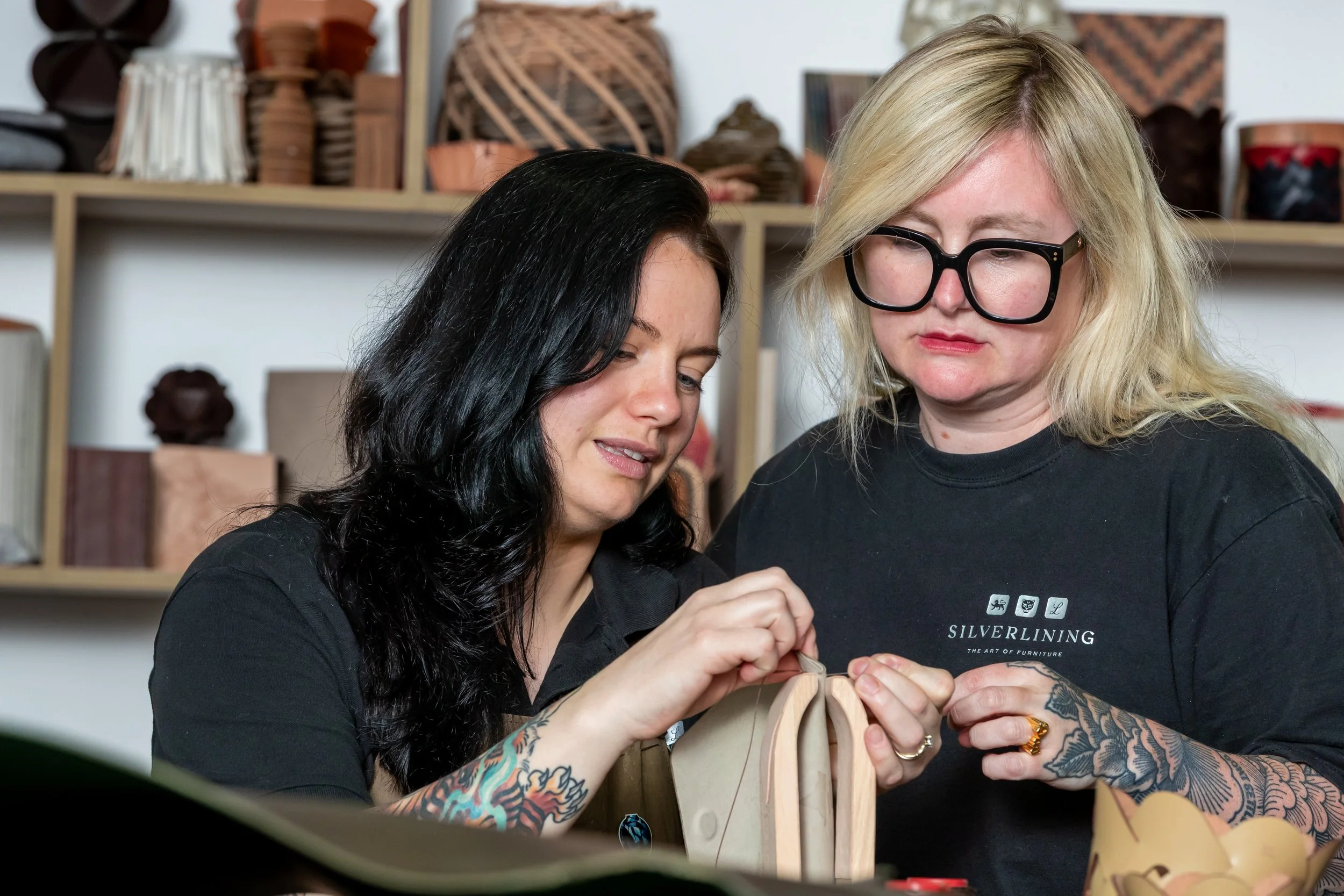
Maisie joined Silverlining with no leatherworking experience and no craft background. What she brought was an instinct for precision that revealed itself the moment she picked up the tools. Under Kate's guidance, she committed to comprehensive learning of materials, tools, and techniques through hands-on practice and meticulous study. She sought feedback constantly and approached each project with patience. Within nine months she was promoted from trainee to junior craftsperson, a timeline well ahead of the standard.
Heritage Crafts recognised her achievement with the Emerging Leatherworker of the Year award, presented at Wentworth Woodhouse in November 2025. The judges described Maisie as blending "a proactive approach with an innate talent for precision, quality, and technical skill, which rivals more seasoned artisans." One of her first major projects was the Ripple Mirror, a piece from Studio SL's Layers in Time collection requiring hand-chased leather textures worked individually by hand.
Studio SL: Leather in Layers In Time
Studio SL is Silverlining’s in-house creative department and Layers in Time, including the Ripple Mirror, was its first collectible design collection, launched in the autumn of 2025.
The Ripple Mirror, which Maisie worked on, features two burgundy leather hides that were soaked and pressed under hydraulic pressure into CNC-machined moulds, forming concentric waves that recall a raindrop's impact on still water. After days of drying, Maise worked small stamps across the surface by hand, deepening the play of light and shadow that makes the leather appear to move.
Two more pieces from the collection showcased leather craftsmanship.
The Wave Console pushed stacked leather construction to its most ambitious scale. Over 1,200 individual strips of vegetable-tanned coach hide were hand-applied across a bio-based flax composite structure, each strip spokeshaved smooth as it followed the console's flowing curves.
The Chroma Mirror’s design saw two hides moulded into soft curves, then painted layer by layer with water-based dyes applied using calligraphy brushes. Each application enhanced the leather's natural grain. Two circular mirrors, one silvered, one golden, were set into gold-plated brass surrounds. The result is a piece that changes character as the light around it changes.
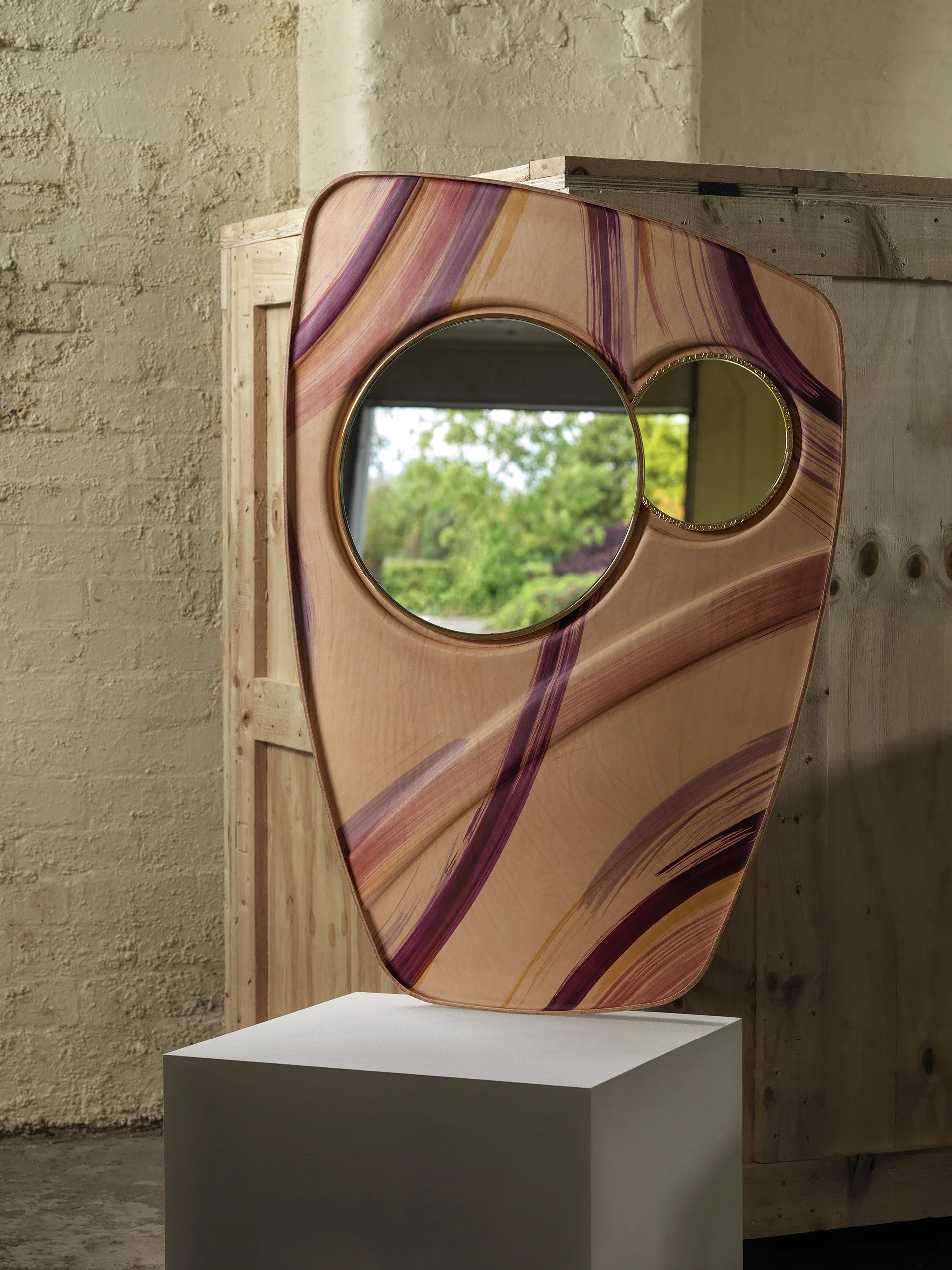
Chroma Mirror
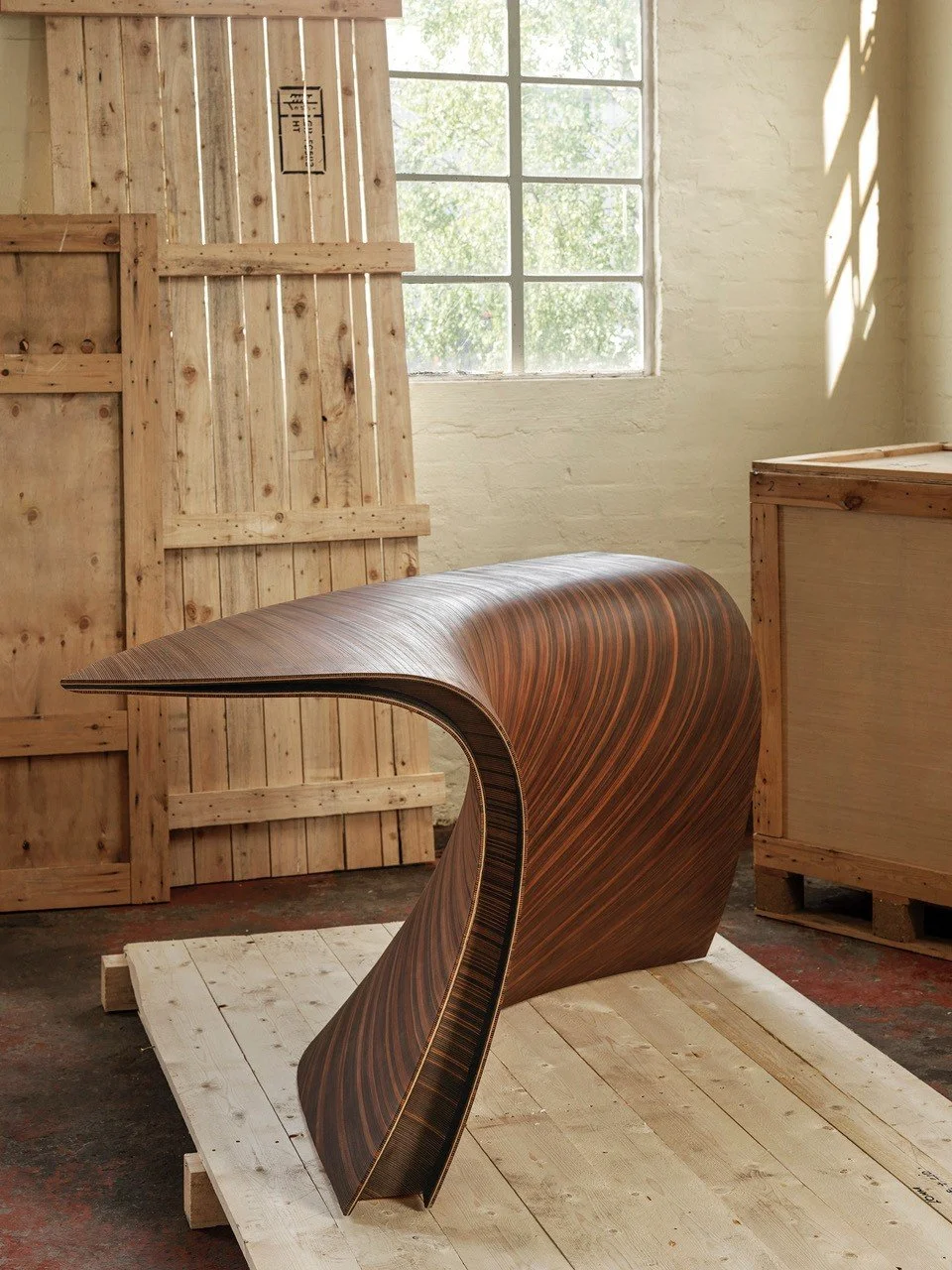
Wave Console
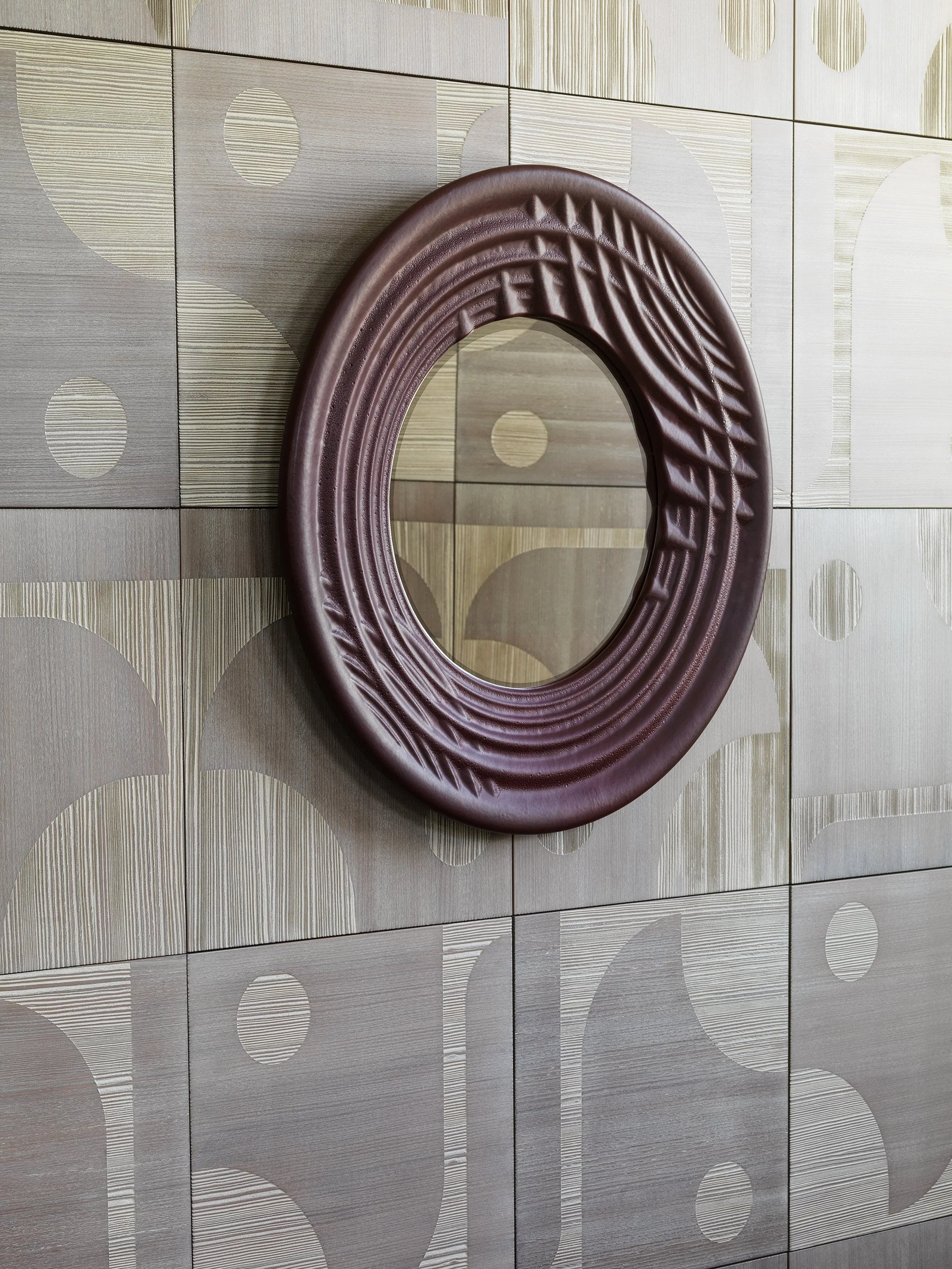
Ripple Mirror
Looking Ahead
The leather workshop is currently preparing pieces for Studio SL's second collectible design collection, launching in autumn 2026. The techniques being developed and the craftspeople will not simply build on what has come before. They will push leather craftsmanship into an exploration of unknown territory - a new standard, harder won, and more remarkable for it.
Subscribe to our newsletter
Sign-up to receive our newsletter and discover our stories, collections and latest innovations.


