
Originally known in France as the fauteuil confortable, the club chair emerged in the late 19th century as a deliberate alternative to formal seating. At a time when chairs were designed to impose posture and etiquette, this new form proposed something radical: comfort first.
Low, generous, and inviting, the club chair was created to be lived in rather than admired from a distance. Its purpose was not ceremony, but conversation, reading, and long moments of pause.
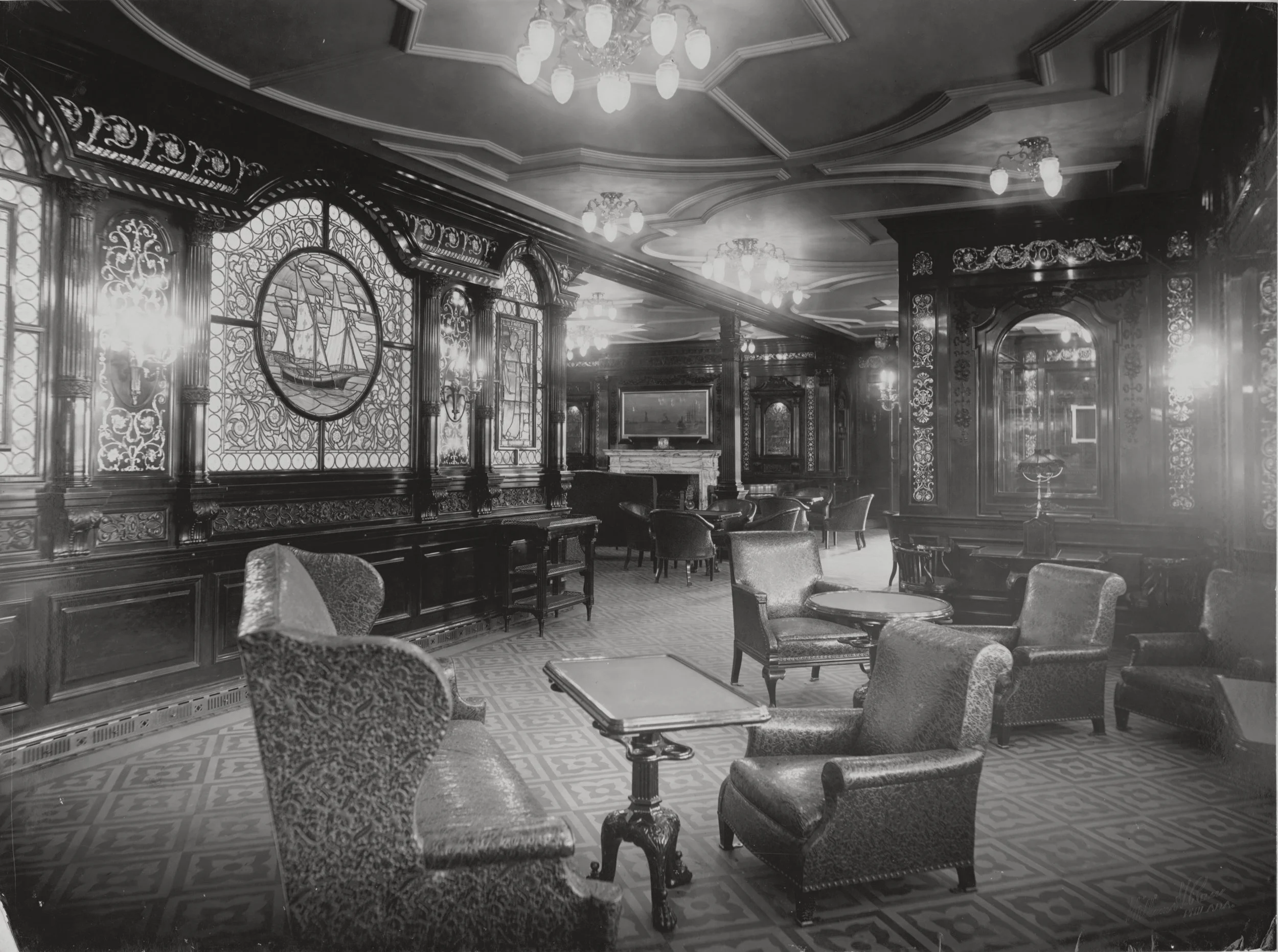
Designed to relax, not to impress
Unlike the upright chairs that dominated European interiors, the club chair sat lower to the ground, with a deep seat and a gently reclined back. Wide arms and enveloping proportions encouraged the body to settle rather than sit to attention.
This shift marked a turning point in furniture design. Comfort became a design principle, not an afterthought. The club chair was not about appearance or status, but about how a piece felt when used over time.
Shape with personality
As the club chair evolved in the early 20th century, particularly during the Art Deco period, its silhouette became more expressive. Distinctive backrest shapes led to informal nicknames that are still used today.
The moustache chair, with its sweeping curved arms, the gendarme's hat, inspired by the shape of a French police cap, and the clover form are all examples of how subtle changes in line created strong identities. These names were never official, but they endured because they captured the character of each design so precisely.
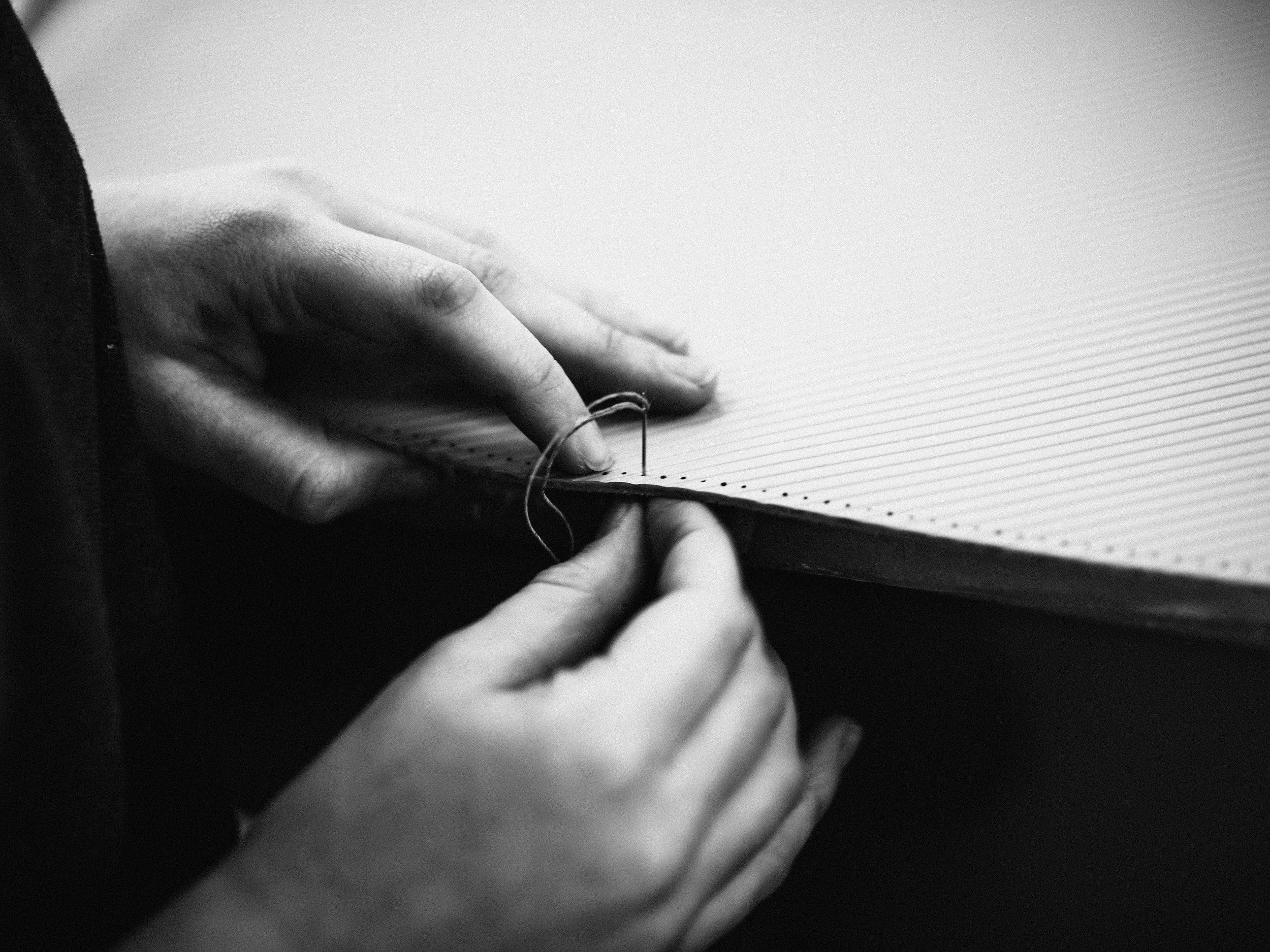
Leather as a design decision
Leather was chosen for early club chairs for practical reasons. It resisted wear, aged gracefully, and developed a patina that enhanced rather than diminished the piece.
Traditionally, club chairs were upholstered in full-grain, vegetable-tanned sheepskin leather. This process preserves natural markings and variations, meaning no two chairs are ever identical. Over time, the leather softens, darkens, and records use, turning the chair into something deeply personal.
From Paris to modern interiors
After the First World War, the club chair travelled beyond France. American soldiers returning from Europe brought with them a taste for the low, leather-upholstered chairs they had encountered in Parisian cafés and clubs.
Some of the heavier barrel forms that followed were influenced by the padded leather seating found in early aircraft. Built for long hours and physical endurance, those aviation seats shared the same objective as the club chair itself: comfort that supports focus and reflection. It was a fitting lineage.
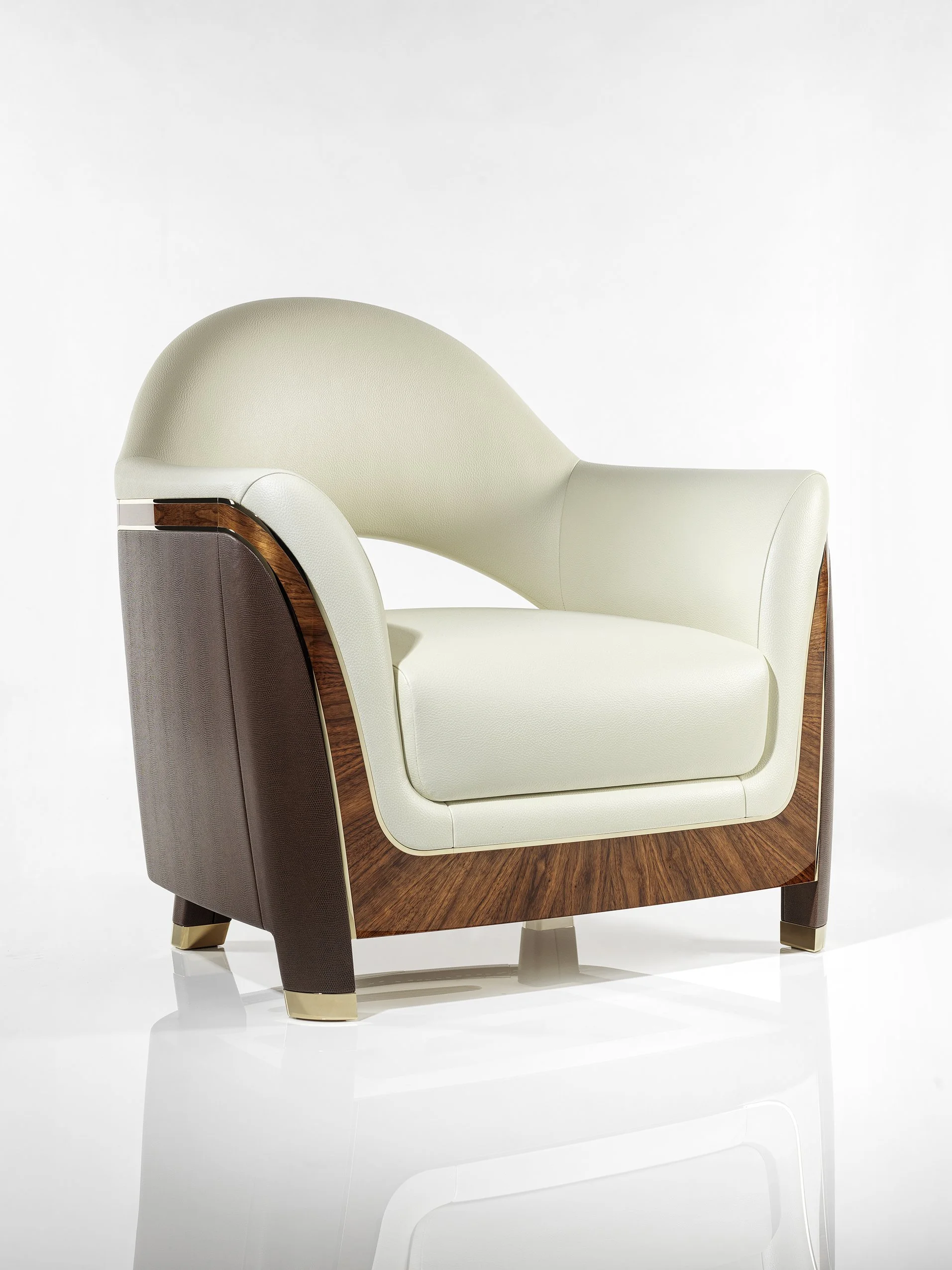
This connection between aviation and furniture continues today. Silverlining has created pieces for private residence, super yachts and private aircraft interiors, applying the same principles: engineering for performance, materials that endure, and design that serves function without compromise.
The club chair remains remarkably adaptable. Its low profile and restrained form sit comfortably in contemporary interiors, from minimal spaces to more layered environments. Designers often use club chairs to introduce warmth, tactility, and human scale without visual excess.
The club chair at Studio SL
At Studio SL, the club chair is approached as a continuation of its original philosophy. It is furniture designed for quiet moments, long conversations, and ease of use. Proportion, comfort, and material integrity guide every decision.
While all club chairs are armchairs, not all armchairs are club chairs. What defines the club chair is its relationship to the body and to time: it is made to be used, to age, and to remain relevant long after trends have shifted.
Subscribe to our newsletter
Sign-up to receive our newsletter and discover our stories, collections and latest innovations.


