
Nature as Blueprint: How the Natural World Shapes Our Design
For centuries, designers have looked to nature for inspiration. At Silverlining, we look to it as blueprint for design.
The natural world is governed by principles refined over millennia. Growth patterns, erosion, movement, layering. These forces shape landscapes, plants and materials, and they continue to inform the way we design and build furniture today.
In our workshop, natural phenomena are studied, interpreted and expressed through wood, leather, metal and glass. Each piece begins with a simple question: how can the logic of nature be transformed into form through craft?
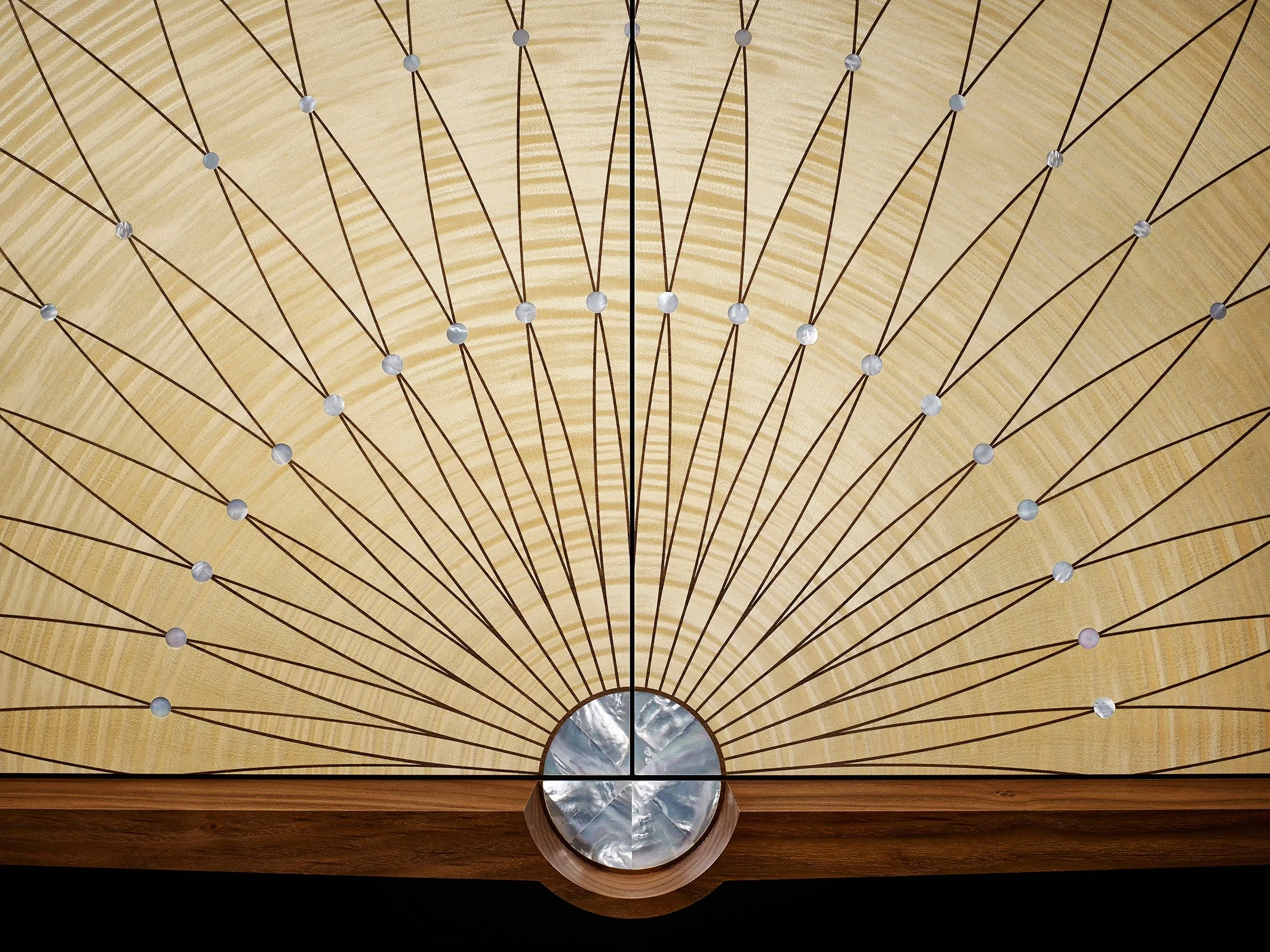
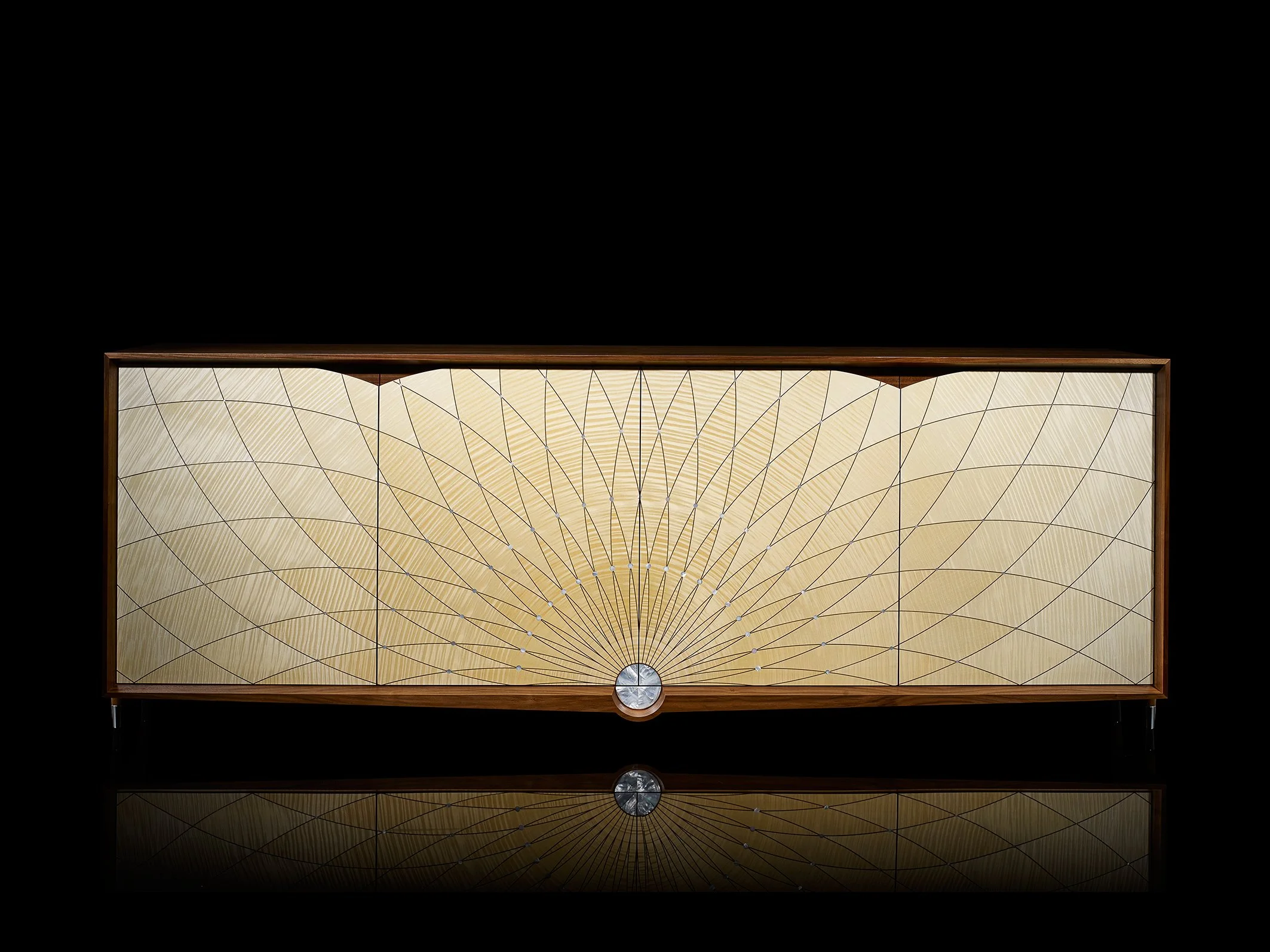
The Fibonacci Cabinet
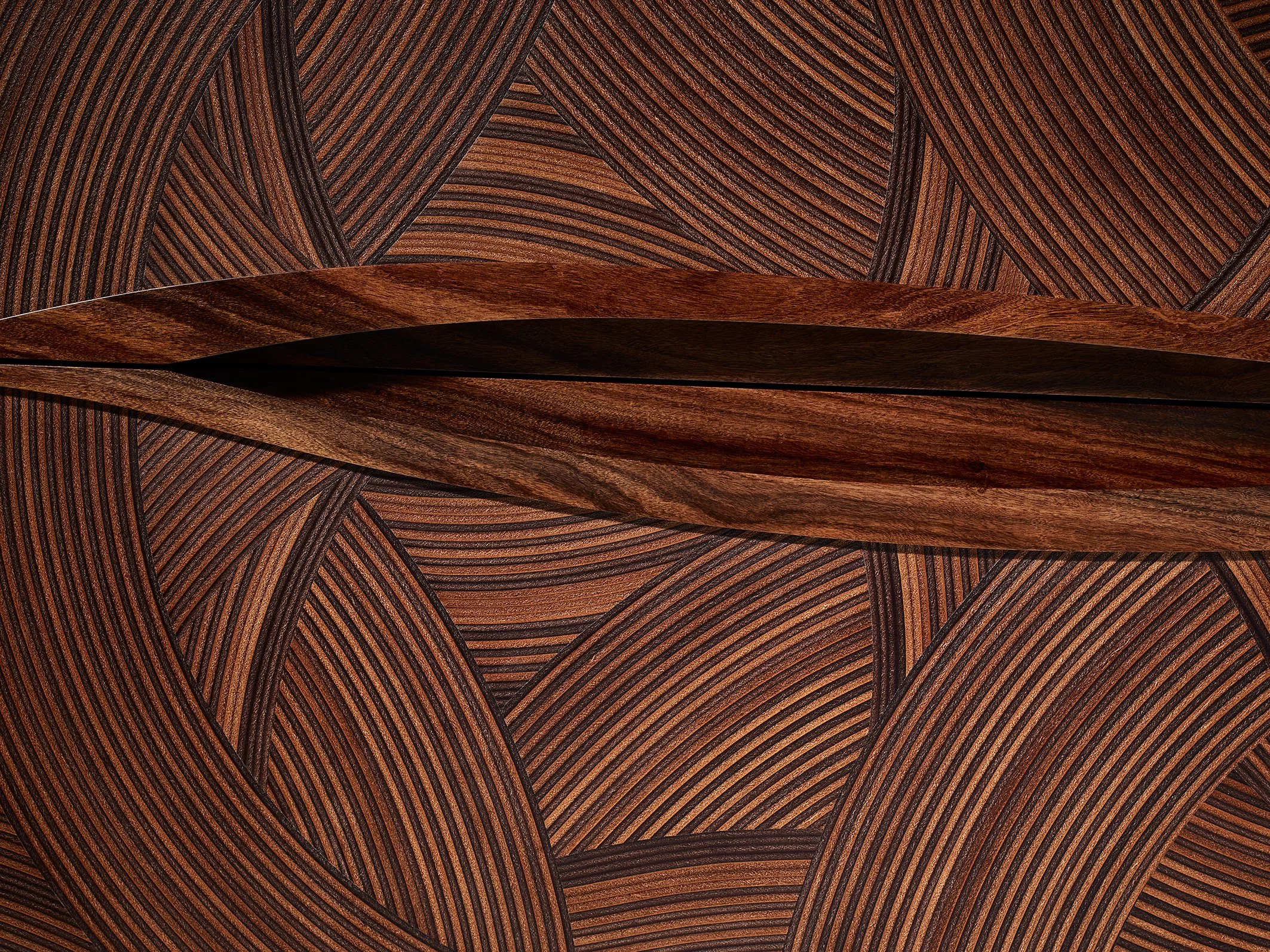
The Fibonacci sequence appears throughout the natural world, shaping the growth patterns of sunflowers, pine cones and branching plants. For centuries it has fascinated artists and architects seeking to understand the geometry of natural harmony. Leonardo da Vinci explored similar proportional relationships in works such as the Vitruvian Man, where mathematics and nature meet.
The Fibonacci Cabinet takes this principle as its starting point. Rippling sycamore marquetry unfolds across the surface in warm ochre tones, echoing the colour and structure of a sunflower head. The arrangement of the veneers follows the same geometric progression found in nature, creating a surface that feels both ordered and organic.
The result is not simply a decorative pattern, but a visual translation of nature's own method of organising growth and space. Where the Fibonacci Cabinet expresses mathematical order, the Vortex Table explores a different principle: movement.
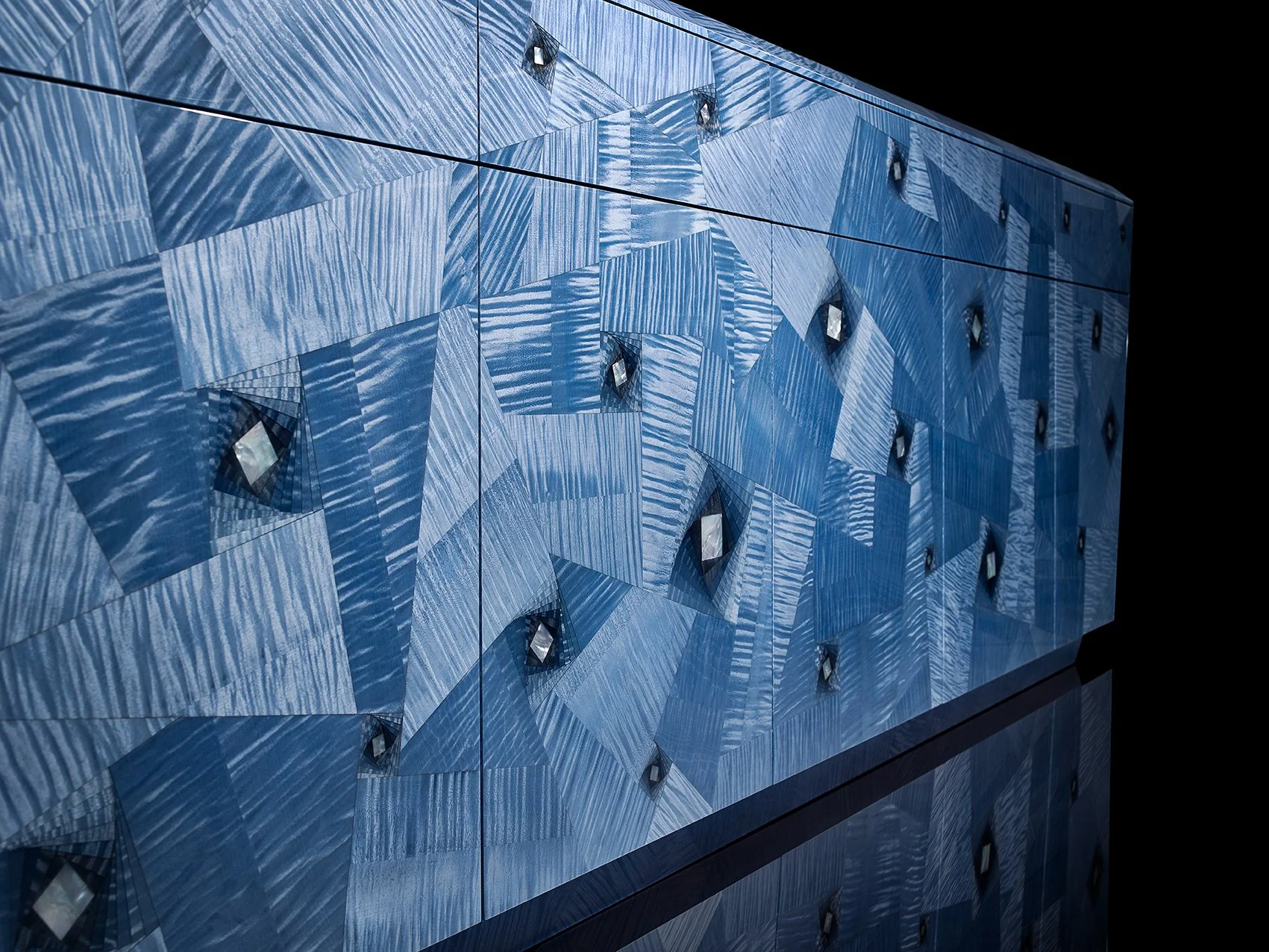
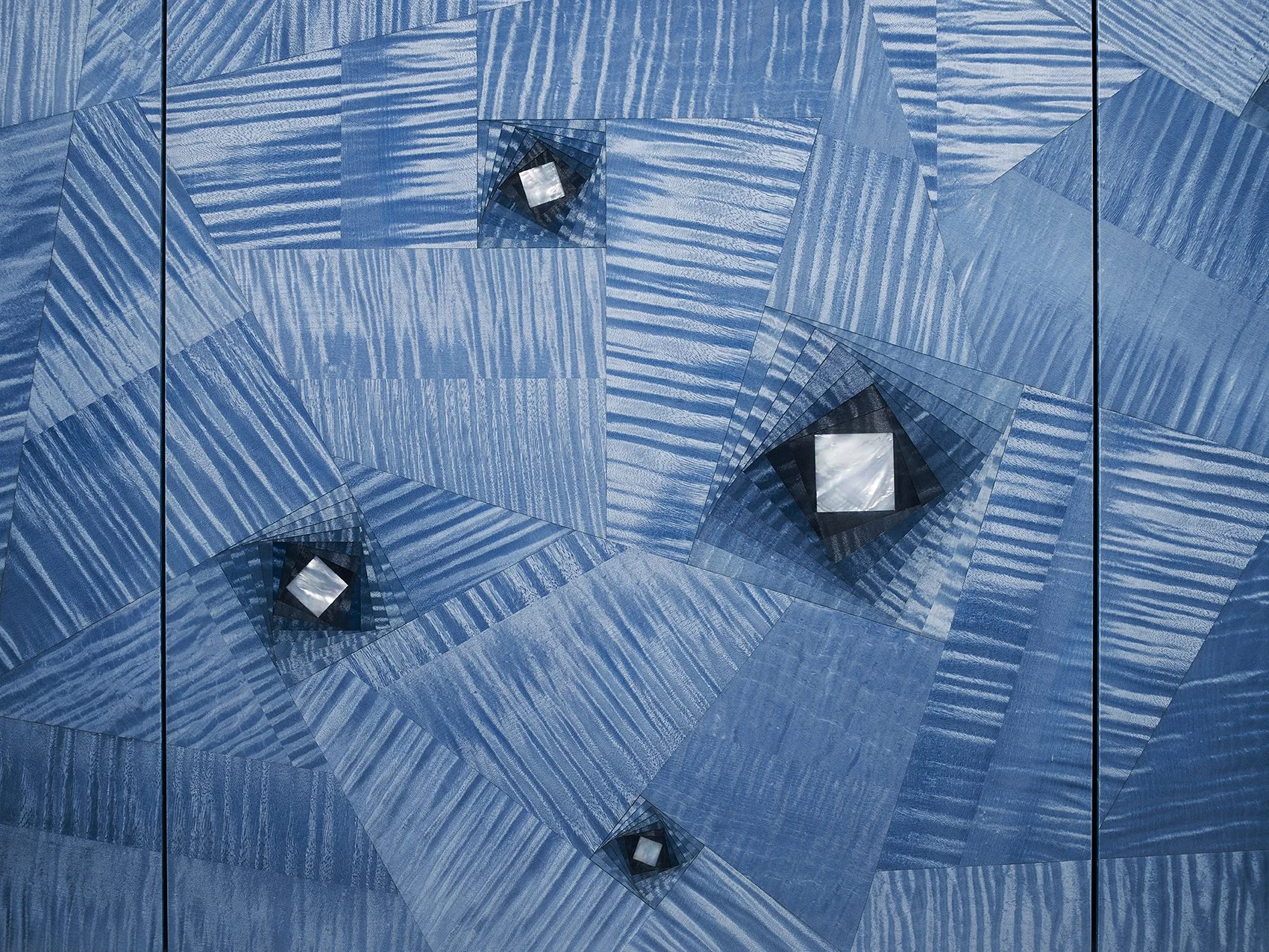
The Vortex Cabinet
The design draws inspiration from the Saltstraumen whirlpools of Norway, one of the most powerful tidal currents in the world. The challenge was not to depict water, but to capture the sensation of rotational energy within a static object.
This effect is achieved through intricate marquetry composed of dyed sycamore, mother-of-pearl and clear resin. The swirling pattern draws the eye inward, suggesting motion beneath the surface. What appears still carries the visual tension of constant movement. These pieces - the Fibonacci Cabinet and Vortex Table - capture dynamic forces: mathematical sequences unfolding, water in constant rotation. Other designs emerge from quieter processes, where change happens slowly over centuries.
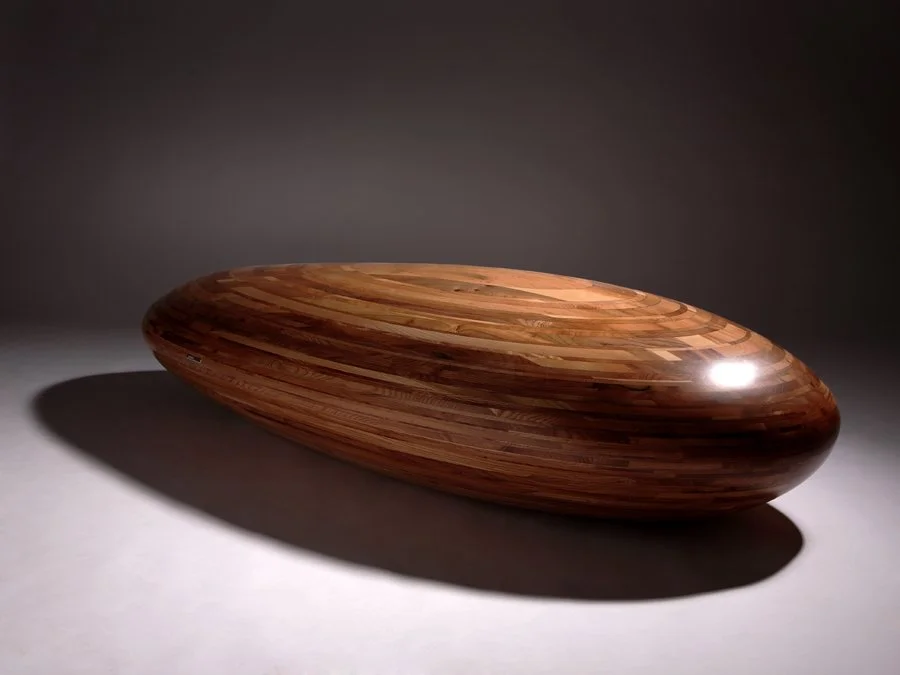
The Shingle Pebble Bench
The Shingle Pebble Table was created for a client who wished to evoke the tranquillity of a favourite Irish beach within their home. Its smooth, sculptural form takes inspiration from pebbles shaped by centuries of tidal movement.
To achieve this form, layers of English elm were laminated together and carefully shaped. The visible lamination lines across the surface echo geological stratification, revealing the structure of the piece while reinforcing the organic form.
What appears as decorative detail is, in fact, the structure of the piece revealed. This principle of layering - where process becomes pattern - appears again in the Antelope Cabinet, though expressed through leather rather than wood.
The Antelope Cabinet
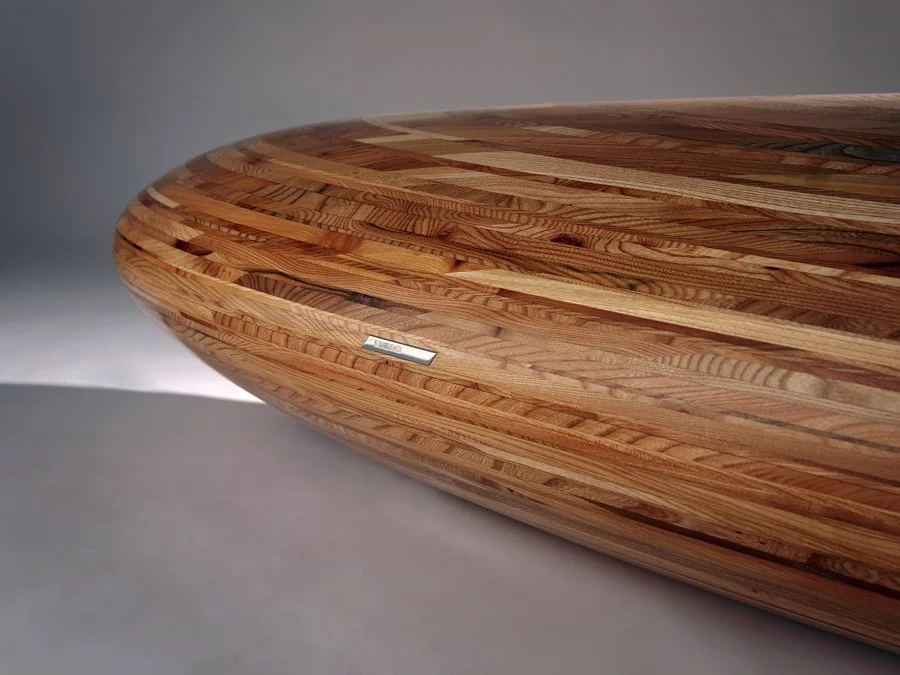
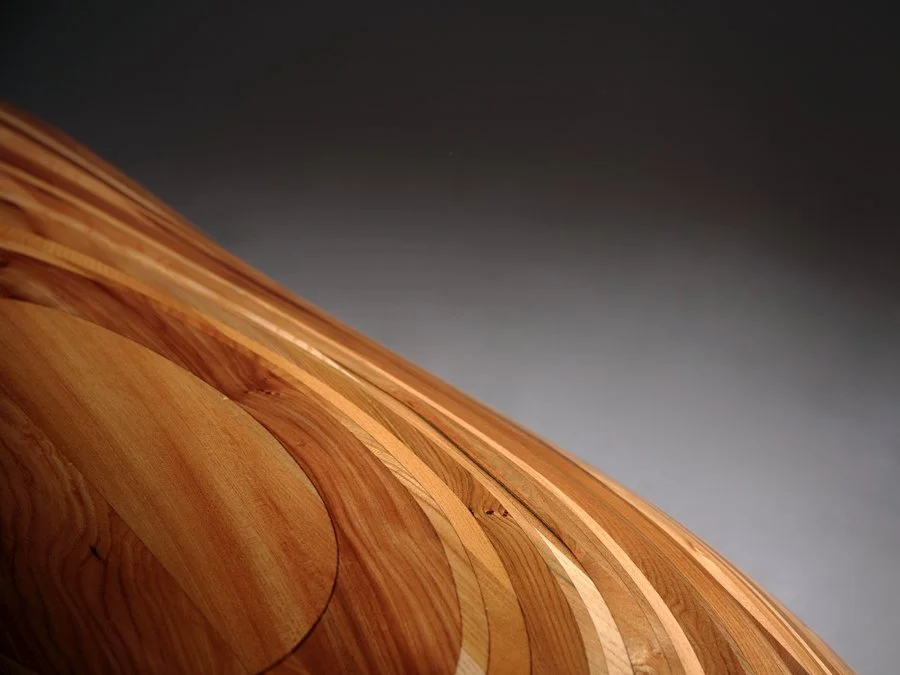
The piece takes its name from Antelope Canyon in Arizona, whose flowing sandstone walls have been shaped by centuries of flash flooding and erosion. The canyon's layered bands of colour became the reference point for the cabinet's surface.
To recreate this effect, Silverlining's leather workshop developed a stack-lamination technique using repurposed coach-hide leather. Layers are built up and sculpted to reveal shifting bands of colour and depth, echoing the canyon's natural formations. Diagonal sculptural handles appear to emerge from the surface, reinforcing the sense of movement through the layered form. Where geological forces shape landscapes over millennia, nature also creates intricate structures at a smaller scale - in feathers, shells, and the growth patterns of living things.
The Feather Bar
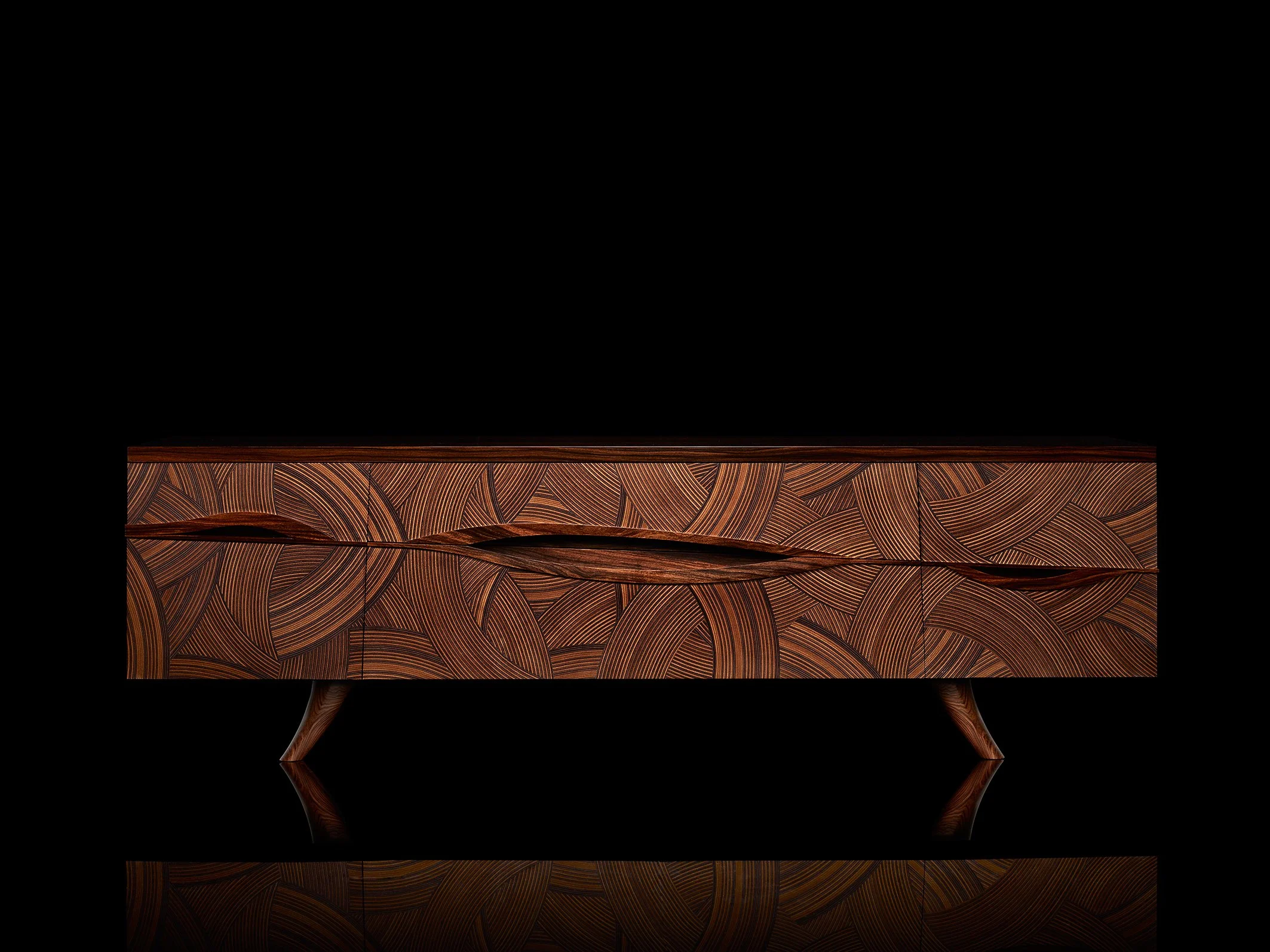
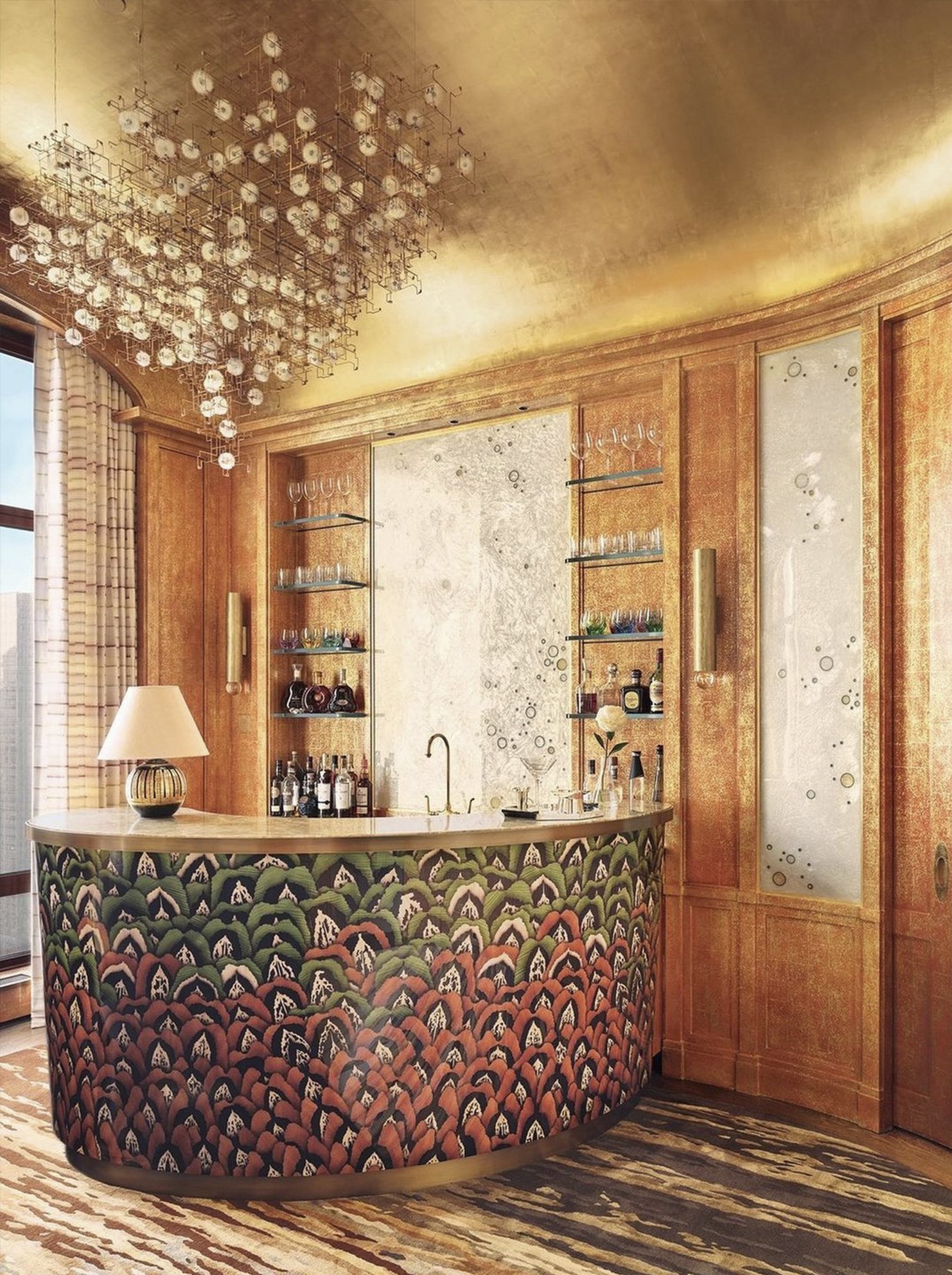
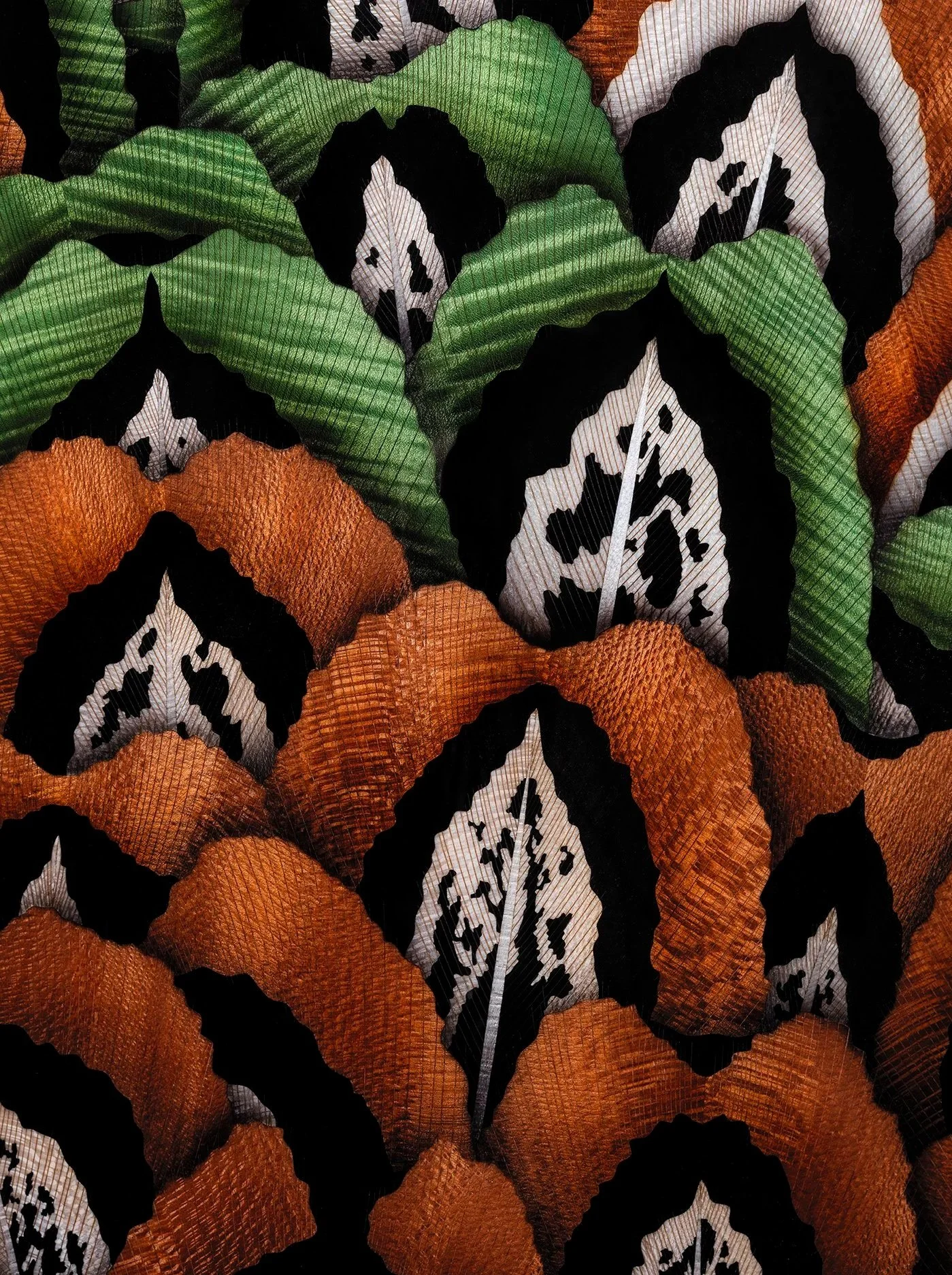
The Feather Bar draws inspiration from the intricate feather patterns of the English ring-necked pheasant. Each feather is an extraordinary piece of natural engineering, composed of hundreds of barbs extending from a central shaft.
A curved door forming the front of the bar recreates this complexity through marquetry, concealing storage while displaying the feather pattern across its surface. More than 2,000 individual pieces of veneer were cut and positioned by hand to form the pattern. Through-dyed ripple sycamore, natural and oxidised lacewood and resins enriched with nickel and Dubai gold create depth, shimmer and subtle shifts in tone.
The result is a surface that captures both the delicacy and structure of the original natural form. These pieces - the Fibonacci Cabinet, Vortex Table, Shingle Pebble Table, Antelope Cabinet, and Feather Bar - each translate a specific natural phenomenon into craft. The Land, Sea and Sky Table takes a different approach: it honours not only nature's forms, but also its history.
The Land, Sea and Sky Table
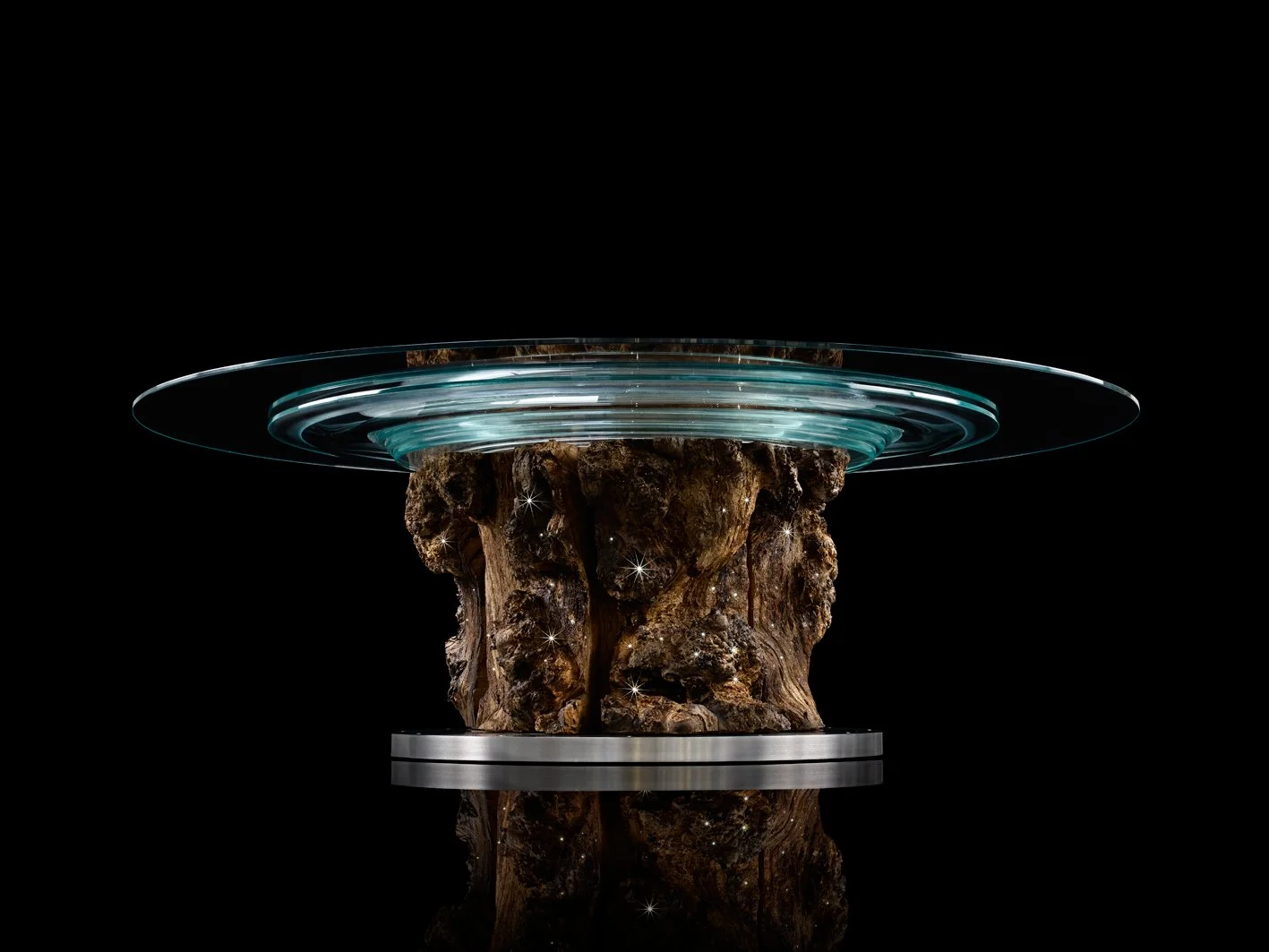
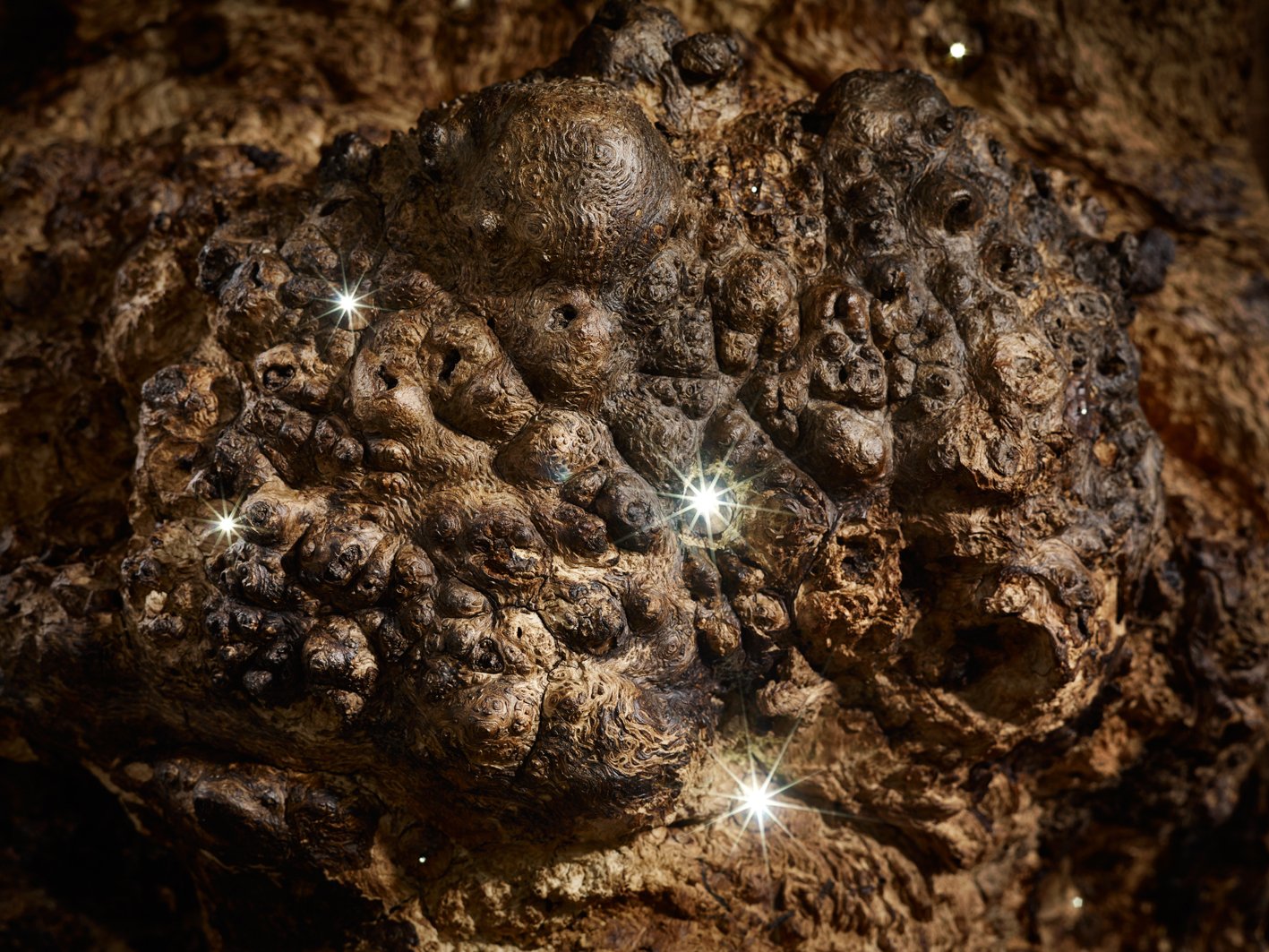
At the heart of the Land, Sea and Sky Table is a remarkable piece of English brown burr oak from the Castle Howard estate. Planted in the eighteenth century, the tree fell during a storm and lay undisturbed for more than twenty five years. During that time, beefsteak fungi transformed the wood's colour, deepening it from pale honey to rich brown.
Commissioned by clients with a deep appreciation for the natural world and developed in collaboration with superyacht designer Greg C. Marshall, the table was designed to honour the tree's provenance.
A sculptural pedestal carved from the burred base of the oak rises above a polished stainless steel plinth. Above it sits a circular aquamarine cast glass top, while a central bowl turned from a fifty one kilogram block of burr oak anchors the composition. One hundred and sixty micro LED lights were inserted by hand into the pedestal, illuminating the complex figure of the burr.
Installed aboard a yacht in New Zealand, the piece brings together earth, sea and sky in a single form.
A Continuing Dialogue
Nature offers an endless source of ideas, but translating those ideas into furniture requires more than observation. It requires curiosity, patience, and a deep understanding of materials.
Across landscapes, plants, and living systems, nature refines its structures slowly over time. Patterns emerge, forms evolve, and materials respond to the forces around them.
Design, in many ways, follows a similar path. By observing natural systems closely, we begin to understand not only how forms appear, but why they exist. Through Studio SL and our ongoing work, this dialogue between nature and craft continues - each new piece an exploration of what materials can express when informed by the principles we find in the world around us.
Subscribe to our newsletter
Sign-up to receive our newsletter and discover our stories, collections and latest innovations.


