
Why Storage Became Sculpture
Storage furniture was not always expected to be beautiful.
For centuries, its purpose was purely functional. Chests held linens. Cabinets secured valuables. Sideboards stored serving pieces. These were practical objects, built for durability and capacity rather than aesthetic consideration.
The credenza changed this.
Somewhere between utility and art, it established a category where storage no longer needed to apologise for existing. It could occupy visual space with confidence. It could justify attention through craft, materials, and surface treatment.
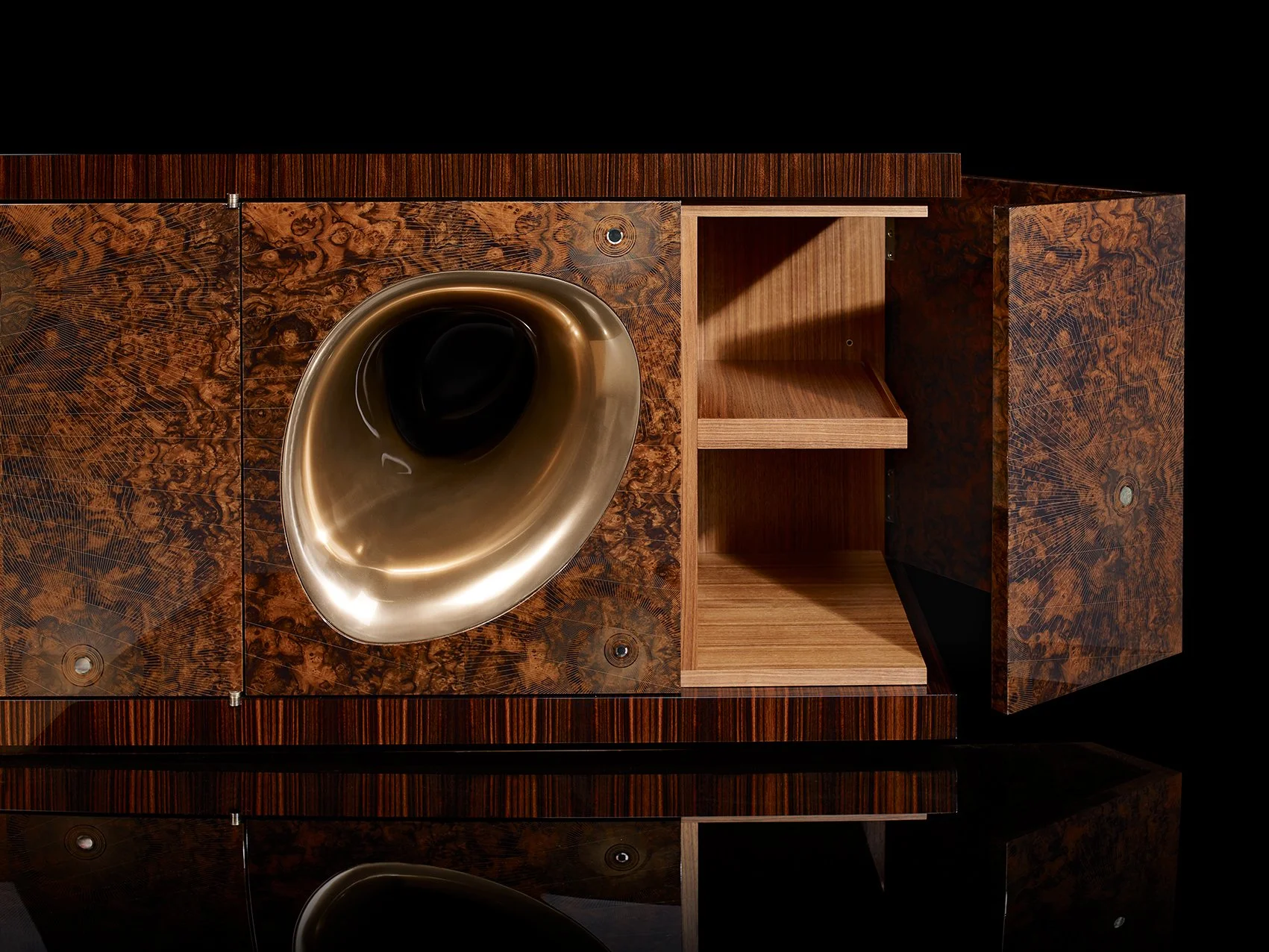
The Credenza as Canvas
Originating in Renaissance Italy as a serving piece, it was positioned prominently in dining spaces: visible, accessible, performative. Unlike storage hidden in service areas or private chambers, the credenza occupied public space. It was seen by guests. It reflected the household's status and taste.
This visibility changed expectations.
If the credenza would be observed, it should reward observation. Surface quality mattered. Proportions mattered. Material choices became deliberate rather than incidental. The credenza's horizontal expanse offered a canvas for decorative craft: marquetry, veneering, inlay, carving.
The piece became as important as what it stored.
Craftsmanship shifted from being applied for durability to being applied for beauty. The credenza justified this investment because it occupied prominent space. It was not hidden. It performed.
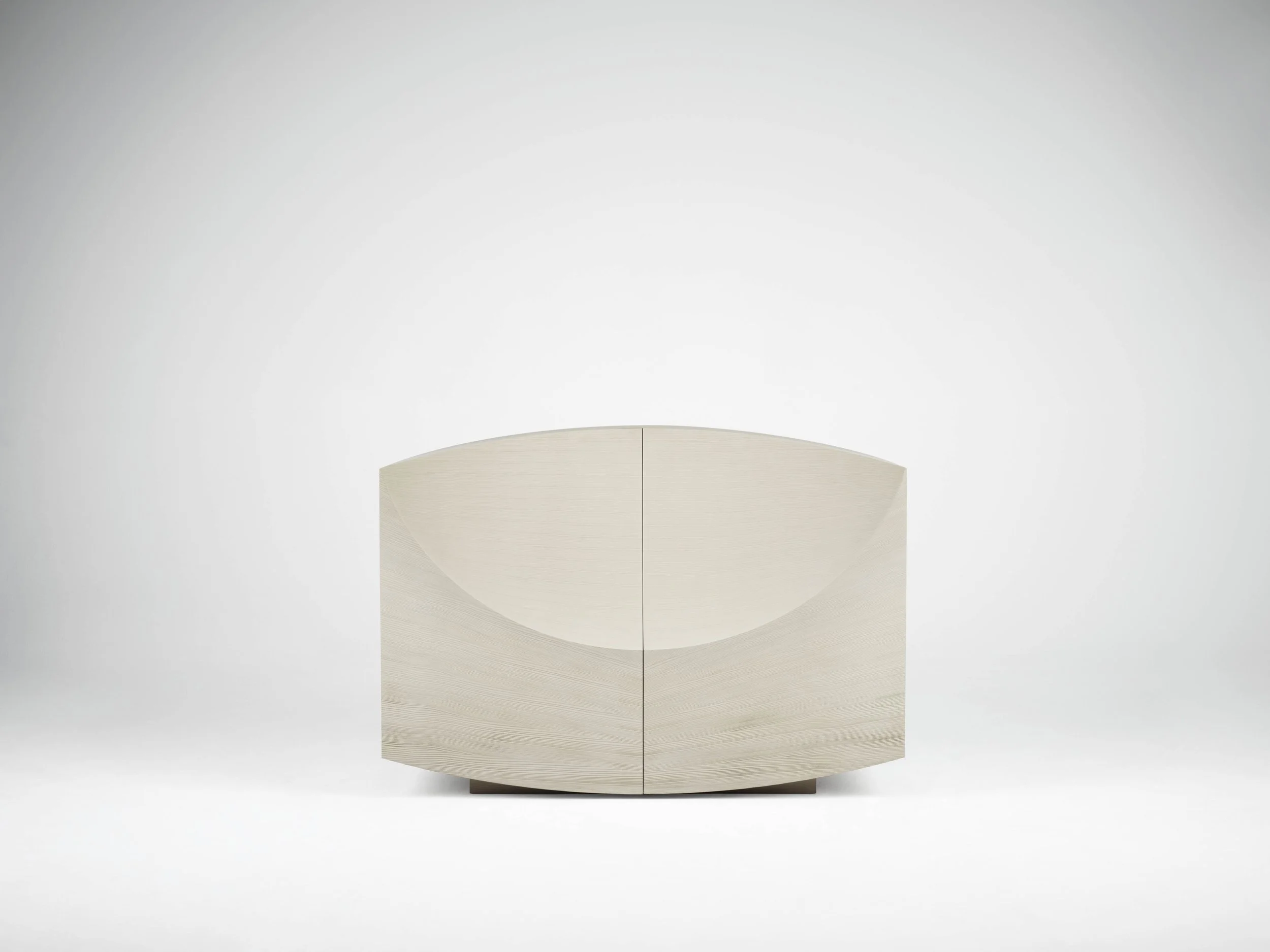
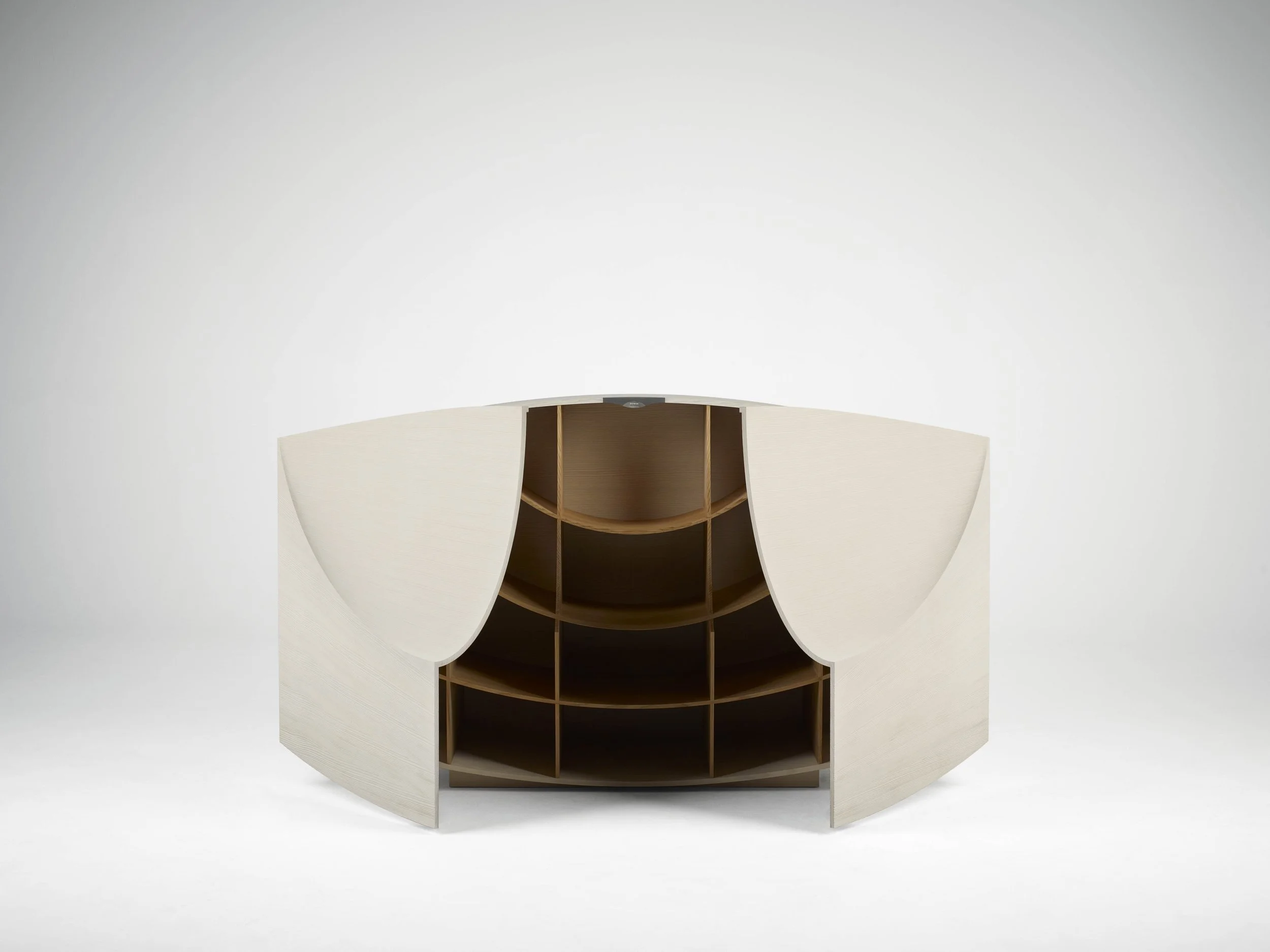
The Credenza in Contemporary Space
The credenza occupies a curious position in contemporary interiors. Open-plan living removes walls and encourages sightlines, yet the credenza does the opposite. It blocks views. It hides things.
This contradiction is useful.
When everything in a room is visible, the credenza's ability to conceal becomes valuable. It reduces what the eye must process. It creates calm in visually busy spaces.
The design decision becomes: should the credenza itself be the focus, or should it frame what sits inside?
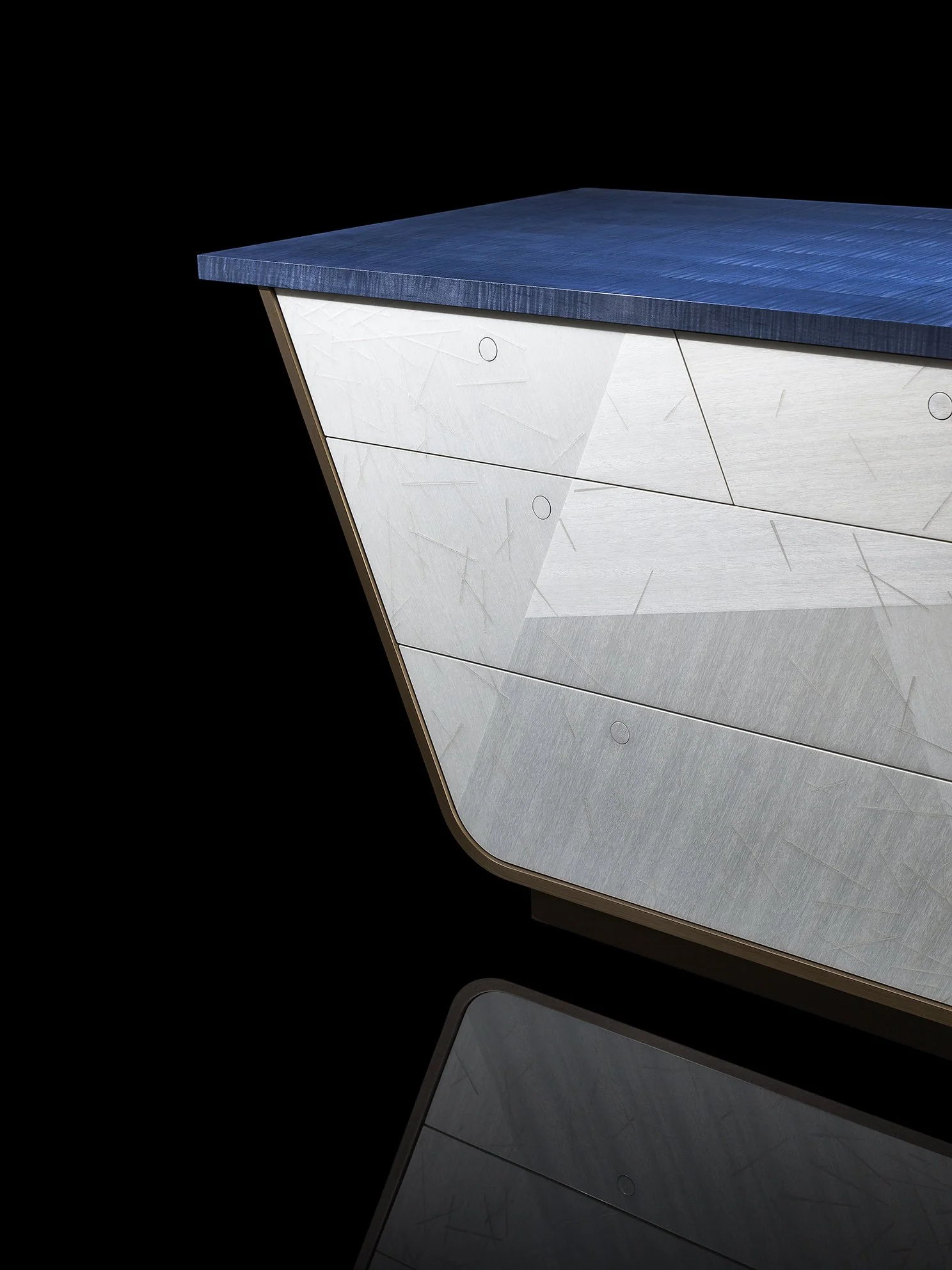
Solid doors make the credenza the statement. Marquetry, veneered panels, material innovation draw attention to the furniture itself. The credenza becomes the feature.
Glass fronts reverse this. The credenza becomes a frame for what is displayed within. The curated objects matter more than the container.
Both approaches serve different needs. One anchors a space through craft and material presence. The other organises and displays whilst remaining visually secondary.
Understanding this distinction helps determine when a credenza enhances a room and when it competes with it.
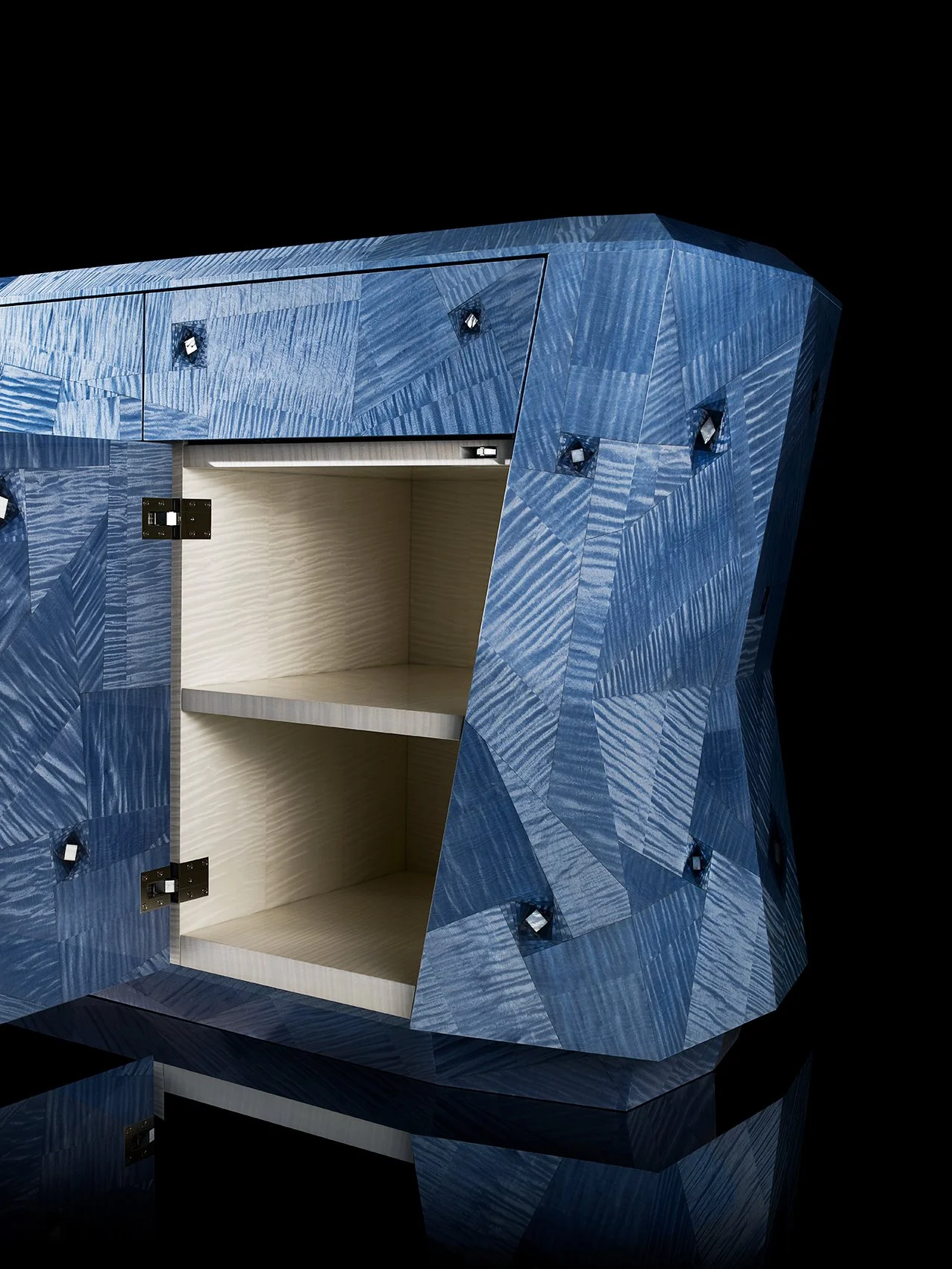
Craft That Transforms Purpose
Certain techniques fundamentally changed how storage furniture was perceived.
Marquetry transformed flat panels into pictorial compositions. What had been merely a door became a surface worth studying. Hand veneering allowed exotic timbers to wrap horizontal forms in continuous grain patterns. The credenza's length became an advantage rather than a constraint: more surface to showcase material beauty.
Metalwork added sculptural dimension. Leather applications introduced texture and tactility. Resin work brought luminosity and depth.
Each technique elevated the credenza beyond utility. The distinction between functional furniture and decorative object began to blur. Storage furniture could be both. It could perform its practical role whilst commanding attention as a crafted piece.
Function did not disappear. It was joined by form that deserved equal consideration. This principle extends to contemporary credenza making, where material choice defines presence.
The Engineering Beneath
What allows storage to become sculpture is invisible precision.
Doors must align perfectly. Internal organisation must maximise capacity whilst maintaining external proportions. Structural integrity must support weight and withstand use over decades.
Without flawless joinery, marquetry panels cannot meet seamlessly. Without precise mechanisms, doors disrupt visual continuity. Sculpture requires foundation.
Why This Matters
Storage became sculpture because visibility demanded it.
When furniture occupies prominent space, it cannot hide behind pure function. It must justify its presence.
The credenza understood this early and has refined the answer over centuries. Craft, materials, proportions, and engineering converge to create objects that store beautifully rather than simply storing.
This is recognition that domestic objects shape how we experience interior space. Furniture we interact with daily deserves the same level of consideration as art we hang on walls.
The credenza proves that storage can achieve this without apology.
It does not choose between function and form.
It insists on both.
For Designers and Makers
For designers specifying credenzas, the sculptural dimension offers opportunities beyond conventional storage solutions. Clients seeking furniture that performs multiple roles find the credenza uniquely suited to this dual mandate.
For makers, credenzas expose workshop capability across disciplines. They require joinery precision, surface finishing expertise, material knowledge, and engineering calculation. The sculptural credenza reveals whether a maker can balance technical performance with aesthetic ambition.
Storage became sculpture not through decoration applied to utility, but through craft that makes no distinction between the two.
Subscribe to our newsletter
Sign-up to receive our newsletter and discover our stories, collections and latest innovations.


