
Rye straw is not an obvious choice for furniture. Hollow, fragile, seasonal. Yet for centuries, craftspeople have recognised its potential. When split lengthwise and laid by hand, straw becomes marquetry. When viewed end-grain (the cut end of the hollow stalk), it reveals a subtle geometry that catches and reflects light in unexpected ways.
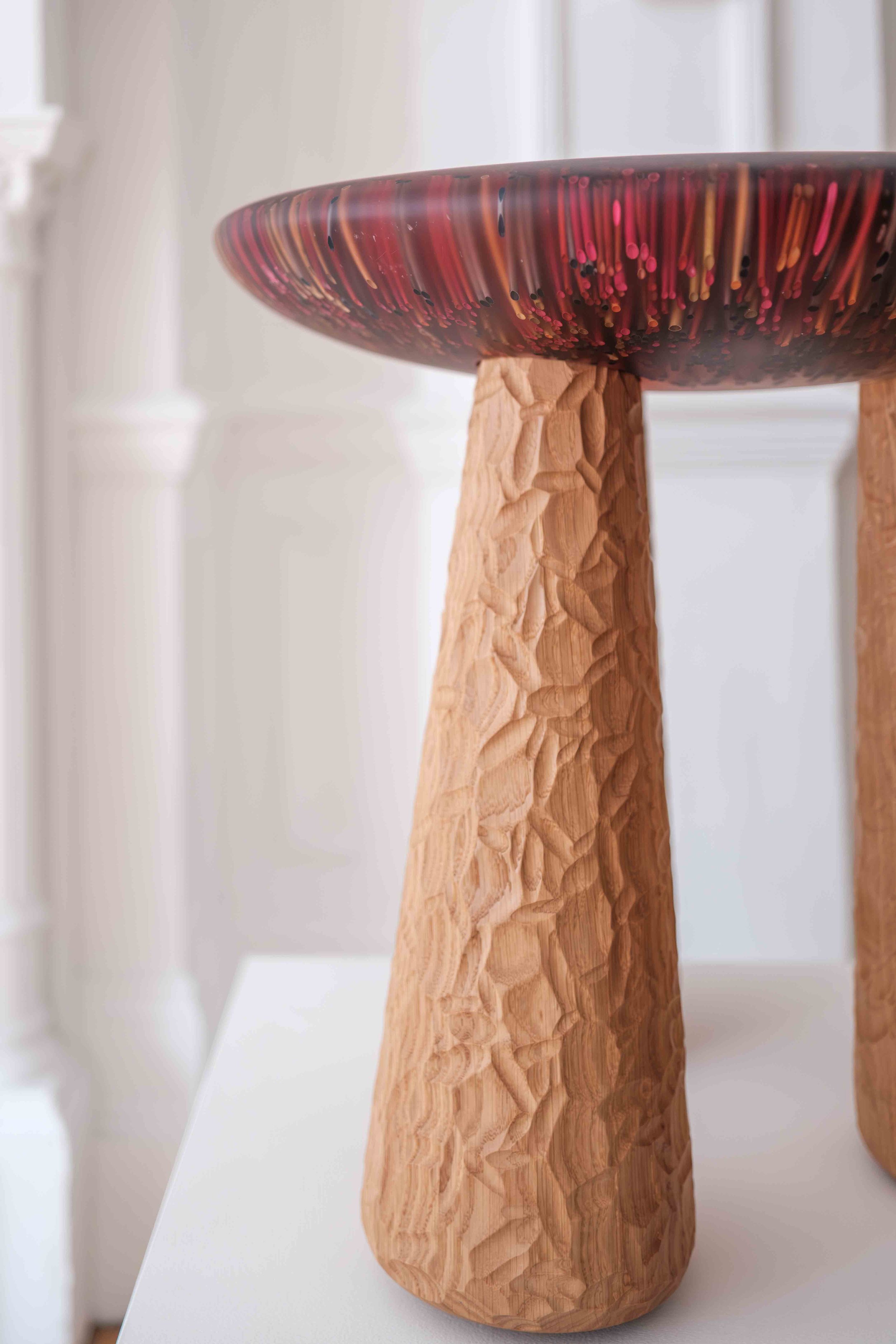
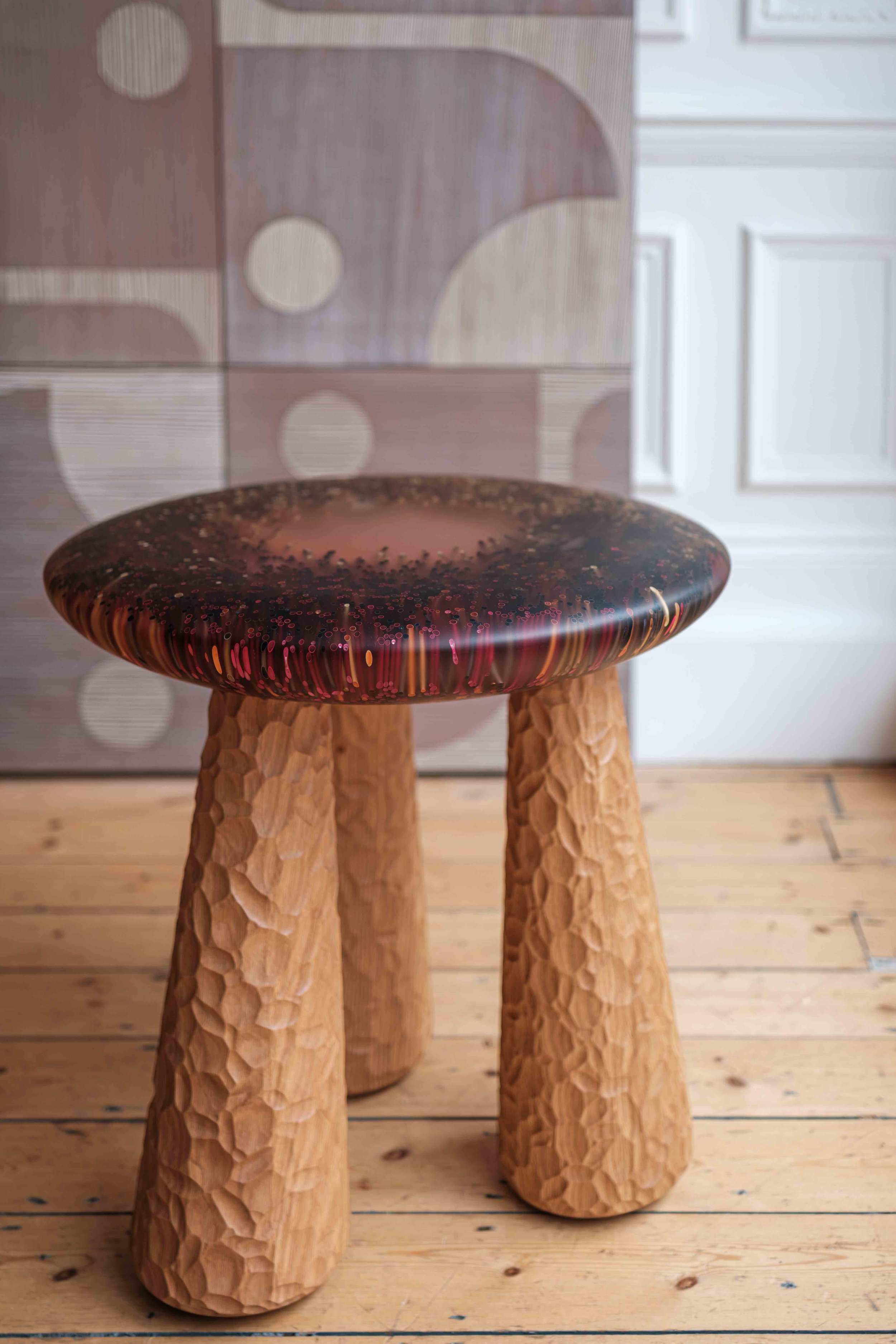
The Lumen Side Table is built around this potential. Eight tones of hand-laid French rye straw radiate around a central clear window, creating a surface that appears to glow from within. The piece sits on three oversized, hand-turned oak legs with chip-carved detailing. Its form is simple. Its surface is not.
This is the result of extensive research and development. Straw marquetry has a history in furniture making, but bringing it into contemporary design required solving problems that had no established solutions.
Material Selection: Why Rye Straw?
The choice of rye straw was not arbitrary. It followed material research that considered structural behaviour, visual properties, sustainability and compatibility with resin encasement.
Rye straw is environmentally sustainable. It is a byproduct of grain production, biodegradable, and renewable. Historically, it has been used in marquetry and decorative arts for centuries, valued for its clean, uniform structure when split.
French rye straw, sourced from Burgundy, is considered the finest available. The stalks are straight, hollow, and consistent in diameter. When split, they reveal a smooth interior surface that takes dye evenly and lays flat without warping. The exterior surface carries a natural silica coating that gives the material its distinctive lustre and makes it naturally water-resistant.
But this silica coating also presented the central technical challenge. Silica repels adhesives. It resists resin absorption. For the Lumen Side Table to function as a durable piece of furniture, the straw needed to be fully integrated with resin. Not simply coated, but structurally unified.

The Technical Problem: Resin and Air
The hardest problem was not aesthetic. It was structural.
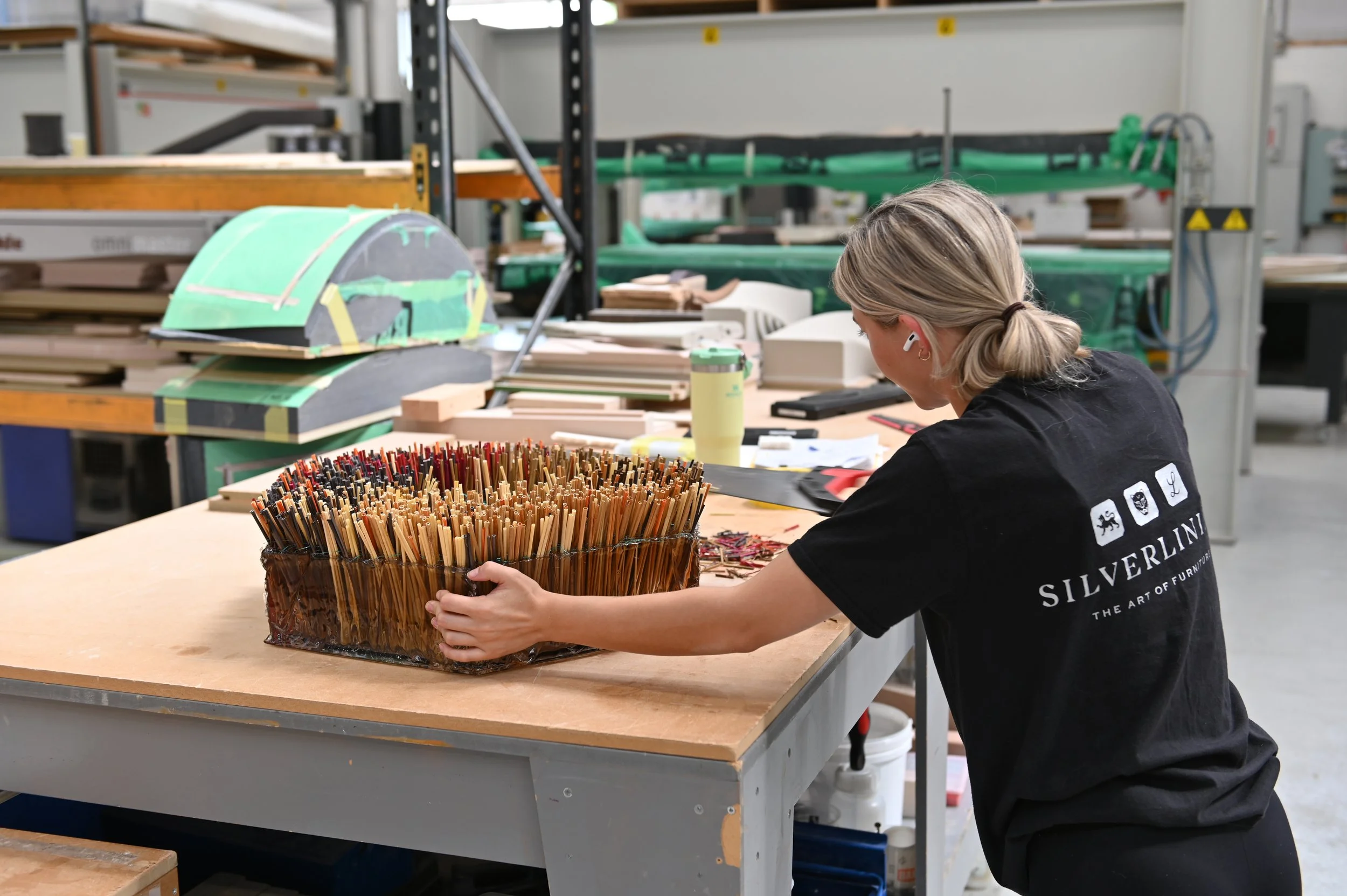
Rye straw is hollow. When encased in resin (which provides both protection and translucency), air becomes trapped inside the stalk. Any trapped air weakens the structure and disrupts the visual effect. The natural silica coating on the straw’s exterior compounds the problem by repelling the resin, preventing full absorption.
Achieving full resin saturation without trapped air became the key technical challenge. This required months of R&D. Temperature control proved critical. The resin had to be applied at precisely the right temperature. Too cold, and it would not flow into the hollow straw. Too hot, and it would degrade the material or create bubbles.
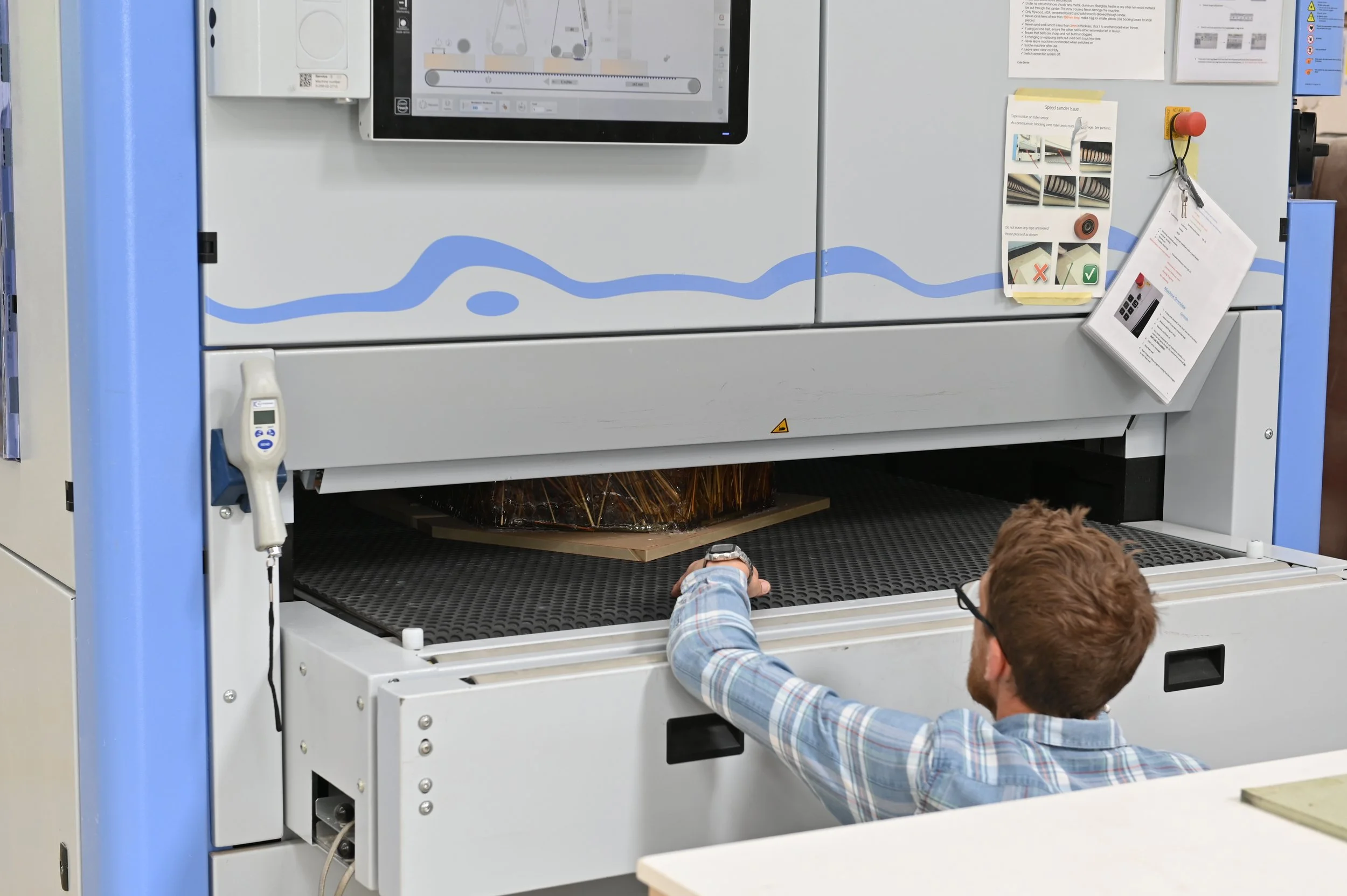
The solution was not a single breakthrough, but a strict, detailed process developed through testing. Every step matters. Timing, temperature, pressure. The process is very slow. It cannot be rushed. Precision at every stage determines whether the final surface is structurally sound or compromised.
The result is a surface where straw and resin function as a single material. Structurally sound. Visually seamless.
Light, Colour, Reflection
The straw is dyed to achieve eight distinct autumnal tones, ranging from pale gold to deep amber. These colours are not applied to the surface but absorbed into the material itself, ensuring consistency throughout.
Light plays an equally important role. The resin reflects autumnal hues as light passes through and around the straw. The effect shifts depending on the angle of view and the light source. What appears as one tone in daylight may deepen or brighten under artificial light.
Light also travels along the length of the hollow straw. The reflective nature of the material, combined with the resin encasement, allows light to interact with the surface in ways that solid materials cannot achieve. When lit from behind or at an angle, the straw creates a shimmering effect. The surface does not simply reflect light. It responds to light.

R&D as Design Practice
The Lumen Side Table demonstrates how research and development functions at Silverlining. The piece began with a question: could straw marquetry be brought into contemporary furniture design without compromising either the integrity of the technique or the structural demands of a functional object?
The answer required technical problem-solving. Studio SL works alongside the R&D and workshop teams to explore these questions. The design is not separate from the making.
This is how innovation happens. Not through sudden breakthroughs, but through sustained investigation, testing, and refinement.
Subscribe to our newsletter
Sign-up to receive our newsletter and discover our stories, collections and latest innovations.


