
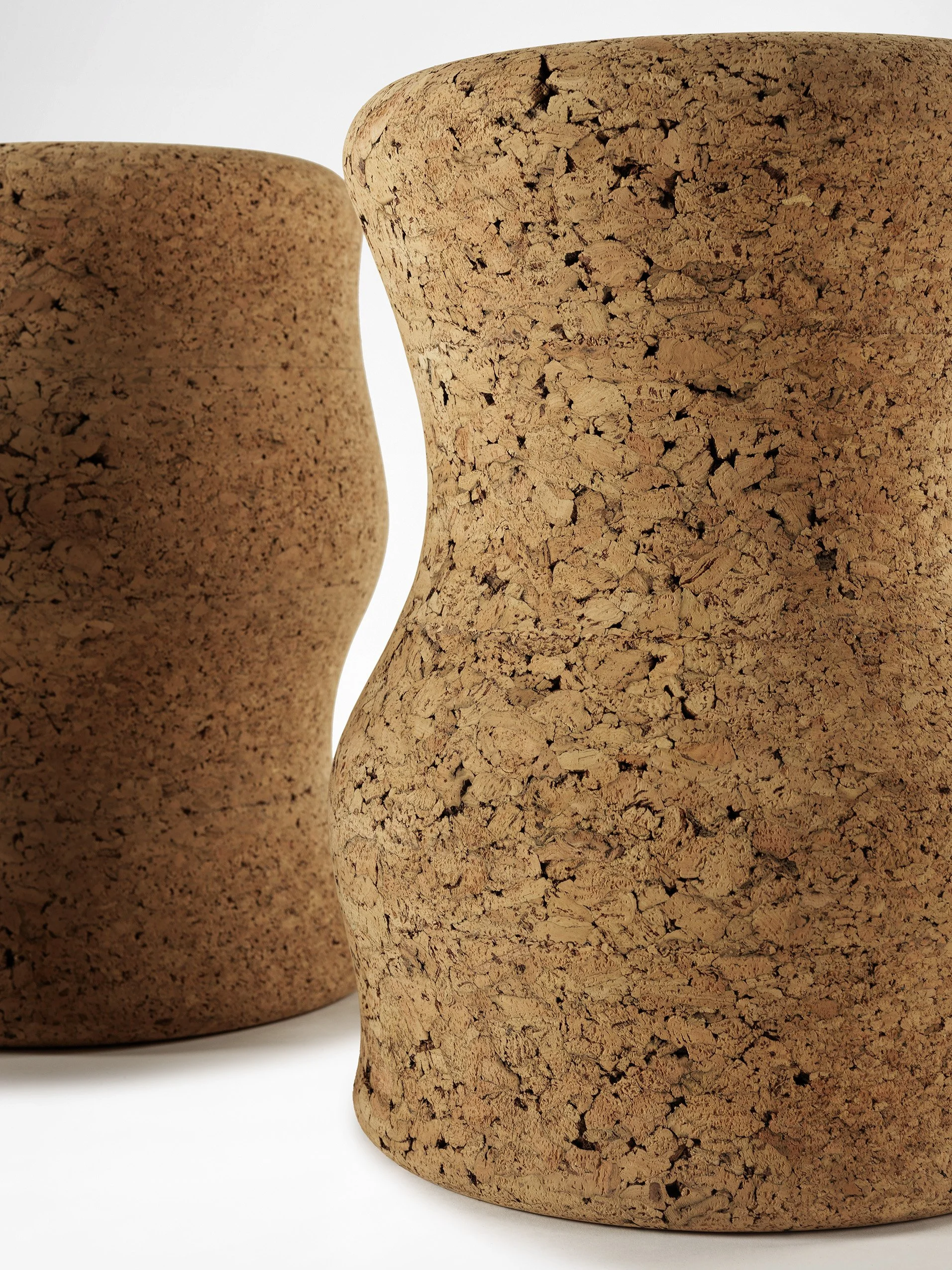
Cork Stools
Sustainability is often discussed in broad terms. In a workshop, it becomes something far more precise. It is a question of materials, of decisions, and ultimately of how long a piece is made to last. For a studio working with the finest natural materials, creating pieces designed to last generations, the question deserves a more considered answer.
It begins with the material
Every decision about sustainability begins before anything is made. It begins with what a piece is made from and where that material comes from.
British native timbers such as oak, ash, walnut and sycamore carry a provenance that matters increasingly to clients. The growth rings visible in a piece of English oak end-grain are a record of time, of seasons, of a specific place. That connection between material and landscape is part of what makes a piece worth keeping.
Vegetable-tanned leather tells a similar story. Produced using natural tannins derived from bark and plant matter rather than heavy metals and chemical baths, it is a slower, older process. The leather it produces is more responsive to the hand, more alive to touch, and more transparent in its origins. It ages with the piece rather than against it, deepening, settling, becoming more itself over time.
Cork is perhaps the most compelling material argument of all. Harvested from the bark of the cork oak without felling the tree, it is one of the few genuinely renewable materials available to furniture makers. Each harvest stimulates the tree's regeneration, enabling it to absorb significantly more carbon than an unharvested tree. In collaboration with Winch Design, Silverlining used cork as the structural base of a marine-grade coffee table, precision-milled and hand-finished alongside English olive ash and American black walnut. A material most associated with wine bottles, brought into something of genuine beauty and purpose.
Nothing is treated as waste
How a studio handles what it does not use says as much about its values as what it chooses to work with. At Silverlining, offcuts and rejected material are treated not as a problem to manage but as a source of inspiration.
Cascade, one of the pieces in the In Focus collection, makes this thinking visible. Its marquetry surface is composed entirely from veneer offcuts, and its sculpted side profiles are built from stacked layers of leftover coach-hide leather. What the workshop might have discarded became the defining material gesture of the piece. Veneer offcuts become marquetry. Timber ends find their way into samples and prototypes. Looking at what remains and asking what it could become is simply part of the way Silverlining works.
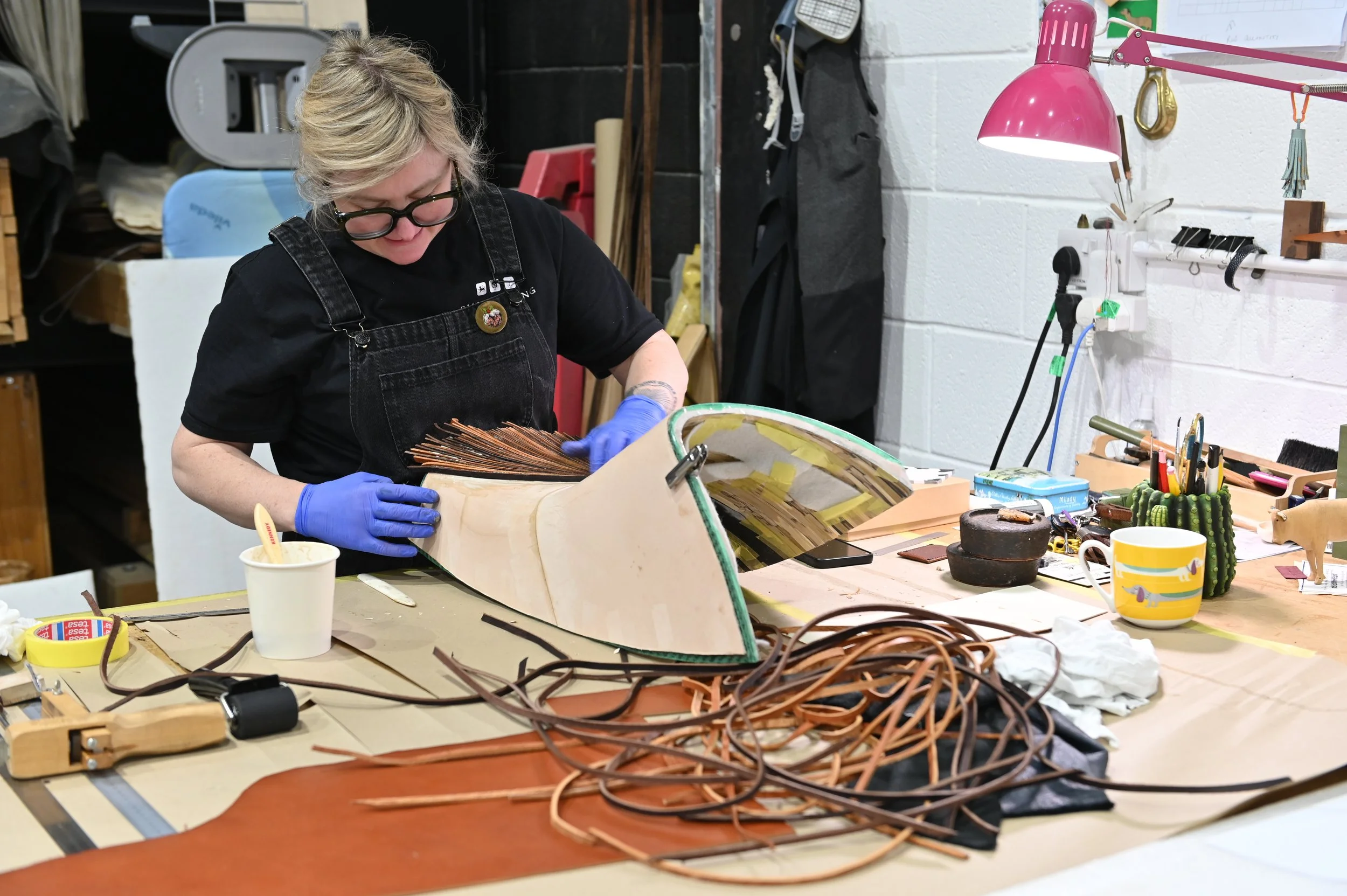
Using waste strips of leather
Designed to outlast trends
The most sustainable piece of furniture is, in the end, the one that never needs to be replaced. This is not a new idea, but it is one that bespoke making is uniquely placed to honour. When a piece is designed with a specific client, space and context in mind, when it is made with materials chosen for longevity as well as beauty, and when the craftsmanship behind it is of a standard that holds over decades, the environmental case makes itself.
The pieces Silverlining makes are designed to be passed on. That is not a claim about sustainability. It is a description of how they are built.
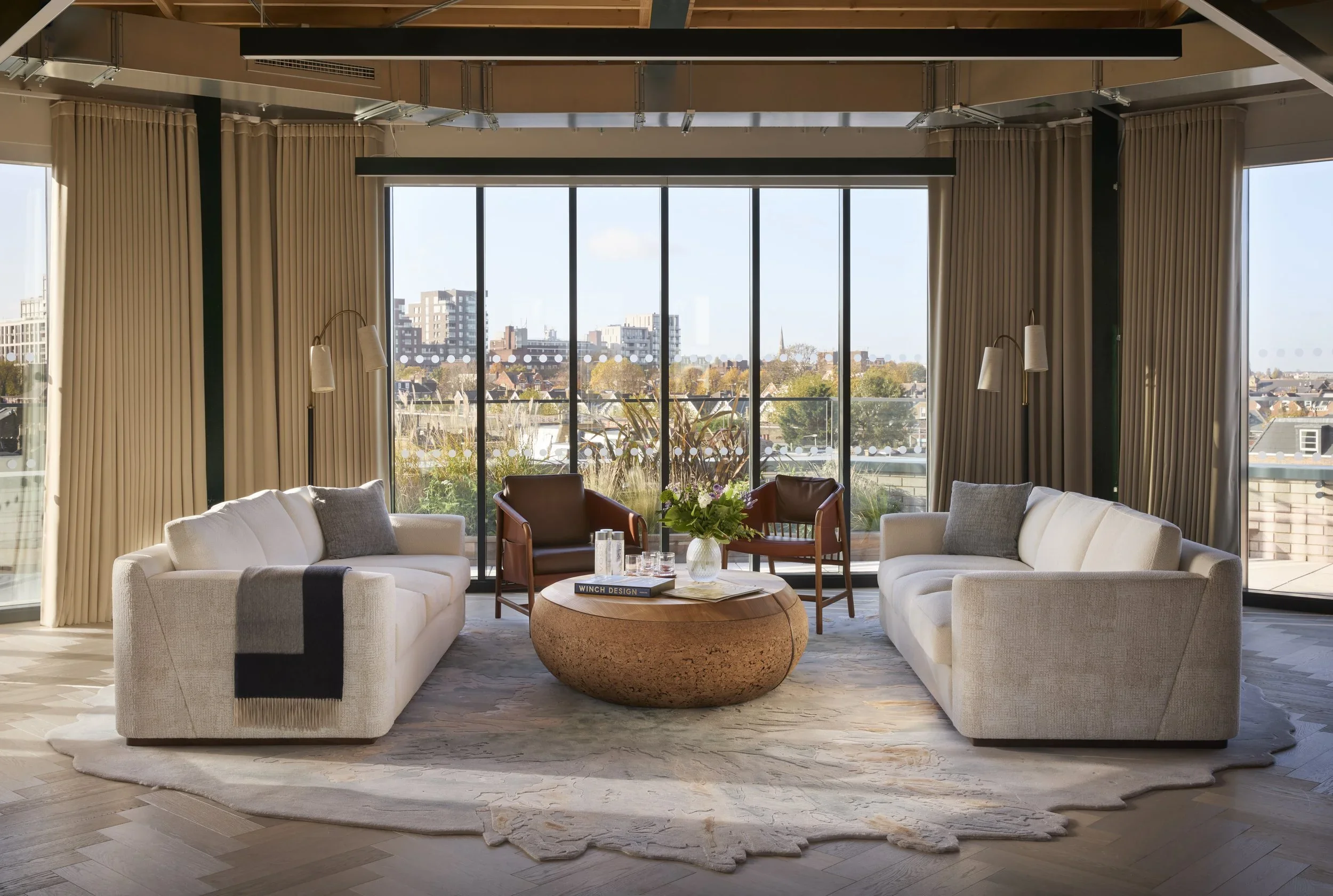
Cork Coffee Table at Winch Design
Honesty as a standard
No studio operating at scale can claim to be entirely without impact. Some processes rely on solvents. Some materials travel long distances. The energy demands of a working workshop are real. Silverlining is honest about this. The direction of travel is clear, towards water-based adhesives, organic finishes and lower-impact lacquers, not as replacements for quality but as part of the same pursuit of it.
As a member of We Are Prime, Silverlining holds itself to a continuing standard of honesty about its practice and its ambitions. As a regular participant in the Blue Wake programme at the Monaco Yacht Show, it contributes to the wider conversation about sustainable practice within the superyacht industry. The commitment is not to perfection. It is to the ongoing effort of doing better, and to being open about where that effort stands.
So what does sustainability really mean in high-end furniture today? Not a certification or a claim, but a discipline built into every decision, from the first material choice to the last finish applied. It means making things that are worth keeping, from materials worth caring about, with honesty about the distance still to travel.
Subscribe to our newsletter
Sign-up to receive our newsletter and discover our stories, collections and latest innovations.


